
Doom predictions have become a common occurrence in Ghanaian media in recent years, frequently generating news stories and igniting contentious public discussions.
These predictions, especially those involving well-known individuals, are magnified and disseminated with little question from prime-time broadcasts to church pulpits.
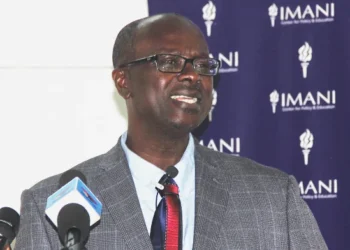
According to Professor Stephen Kwaku Asare, a Fellow at the Ghana Centre for Democratic Development (CDD-Ghana), this pattern reveals more about the media’s agenda than it does about prophecy per se.
In a frank analysis, Professor Asare criticised Ghana’s media for what he sees as their central role in amplifying and normalising doom prophecies.
He argued that while prophecy itself is not inherently harmful, the problem lies in how media outlets package and circulate such messages as news, often without context or verification.
In his analysis, Prof. Asare contended that prophecies have become an easy pathway for broadcasters and online platforms to attract audiences because they combine drama, brevity, and emotional weight.
“Sensationalism sells,” he said, explaining that prophecies are “short, dramatic, and emotionally charged,” making them perfect for boosting ratings, generating clicks, and driving viral shares.
This built-in appeal, he stressed, makes them more commercially attractive than well-researched investigative journalism or fact-based reporting.
Deep Cultural Pull of Prophesies
Beyond their dramatic appeal, he highlighted the deep cultural pull prophecies hold in Ghana. According to him, religious messages resonate strongly in a society where faith is deeply woven into daily life, offering a mix of belief, entertainment, and gossip.
“Prophecy taps into our deep religious traditions, attracting audiences for belief, entertainment, and gossip,” he noted. This cultural connection, he warned, makes it harder for the media to resist broadcasting such content, even when its news value is questionable.

Prof. Asare also pointed to competitive pressure in the industry as a significant factor sustaining the practice. He observed that once one television or radio station airs a prophecy, rival outlets often feel compelled to do the same to avoid losing viewers and listeners.
This, he argued, creates a chain reaction where editorial decisions are guided less by public interest and more by the fear of losing market share.
Weak Regulation
On the regulatory front, he expressed concern about what he described as “weak enforcement” by oversight bodies such as the National Media Commission (NMC) and the National Communications Authority (NCA).
He noted that these institutions tend to act only after public outrage, with sanctions that are too minimal to discourage repeat behaviour. This lack of deterrence, he argued, effectively gives media houses a free pass to continue their practices.
Editorial lapses within media organisations, in his view, also contribute to the trend. He explained that live church services and similar religious events are often broadcast in real time without the scrutiny applied to political debates, investigative documentaries, or current affairs programmes.
This “thin editorial gatekeeping,” he warned, allows unverified and potentially damaging pronouncements to reach large audiences without challenge.
Another factor, according to Prof. Asare, is the use of “public interest” as a cover for commercial motives. Media outlets frequently justify broadcasting prophecies as serving public awareness, but he insisted that “the real driver is ratings, not accountability or education.”
He further noted that these broadcasts are attractive to stations because they are inexpensive. “Airing or replaying a prophecy costs almost nothing compared to producing original reporting,” he stated.

The legal environment, he added, offers little pushback against this trend. Few defamation suits are brought against the pastors who make these pronouncements or the stations that air them.
Moreover, Ghana’s legal system does not easily recognise claims for emotional distress, leaving little legal recourse for individuals affected by such broadcasts.
This lack of litigation, he said, allows both religious leaders and media outlets to operate without fear of serious consequences.
Social Media Factor
The social media factor, Prof. Asare explained, further fuels the recycling of prophecies. “Prophecies generate instant online chatter, boosting algorithms and audience metrics,” he said.
When the prophecy involves a political figure, he observed, the content’s value skyrockets. “Make the prophecy about a politician and you are sitting on a goldmine,” he remarked, noting how such stories dominate timelines and online discussions.
Lastly, he drew attention to the blurring of boundaries between news and entertainment in Ghana’s media landscape.
He argued that many outlets treat prophecy as both “serious news” and infotainment, allowing it to bypass ethical safeguards and reach audiences in ways that distort public discourse.
For Prof. Asare, the solution requires a multi-pronged approach. “It must stop,” he declared, calling for stronger enforcement by the NMC, strategic litigation to hold broadcasters accountable, and a public willing to switch off sensational prophecy coverage.
His message was unambiguous: “The problem isn’t prophecy. It’s the media turning it into news. Fix the media.” His remarks add to a growing conversation about the media’s role in shaping Ghana’s information environment, particularly concerning religious content.

While some defend prophecy broadcasts as part of religious freedom and public discourse, critics like Prof. Asare caution that their unfiltered circulation can undermine journalism’s credibility, promote unverified claims, and distract from substantive national issues.
Prof. Asare’s criticism highlights the necessity of a more intentional division between religious expression and the requirements of professional journalism as Ghana struggles with issues of media ethics, regulation, and audience responsibility.
He thinks the cycle of prophecy sensationalism can be broken, whether it is through industry self-regulation, policy reform, or audience behavior changes, but only if the media take the initiative to redefine their role.
READ ALSO: Don’t Rush Back to Capital Markets Despite Debt Wins- Deloitte Warns Ghana