
IMANI Africa has raised critical questions over two major foreign-backed investments announced by the Ministry of Food and Agriculture, warning that while the projects could transform Ghana’s agro-economy, they also risk entrenching dependence on exports without securing domestic food security.
The think tank pointed to Qatar’s $1.5 billion investment in large-scale farming and Aljadad Group’s $5 billion fertilizer facility at Atuabo as pivotal moves that demand closer scrutiny.
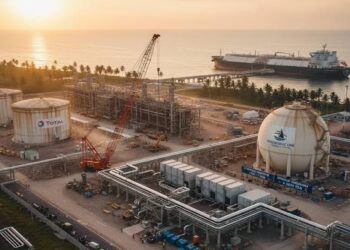
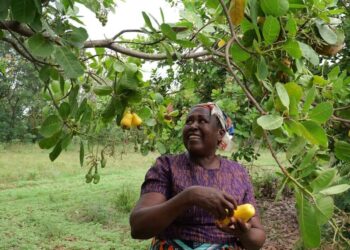
The Ministry reported that Qatar’s initiative will “irrigate farmland, allocate plots to farmers, and purchase harvests for export,” projecting at least 2,500 direct jobs and stronger export earnings. Aljadad’s facility, on the other hand, will anchor on the Atuabo gas plant to produce “urea and ammonia locally,” breaking Ghana’s cycle of fertilizer imports, which cost $254.95 million in 2023 alone.
IMANI observed that both projects demonstrate foreign confidence in Ghana’s agricultural potential, but stressed that they must not bypass national priorities.
“Fertilizer self-sufficiency is overdue and Aljadad’s investment offers scale and stability. But the structure of the Qatar arrangement raises real questions about whether Ghana’s farmers and consumers will benefit first, or whether we risk repeating colonial export patterns”
IMANI Africa

The $5 billion fertilizer plant represents what many economists have long demanded: domestic production of critical inputs. For decades, Ghana’s farming fortunes have been dictated by global markets, with price shocks and supply chain disruptions exposing farmers to uncertainty.
IMANI argued that local manufacturing of fertilizer could not only reduce dependence on imports but also provide predictable input prices to farmers, boost productivity, and create a platform for Ghana to become a supplier across West Africa.
The Institute of Fiscal Studies has repeatedly urged the government to prioritize fertilizer manufacturing in its budgets, and IMANI sees the Aljadad project as the private-led scale that could deliver real impact. The think tank emphasized that success will depend on transparent implementation, equitable access, and integration with smallholder farmers.
“Domestic fertilizer production must feed Ghana’s own agricultural base, not only commercial agribusinesses. If access is skewed, the opportunity for broader resilience will be lost,” the organization cautioned.
Qatar’s Role: Boost or Backfire?
While the fertilizer project targets supply challenges, IMANI noted that the Qatar initiative is layered with potential contradictions.
By providing irrigation, inputs, and guaranteed markets, Qatar’s model introduces scale and efficiency. However, IMANI questioned whether a system that prioritizes export contracts could leave Ghana importing staples while exporting raw produce.

Ghana’s food import bills remain high, with rice, poultry, and processed goods continuing to dominate inflows. IMANI highlighted that the risk of becoming a breadbasket for Qatar, while local shelves still rely on imports, could undermine the very purpose of agricultural modernization.
“Ghana must avoid becoming simply a contract farm for foreign nations. The test will be whether the produce feeds into local agro-processing, milling, and manufacturing, or whether we repeat the colonial model of exporting raw crops and importing finished foods”
IMANI Africa
For IMANI, the critical task is not just the headline figures of $6.5 billion in foreign commitments, but how these investments are embedded into Ghana’s agro-industrial ecosystem.
Fertilizer production and large-scale irrigated farming provide the building blocks of transformation, yet without strong linkages to local processors, distributors, and manufacturers, the country risks missing the value addition that drives jobs and economic resilience.
The think tank insisted that Ghana must prioritize channeling fertilizer to smallholder farmers, ensuring that Qatar-backed farms supply local industries, and enforcing frameworks that keep value chains anchored in the domestic economy.

“Done right, these projects can serve as building blocks for a competitive agro-industrial future. Done wrong, they will simply deepen Ghana’s dependency on foreign contracts and limit the benefits to a few sectors”
IMANI Africa
The Ministry of Food and Agriculture, announcing the deals, described them as proof of Ghana’s rising investment appeal and the government’s commitment to strengthening agriculture under President John Dramani Mahama’s leadership.
But for IMANI, the measure of success will be whether the investments serve Ghana’s people first, ensure food security, and build long-term resilience in the face of global economic uncertainty.
READ MORE: Chamber of Mines Warns Against Cutting Mining Lease Tenure