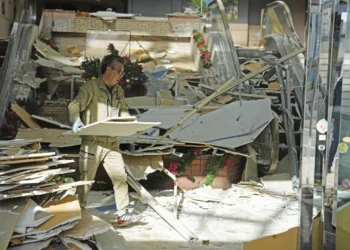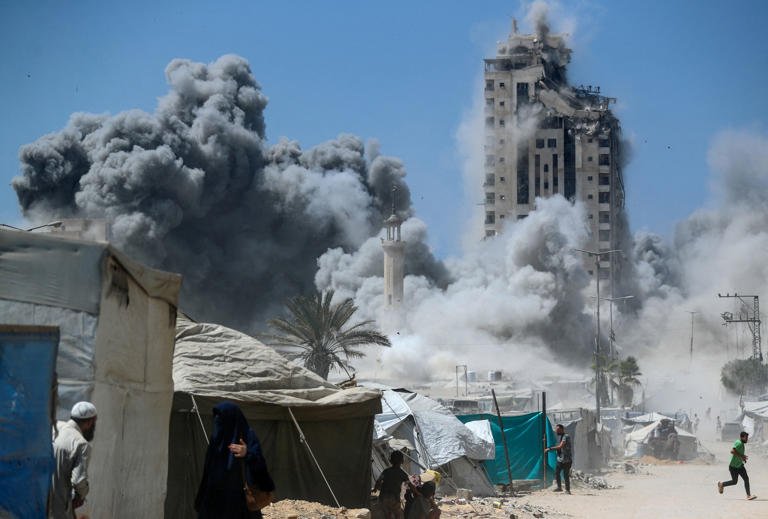
Israel’s forces have struck a high-rise tower in a densely populated part of Gaza City and warned of further attacks to multi-storey buildings as it intensifies its campaign to seize control of the capital.
The Israeli military ordered people in Mushtaha Tower, a 12-storey building located on the western side of Gaza City and surrounded by hundreds of makeshift tents, to evacuate, and later struck the building, claiming it was “Hamas infrastructure” and was used to plan and carry out operations against Israeli forces.
This came as the military stepped up operations aimed at seizing control of the famine-stricken city of some 1 million Palestinians.
Strikes elsewhere in Gaza City killed at least 27 people, health officials said. Israel said it struck the building because it was used by Hamas for surveillance.
The military accused Hamas militants of using high-rises in the city for surveillance and planned ambushes, and said it would carry out “precise, targeted strikes” on militant infrastructure in the coming days.
Israel has begun mobilizing tens of thousands of reservists and is repeating evacuation warnings as part of its plan to widen its offensive, which has sparked opposition domestically and condemnation abroad.


Israel has declared Gaza City, in the north of the territory, to be a combat zone. Parts of the city are already considered “red zones” where Palestinians have been ordered to evacuate ahead of expected heavy fighting.
That has left residents on edge, including many who returned after fleeing the city in the initial stages of the war, which has already displaced around 90% of the territory’s population.
The city’s Shifa Hospital said that 27 people were killed in Israeli strikes overnight into Friday, including six members of a single family. The Israeli military says it only targets militants and blames Hamas for civilian deaths because the militants operate in densely-populated areas.
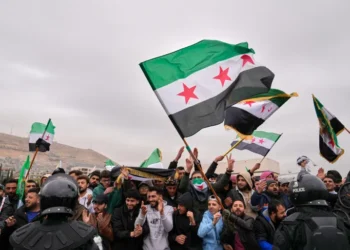
The offensive has also sparked widespread protests among Israelis who fear it will endanger hostages still held in Gaza, some of whom are believed to be in Gaza City. There are 48 such hostages, 20 of them believed by Israel to be alive.
The protesters accuse Netanyahu of prolonging the war in order to satisfy his far-right governing partners instead of reaching a ceasefire with Hamas to bring the hostages home.
Hamas Releases Video Of Hostages In Gaza City
Meanwhile, Hamas released a propaganda video of two hostages in Gaza City. The video shows Guy Gilboa-Dalal in a car, at one point joined by another hostage, Alon Ohel.
In a move apparently aimed at swaying Israeli public opinion as the military ramps up its assault on the city, the propaganda video shows captive Guy Gilboa-Dalal in a car in several locations in Gaza City, including outside the Red Crescent headquarters.
In the nearly four-minute video, Gilboa-Dalal addresses the planned Israeli takeover and occupation of Gaza City as he pleads for the Israeli government to bring him home.
It was a rare Hamas hostage video in which captives were filmed above ground. Gilboa-Dalal, who was likely filmed under duress, says in the clip that the date of filming is August 28 and that he has been a hostage for 22 months.
Gilboa-Dalal also calls on Israelis to demonstrate against the government and to demand an end to the war that would bring home the remaining 48 hostages, 20 of whom are still believed to be alive.
Gilboa-Dalal was last seen in a Hamas propaganda video released in February, in which he is forced to watch other hostages being freed during an agreed exchange between Hamas and Israel.
On Friday morning, the Hostages and Missing Families Forum criticized the escalating assault on Gaza City. In a statement, the hostage families said they were briefed by the Israeli military that the offensive would increase the risk to hostages since the Israel Defense Forces (IDF) lacks precise information about their location.
“There is a deal on the table – this is what will bring back the last hostage, this is what will end the war,” the forum said in a statement.
READ ALSO: South Africa’s Transnet Loss Narrows As Turnaround Gains Momentum