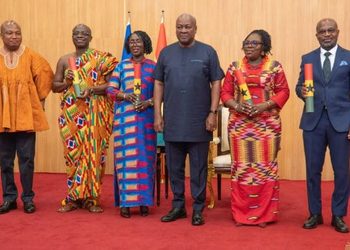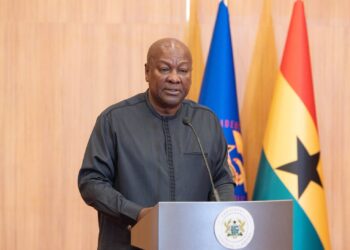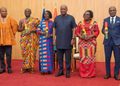
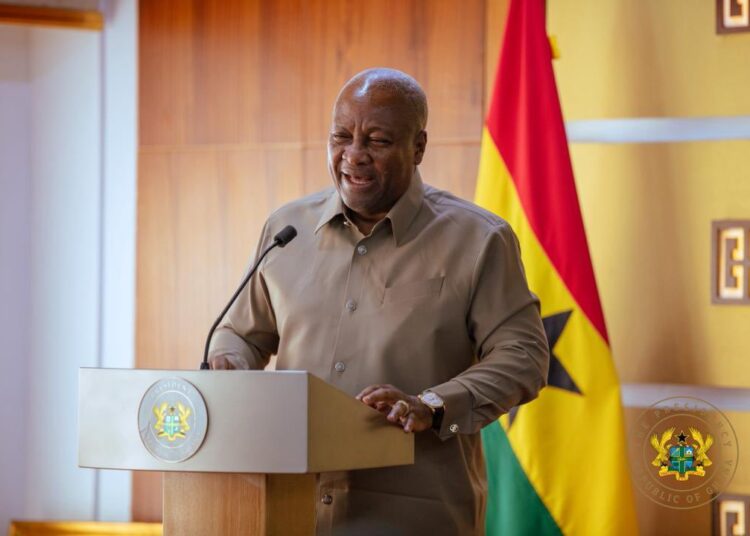
President John Dramani Mahama has called for a united front to combat harassment and attacks on journalists in Ghana. During a courtesy visit by the Ghana Journalists Association (GJA) at Jubilee House, the President reaffirmed his personal commitment to press freedom.
He stated that those who assault media practitioners “must face sanctions and punishment,” to restore the nation’s dwindling international rankings. The President’s remarks came after GJA President Albert Kwabena Dwumfour led a delegation of new executives and elders to the presidency to re-engage on critical issues affecting the media landscape.
President Mahama began his address by congratulating the new GJA executives on their recent election. He expressed his government’s pleasure in working with the media, acknowledging his own roots in journalism.
“I’ve been a fellow traveler for quite a long time by virtue of my training as a journalist. I remember the early days when I did my internship in GBC and I worked in the newsroom.
“That is when I practicalized my skill in story writing. I did my internship in GBC – others were attached to Graphic and the Ghanaian Times and all the other news organizations. The media has come a long way since then”
President John Dramani Mahama
The President credited the 1992 constitution as a major catalyst for the progress of the media landscape. He highlighted Chapter 12 of the constitution as being specifically dedicated to media freedoms and protections.
The President noted that the removal of licensing restrictions was a significant step. It allowed anyone to establish a media house without the kind of restrictions that previously existed. However, he also pointed out that the field has since been profoundly changed by technology and the rise of new media.
“The media has become a bit decentralized today because anybody who has a phone and a camera can report news to the public. It means that communications is dealing with a wider range of people and not only traditional well-organized media houses but also individuals, especially the new group called bloggers”
President John Dramani Mahama
The President expressed concerns that these bloggers and new media outlets are largely unregulated. He noted that while they attend events and vie for positions with traditional journalists, their content can sometimes be extreme. He pointed to the use of “filthy” language and content that can sometimes cross the line into hate speech.
This raised important questions about whether these bloggers should be classified as typical journalists. “These are the questions that must agitate our minds,” he stated.
Reversing a Decline
Furthermore, President Mahama expressed his serious concern about Ghana’s consistent decline in international press freedom rankings, stating that this is an issue that should concern all stakeholders.
He attributed the decline in part to a lack of sanctions against those who harass journalists, and specifically referenced the “unfortunate murder of Ahmed Suale,” which he said caught international attention and contributed to Ghana’s diminished ranking. The President believes that a lack of deterrence has emboldened perpetrators.
“And so we need to find a way of ensuring that people, when they do that kind of thing, face sanctions or are punished,” he expressed. His remarks underscored his government’s commitment to restoring Ghana’s standing as a beacon of press freedom.
This commitment, he said, is what drove him to personally intervene in a recent assault on a JoyNews crew. GJA President Dwumfour had used the meeting to commend the President for his swift action, calling it the “first time in recent memory that a President of the Republic has directly intervened in a case of assault against journalists.”
Partnership and Proactive Solutions
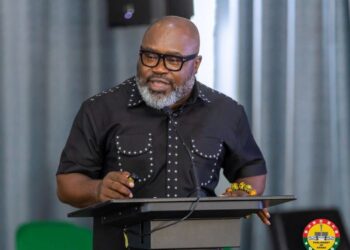
The GJA’s visit provided a platform for a renewed partnership between the media and the government, with GJA President Dwumfour, assuring President Mahama of the association’s commitment to collaborating on proactive solutions to address attacks against journalists.
This partnership, he said, would specifically involve security institutions, especially the Ghana Police Service. Dwumfour also appealed for government support for a journalist, Juan Pius Asiedu, who was shot while covering the 2020 election collation at Ablekuma Central.

He noted that Mr. Asiedu has undergone four surgeries and is still struggling to recover. The President’s direct engagement on this matter and the GJA’s appeal for support highlighted the importance of this renewed alliance.
The meeting signified a willingness on the part of the Mahama administration to work directly with the media fraternity on their most pressing challenges. It is seen as a positive step towards ensuring the safety of journalists and upholding Ghana’s reputation as a bastion of press freedom.
READ ALSO: Israel Strikes High-Rise Building In Gaza City Offensive