• About
  • Advertise
  • Privacy Policy
  • Contact
Sunday, May 17, 2026
  • Login
The Vaultz News
  • Top Stories
  • News
    • General News
    • Education
    • Health
    • Opinions
  • Economics
    • Economy
    • Finance
      • Banking
      • Insurance
      • Pension
    • Securities/Markets
  • Business
    • Agribusiness
    • Vaultz Business
    • Extractives/Energy
    • Real Estate
  • World
    • Africa
    • America
    • Europe
    • UK
    • USA
    • Asia
    • Around the Globe
  • Innovation
    • Technology
    • Wheels
  • Entertainment
  • 20MOBPL2DNew
  • Jobs & Scholarships
    • Job Vacancies
    • Scholarships
No Result
View All Result
The Vaultz News
  • Top Stories
  • News
    • General News
    • Education
    • Health
    • Opinions
  • Economics
    • Economy
    • Finance
      • Banking
      • Insurance
      • Pension
    • Securities/Markets
  • Business
    • Agribusiness
    • Vaultz Business
    • Extractives/Energy
    • Real Estate
  • World
    • Africa
    • America
    • Europe
    • UK
    • USA
    • Asia
    • Around the Globe
  • Innovation
    • Technology
    • Wheels
  • Entertainment
  • 20MOBPL2DNew
  • Jobs & Scholarships
    • Job Vacancies
    • Scholarships
No Result
View All Result
The Vaultz News
No Result
View All Result
in Banking

Absa Group Signals Fresh Era with High-Profile Executive Changes

M.Cby M.C
September 5, 2025
Reading Time: 3 mins read
Absa Group Signals Fresh Era with High-Profile Executive Changes

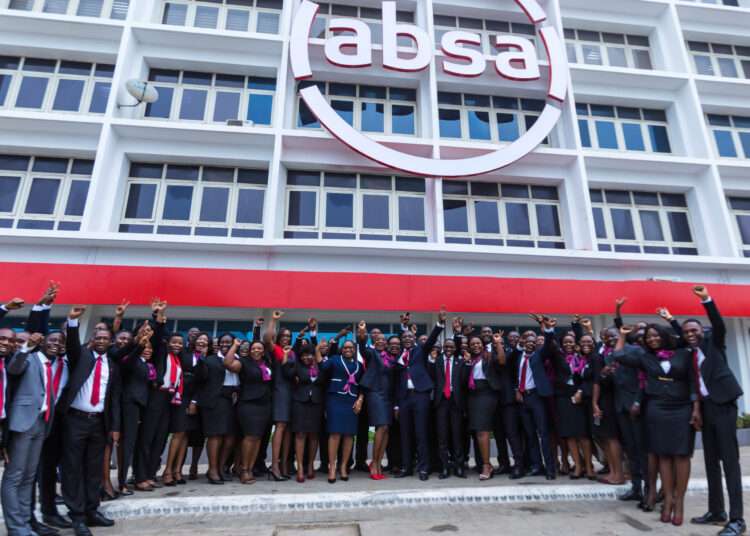
Absa Bank

Absa Group has unveiled a series of executive leadership changes designed to strengthen its position as a leading Pan-African financial services powerhouse.

The appointments, announced this week, mark a bold step toward driving growth, innovation, and customer-centricity across the Group’s diverse markets.

The sweeping leadership changes underscore Absa’s commitment to operational excellence and its ambition to scale impact across Africa’s fast-evolving financial landscape. With the new appointments, the Group seeks to deepen regional influence, build resilience, and maintain agility in meeting client needs.

One of the most notable appointments is that of Charles Russon, who will assume the role of Group Executive: Africa Regions, effective 1 September 2025, subject to regulatory approval. Until June 2025, Russon served as Interim Group Chief Executive, and prior to that, he was the Chief Executive of Corporate and Investment Banking.

ADVERTISEMENT

In his new capacity, Russon will be accountable for overseeing the Group’s operations across African regions, ensuring strategic alignment, financial discipline, and adherence to regulatory frameworks. His mandate also includes providing advisory support to business units while spearheading strategic planning and execution in support of the Group Chief Executive.

Absa commended Russon for his leadership during the transition to the new Group Chief Executive and praised his continued impact on the Group. He will remain a member of the Group Executive Committee and serve as a Prescribed Officer for both Absa Group Limited and Absa Bank Limited.

Zaid Moola Joins as New CIB Chief

Another strategic appointment is Zaid Moola, who will take up the role of Chief Executive: Corporate and Investment Banking (CIB). Subject to regulatory approval, Moola will officially join Absa on 1 December 2025 and assume full accountability as CIB Chief on 1 January 2026.

Moola brings a wealth of experience from Standard Bank, where he most recently served as Head of Global Markets. His prior roles included Deputy Head of Global Markets and Head of CIB South Africa. A Chartered Accountant (CA(SA)) and a graduate of the Advanced Management Programme from INSEAD, Moola is also a FAIS-certified Authorised Representative and Key Individual.

As CIB Chief, he will focus on strengthening Absa’s investment banking franchise, expanding global market reach, and driving competitive advantage in corporate banking across the continent. His appointment signals Absa’s intent to deepen its corporate and investment banking footprint in line with global best practices.

Musa Motloung Strengthens Risk Oversight

In addition, Musa Motloung has been named Group Strategic Risk Officer, reporting to the Group Chief Risk Officer, Rajal Vaidya. His appointment is also subject to regulatory approval.

Motloung joins Absa from Standard Bank, where he served as Chief Risk Officer for the Corporate and Investment Bank. With an extensive background spanning finance, investment banking, and corporate strategy at major institutions including Barclays Africa, BHP Billiton, and Anglo American, he brings both depth and diversity of expertise to his new role.

A Chartered Accountant (CA(SA)) with advanced qualifications, including an MPhil in Corporate Strategy and a PhD, Motloung will be a critical voice on the Group Executive Committee. His focus will be on embedding robust risk management frameworks that safeguard long-term value creation and ensure sustainable growth.

Commenting on the appointments, Kenny Fihla, Absa Group Chief Executive Officer, expressed confidence in the fresh leadership lineup.

ADVERTISEMENT

“Our ability to design and deliver as a client-centric Pan-African organisation—enabled by top talent—is critical to our success, and I’m excited to work with these colleagues moving forward.”

Kenny Fihla

Fihla emphasized that the changes reinforce Absa’s long-term strategy of building resilience, enhancing client experience, and positioning the Group as a leader in Africa’s financial services industry.

These executive changes arrive at a pivotal time for Absa, as the Group navigates intensifying competition, shifting customer demands, and a dynamic regulatory landscape. By consolidating leadership expertise, Absa aims to sharpen its competitive edge, accelerate digital innovation, and deliver inclusive financial solutions across its markets.

READ ALSO: Government and Media Forge Alliance Against Attacks on Journalists

Sign Up to Our Newsletter

Fresh updates, Straight to your inbox

Tags: Absa Africa RegionsAbsa Corporate and Investment BankingAbsa executive appointmentsAbsa GroupAbsa leadership changesAbsa risk managementCharles Russon AbsaMusa Motloung AbsaZaid Moola Absa
Share1Tweet1ShareSendSend
Please login to join discussion
Previous Post

Government and Media Forge Alliance Against Attacks on Journalists

Next Post

StarHealth Insurance Makes Grand Entry: Officially Launched After 3 Years of Quiet Growth in Ghana

Related Posts

Ecobank Ghana PLC Breaks Silence After Supreme Court Judgement
Banking

Ecobank Ghana PLC Breaks Silence After Supreme Court Judgement

May 17, 2026
Ghana Defies Odds With Record Financial Growth
Banking

Ghana Defies Odds With Record Financial Growth

May 16, 2026
Fidelity Demands Africa Own Its Digital Future At a time when Africa’s digital economy is accelerating at an unprecedented pace, Fidelity Bank Ghana has delivered one of the strongest messages yet on the continent’s technological future. The bank made a bold and urgent case for Africa to stop depending on foreign controlled digital systems and begin building its own infrastructure capable of retaining value, strengthening currencies, and driving long term economic sovereignty. As one of the key sponsors of the 3i Africa summit, Fidelity Bank did not just show up to participate. It arrived with a message that resonated deeply across conference halls and policy discussions. Fidelity Bank emerged as one of the loudest voices championing a future where African nations control the very digital rails that power their economies. Digital Infrastructure Is The New Economic Power One of the defining moments of the summit came during a high level panel discussion on digital public infrastructure, where Adeline Aryee delivered a statement that immediately captured the attention of participants. She declared that if Africa builds its own digital rails, it naturally retains the value created by those systems. Her message was clear and uncompromising. In previous decades, national infrastructure was measured by roads, bridges, ports, and airports. Today, the true engines of economic power are payment platforms, identity systems, financial technology ecosystems, and digital marketplaces. According to Aryee, digital public infrastructure is no longer a luxury. It is now a strategic national asset. Her remarks struck at the heart of one of Africa’s most pressing economic concerns. Despite growing digital adoption, many transactions across the continent still pass through foreign payment systems, resulting in value leakage and continued pressure on local currencies. Ghana’s Success Story Becomes A Continental Blueprint Aryee highlighted Ghana’s progress in financial inclusion, mobile payments, and digital banking, describing the country as an emerging model for other African economies. Over the years, Ghana has invested heavily in domestic payment systems such as GhIPSS and its flagship platform, Gh-link. These systems have significantly expanded access to financial services while promoting digital transactions across urban and rural communities. Yet Aryee argued that inclusion alone is no longer enough. The next chapter for Africa, she insisted, must focus on ownership. She questioned why local transactions continue to depend on foreign rails when domestic infrastructure already exists. According to her, such dependence creates unnecessary external exposure and limits the continent’s ability to fully capture the economic benefits of its growing digital market. Her comments triggered intense debate among summit participants, many of whom acknowledged the urgent need for policy reforms and infrastructure investments. Market Driven Innovation Takes Center Stage Beyond infrastructure, Fidelity Bank also made a strong case for innovation that begins with real market needs. During the Ecosystem Roundtable on platforms, talent, and digital markets, Prince Osei Hyeaman-Addai shared insights from the bank’s years of digital financial innovation. He stressed that successful digital products are not built in boardrooms or based on assumptions. Instead, they are created by listening carefully to the market and understanding customer pain points. According to him, the market itself reveals the problems that need solving, the type of platform required, and the path toward scalable growth. His comments reflected a growing shift in African fintech circles, where customer centered design is becoming essential for product adoption and long term relevance. Trust And Credibility Remain The Real Currency Prince also emphasized that technology alone does not guarantee success. In his view, trust, credibility, and strong operational structures remain the real foundations of successful innovation. He noted that while investor interest in African fintech continues to rise, startups must prove they can deliver sustainable solutions, maintain transparency, and build products that respond to local realities. This perspective reflects Fidelity Bank’s own journey in digital transformation. Over the years, the bank has built strategic collaborations with leading fintech players, including IT Consortium, helping pioneer wallet to bank integrations and mobile financial solutions in Ghana. These partnerships have helped position Fidelity as one of Ghana’s most innovation driven financial institutions. A Defining Moment For Africa’s Digital Future Fidelity Bank’s participation at the 3i Africa Summit 2026 was more than a corporate appearance. It was a strategic declaration. At a time when Africa is racing to build competitive digital economies, the bank’s message was impossible to ignore. Africa cannot simply consume technology created elsewhere. It must own the infrastructure, shape the platforms, and capture the value generated by its digital future. As conversations from the summit continue to ripple across financial and policy circles, one thing is becoming increasingly clear. Africa’s next economic revolution may not be built on oil, gold, or minerals. It may be built on digital rails designed, owned, and powered by Africans. READ ALSO: IMF Ghana Review Ends in Dramatic Cliffhanger Fidelity Demands Africa Own Its Digital Future At a time when Africa’s digital economy is accelerating at an unprecedented pace, Fidelity Bank Ghana has delivered one of the strongest messages yet on the continent’s technological future. The bank made a bold and urgent case for Africa to stop depending on foreign controlled digital systems and begin building its own infrastructure capable of retaining value, strengthening currencies, and driving long term economic sovereignty. As one of the key sponsors of the 3i Africa summit, Fidelity Bank did not just show up to participate. It arrived with a message that resonated deeply across conference halls and policy discussions. Fidelity Bank emerged as one of the loudest voices championing a future where African nations control the very digital rails that power their economies. Digital Infrastructure Is The New Economic Power One of the defining moments of the summit came during a high level panel discussion on digital public infrastructure, where Adeline Aryee delivered a statement that immediately captured the attention of participants. She declared that if Africa builds its own digital rails, it naturally retains the value created by those systems. Her message was clear and uncompromising. In previous decades, national infrastructure was measured by roads, bridges, ports, and airports. Today, the true engines of economic power are payment platforms, identity systems, financial technology ecosystems, and digital marketplaces. According to Aryee, digital public infrastructure is no longer a luxury. It is now a strategic national asset. Her remarks struck at the heart of one of Africa’s most pressing economic concerns. Despite growing digital adoption, many transactions across the continent still pass through foreign payment systems, resulting in value leakage and continued pressure on local currencies. Ghana’s Success Story Becomes A Continental Blueprint Aryee highlighted Ghana’s progress in financial inclusion, mobile payments, and digital banking, describing the country as an emerging model for other African economies. Over the years, Ghana has invested heavily in domestic payment systems such as GhIPSS and its flagship platform, Gh-link. These systems have significantly expanded access to financial services while promoting digital transactions across urban and rural communities. Yet Aryee argued that inclusion alone is no longer enough. The next chapter for Africa, she insisted, must focus on ownership. She questioned why local transactions continue to depend on foreign rails when domestic infrastructure already exists. According to her, such dependence creates unnecessary external exposure and limits the continent’s ability to fully capture the economic benefits of its growing digital market. Her comments triggered intense debate among summit participants, many of whom acknowledged the urgent need for policy reforms and infrastructure investments. Market Driven Innovation Takes Center Stage Beyond infrastructure, Fidelity Bank also made a strong case for innovation that begins with real market needs. During the Ecosystem Roundtable on platforms, talent, and digital markets, Prince Osei Hyeaman-Addai shared insights from the bank’s years of digital financial innovation. He stressed that successful digital products are not built in boardrooms or based on assumptions. Instead, they are created by listening carefully to the market and understanding customer pain points. According to him, the market itself reveals the problems that need solving, the type of platform required, and the path toward scalable growth. His comments reflected a growing shift in African fintech circles, where customer centered design is becoming essential for product adoption and long term relevance. Trust And Credibility Remain The Real Currency Prince also emphasized that technology alone does not guarantee success. In his view, trust, credibility, and strong operational structures remain the real foundations of successful innovation. He noted that while investor interest in African fintech continues to rise, startups must prove they can deliver sustainable solutions, maintain transparency, and build products that respond to local realities. This perspective reflects Fidelity Bank’s own journey in digital transformation. Over the years, the bank has built strategic collaborations with leading fintech players, including IT Consortium, helping pioneer wallet to bank integrations and mobile financial solutions in Ghana. These partnerships have helped position Fidelity as one of Ghana’s most innovation driven financial institutions. A Defining Moment For Africa’s Digital Future Fidelity Bank’s participation at the 3i Africa Summit 2026 was more than a corporate appearance. It was a strategic declaration. At a time when Africa is racing to build competitive digital economies, the bank’s message was impossible to ignore. Africa cannot simply consume technology created elsewhere. It must own the infrastructure, shape the platforms, and capture the value generated by its digital future. As conversations from the summit continue to ripple across financial and policy circles, one thing is becoming increasingly clear. Africa’s next economic revolution may not be built on oil, gold, or minerals. It may be built on digital rails designed, owned, and powered by Africans. READ ALSO: IMF Ghana Review Ends in Dramatic Cliffhanger Fidelity Demands Africa Own Its Digital Future
Banking

Fidelity Demands Africa Own Its Digital Future

May 15, 2026
Absa Bank Ghana Empowers Academic City University College With Money Skills
Banking

Absa Bank Ghana Empowers Academic City University With Money Skills

May 14, 2026

Sign Up to Our Newsletter

Fresh updates, Straight to your inbox

Recent News

Davies Narh Korboe, President of the FAGE

Horticulture Expo 2026 Targets Non-Traditional Export Growth

May 17, 2026
Ecobank Ghana PLC Breaks Silence After Supreme Court Judgement

Ecobank Ghana PLC Breaks Silence After Supreme Court Judgement

May 17, 2026
download 53

Drone Strike Targets UAE’s Sole Nuclear Power Plant

May 17, 2026
Hanan Abdul and wife

AG Recharges Former Buffer Stock CEO as Fake Rent Documents Revive GHS70m Case

May 17, 2026
NPP's Ashanti Regional Chairman, Bernard Antwi Bosiako

AG Slaps Wontumi With Fresh GHS30m EximBank Fraud Charges

May 17, 2026
Next Post
StarHealth Insurance Makes Grand Entry: Officially Launched After 3 Years of Quiet Growth in Ghana

StarHealth Insurance Makes Grand Entry: Officially Launched After 3 Years of Quiet Growth in Ghana

The Vaultz News

Copyright © 2025 The Vaultz News. All rights reserved.

Navigate Site

  • About
  • Advertise
  • Privacy Policy
  • Contact

Follow Us

Welcome Back!

Login to your account below

Forgotten Password?

Retrieve your password

Please enter your username or email address to reset your password.

Log In
No Result
View All Result
  • Top Stories
  • News
    • General News
    • Education
    • Health
    • Opinions
  • Economics
    • Economy
    • Finance
      • Banking
      • Insurance
      • Pension
    • Securities/Markets
  • Business
    • Agribusiness
    • Vaultz Business
    • Extractives/Energy
    • Real Estate
  • World
    • Africa
    • America
    • Europe
    • UK
    • USA
    • Asia
    • Around the Globe
  • Innovation
    • Technology
    • Wheels
  • Entertainment
  • 20MOBPL2D
  • Jobs & Scholarships
    • Job Vacancies
    • Scholarships

Copyright © 2025 The Vaultz News. All rights reserved.

This website uses cookies. By continuing to use this website you are giving consent to cookies being used. Visit our Privacy and Cookie Policy.

Discover the Details behind the story

Get an in-depth analysis of the news from our top editors

Enter your email address