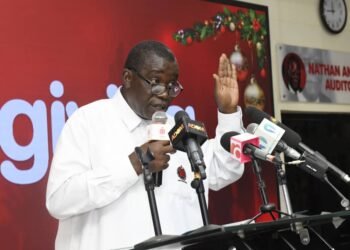
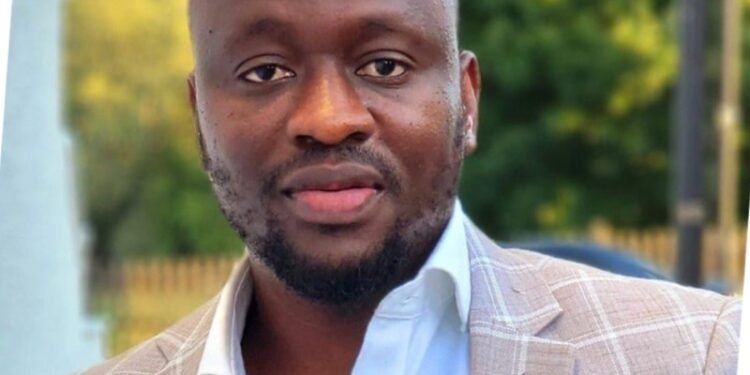
The proposed tariff hikes of 280% for water and 225% for electricity have triggered widespread public debate, with IMANI Africa’s Vice President, Selorm Branttie, describing the situation as both complex and alarming.
According to Branttie, while there may be valid points for justifying the proposed hikes—particularly for water—the real issue lies in Ghana’s failure to protect its water sources and adopt sustainable environmental practices.
Branttie emphasized that the destructive activities of illegal mining, commonly known as galamsey, are rapidly depleting and polluting the nation’s rivers, making water treatment increasingly expensive.
The Ghana Water Company Limited (GWCL) has already indicated that the deteriorating state of water bodies has raised purification costs, a key factor behind the request for higher tariffs.
“This, for me, should be a matter of paramount national security. If we really are going to have clean water sources over the next five years or so, then we have to decide whether we would want to begin to import water or we would want to put a hold on the national greed towards galamsey.”
Selorm Branttie
He warned that the country risks severe water shortages within a few years if authorities continue to take what he described as a top-down approach to tackling environmental degradation rather than enforcing effective on-the-ground measures.
Branttie emphasized that Ghana, with its many rivers and water bodies, should naturally have a plentiful water supply. However, he observed that illegal mining activities, particularly galamsey, have severely polluted these sources, leading to higher turbidity levels.


This pollution has not only reduced the availability of clean water but has also caused a sharp rise in treatment costs for safe consumption.
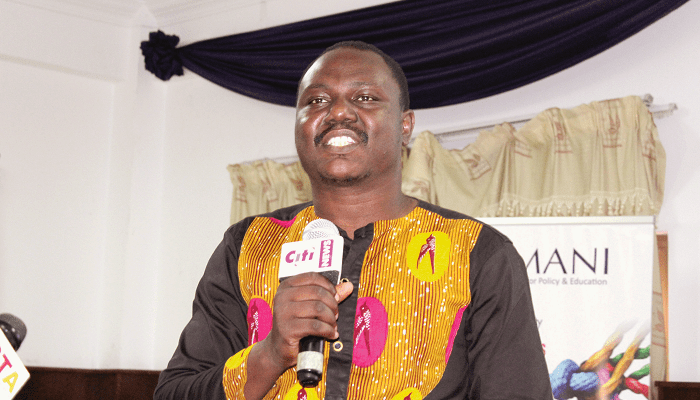
He stressed that the current situation is a direct result of widespread environmental destruction, which has turned what should be an abundant resource into a growing national crisis.
He shared personal observations from traveling across the country, highlighting how smaller rivers are drying up at alarming rates. Conservation efforts such as tree planting along riverbanks, he said, are either neglected or poorly implemented.
“We are going to have situations where water will be a problem within the next five years if we keep the same trend that we are going, especially in areas in the western region, the central region, for instance.”
Selorm Branttie
Electricity Tariffs Raise More Questions
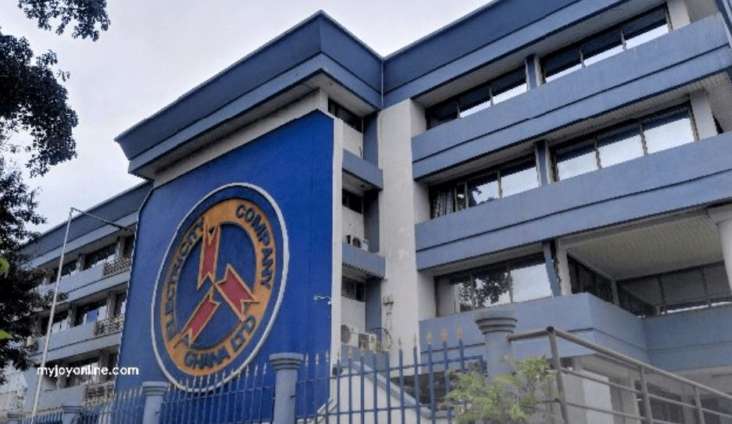
Turning to electricity, Branttie criticized what he described as weak management practices and the absence of a cohesive energy policy, both of which have left consumers paying the price for inefficiencies in the sector.
“I still believe that there are quite a lot of leakages, and the easiest approach is to ask for a hike in tariffs,” he stated, adding that tariff increases should not be the default solution for systemic failures at the Electricity Company of Ghana (ECG).
Branttie compared Ghana’s electricity costs with those of neighboring countries, observing that Ghanaian consumers already pay slightly more than the Ivory Coast but less than Togo and Burkina Faso.
“So what is it that should make it justified that we should multiply it by almost a factor of three, just so that we can be in the green? I believe that would not even be fair to consumers.”
Selorm Branttie
Branttie insisted on a long-term energy policy to address rising debts in the sector while ensuring affordability for consumers.
He argued that unless structural issues in energy generation and distribution are fixed, increasing tariffs will only worsen the financial burden on households and businesses without solving the underlying problems.

He cautioned that Ghana could soon face a situation where its citizens pay three times more for electricity compared to neighboring countries, a development he described as unacceptable given the country’s current economic struggles.
For Branttie, both the water and electricity crises reflect broader governance failures requiring immediate attention, sustainable environmental practices, and a more coherent national energy policy.
READ ALSO: NewGold ETF Plunges 3.7% as GSE Sees Sharp Drop in Trading Volume