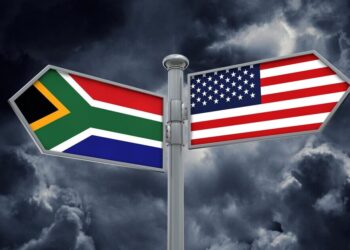
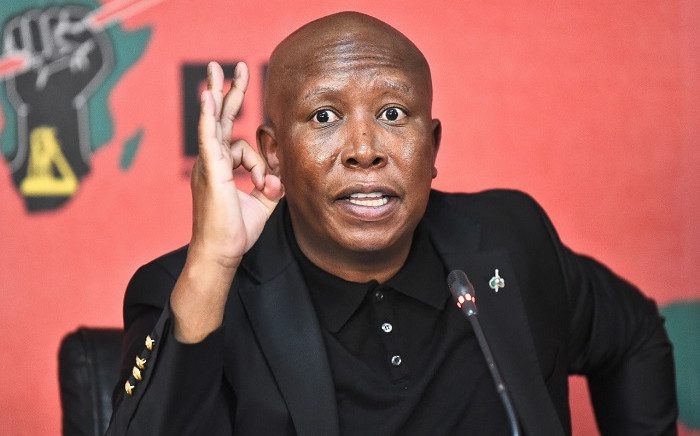
South African President Cyril Ramaphosa has dismissed accusations from Economic Freedom Fighters (EFF) leader Julius Malema that his government is “grovelling” in efforts to ease the 30% tariffs imposed by US President Donald Trump.
Addressing lawmakers during a parliamentary question-and-answer session, Ramaphosa stressed that his administration was pursuing a path of engagement with Washington, not submission.
“Without being supplicant, without going on bended knee, which we have never done, and which we will never do, we will stand as a sovereign country and get the best deal for South Africa.”
President Cyril Ramaphosa
Malema, however, lashed out at government policy, describing the tariffs as “senseless” and demanding a firmer response. He accused officials of begging instead of defending national interests. Ramaphosa countered that such rhetoric could prove counterproductive.“If one wants to play to the gallery, one could embark on the type of option that honourable Malema is talking about without knowing what outcome that option will have,” he remarked, warning against actions that could damage long-term economic relations.
According to the president, cabinet ministers are “feverishly working the ground” in the United States ahead of the next round of negotiations while simultaneously expanding South Africa’s trading partnerships in Asia, Latin America, and the Middle East.“We will stand as a sovereign country,” Ramaphosa repeated, underscoring that South Africa was committed to securing favourable trade deals without compromising dignity or sovereignty.
Tariff Dispute Sparks Heated Political Debate
The tariff issue comes as South Africa prepares to host the G20 heads of state summit in November, a platform expected to spotlight international trade. However, President Trump has already confirmed he will not attend, delegating his deputy, JD Vance, to represent the US.
In parliament, Ramaphosa also addressed questions regarding a controversial visit by the South African National Defence Force (SANDF) chief, General Rudzani Maphwanya, to Iran in August. Build One South Africa leader Mmusi Maimane pressed him on whether the trip signaled military cooperation with Tehran.
“We do not have any military operations with Iran,” Ramaphosa clarified. He explained that the visit had been planned nearly two years ago, though he conceded the timing was regrettable given current geopolitical sensitivities.
“I had a long discussion with him, and we both agreed that the timing could have been managed differently. In dealing with Iran, we engage with them as a sovereign nation, just as we expect others to respect our sovereignty.”
President Cyril Ramaphosa
Domestically, the president fielded questions on the troubled Postbank and its anticipated transition into a state bank. He acknowledged that the institution remained unfit for licensing.
“Now, according to the minister, the Postbank has not yet fully met the conditions for a banking licence, particularly around its card and key management processes and the compliance with prudential standards that are required.”
President Cyril Ramaphosa
He added that stabilising Postbank’s finances and strengthening its governance were immediate priorities before any license could be considered.
The president also reflected on last month’s national convention, billed as a precursor to a national dialogue addressing South Africa’s socio-economic challenges. Despite several foundations withdrawing from the process and concerns over its R740 million cost, Ramaphosa praised the event as a “great success.”
“This is not the president’s dialogue. The people of South Africa called for the dialogue,” he said, stressing that the initiative must be citizen-led.
According to him, the government would only provide financial support while civil society steered the process. “Moving forward, the steering committee would take its lead from civil society, and the government’s only involvement would be to provide the money,” Ramaphosa affirmed.
He defended the decision not to halt the convention, arguing that planning had been too advanced and that continuing was a collective decision.“Those that innovate, that reform, that collaborate, will thrive. This is the path that South Africa is firmly committed to,” the president said in closing.
The parliamentary session offered a glimpse into the competing visions for South Africa’s future, with Ramaphosa emphasizing diplomacy and reform while opposition voices pressed for more aggressive action both at home and abroad.
READ ALSO: GoldBod Marks Milestone in Boosting Reserves and Forex Stability