
The Ministry of Fisheries and Aquaculture Development (MoFAD) continues to intensify its focus on human capital development within the maritime sector, signaling a strong and strategic commitment to structural gender mainstreaming.
In a move to address the long-standing gender imbalance across Ghana’s oceanic and maritime professions, the sector Minister, Hon. Emelia Arthur, convened a briefing with a leadership delegation from the Sea Women’s Hub Initiative to build formal pathways for young women to enter, progress, and lead within the nation’s expanding blue economy.
“The Sea Women’s Hub Initiative is dedicated to empowering young women, particularly Senior High School girls, to explore, access, and excel in careers within the maritime and blue economy industries.
“It seeks to address gender imbalances in maritime professions, strengthen Ghana’s blue economy, and promote inclusive growth through mentorship, advocacy, capacity building, and career guidance”
Ministry of Fisheries and Aquaculture Development
The delegation pushed for a more diversified and highly skilled technical workforce, noting that Ghana’s upstream maritime sector – encompassing commercial shipping, marine engineering, naval architecture, and deep-sea fisheries governance – has been heavily male-dominated.
The Sea Women’s Hub Initiative aims to disrupt this pattern by introducing targeted interventions early in the educational pipeline, with the focus on Senior High School (SHS) girls, geared towards engaging young women before they make critical tertiary and career choices.

This early intervention strategy combines rigorous career guidance with specialized capacity-building modules to build a sustainable talent pipeline for the industry. The goal is to demystify complex maritime fields such as logistics, marine biotechnology, and maritime law, to academically and mentally prepare young women to pursue these high-value professions.
During the consultation, the Sea Women’s Hub leadership team outlined a multi-layered operational framework to scale their impact across coastal and inland regions to build a sustainable talent pipeline for the industry.
Central to their blueprint is the creation of a formalized network of female maritime professionals who can serve as visible role models and mentors. This mentorship structure will guide young women through the complex regulatory, technical, and cultural challenges that often characterize maritime working environments.
MoFAD noted that its aim of bridging the gender representation gap and turning gender inclusion into a core pillar of national maritime policy aligns with civil society organizations like the Sea Women’s Hub.
Hon. Arthur added that Ghana’s blue economy holds immense potential for driving national GDP growth, creating jobs, and fostering regional logistics integration. However, the unequal distribution of technical skills and professional opportunities has limited women’s participation, often confining them to post-harvest processing and informal shoreline trade.
Mentorship, Skills, and Public-Private Alliances
Beyond basic career advocacy, the Hub’s presentation emphasized the importance of technical skills acquisition to ensure local workers remain competitive as international maritime standards evolve. To transition this vision into a nationwide program, the delegation presented a series of specific administrative requests to MoFAD.
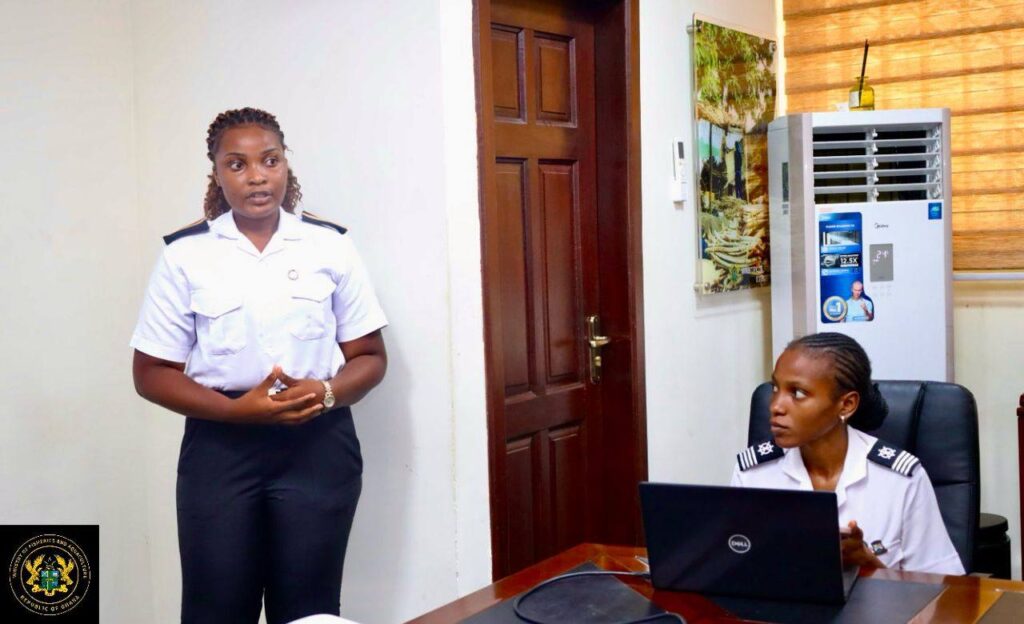
“The Sea Women’s Hub also appealed to the Ministry for endorsement and nationwide visibility to help raise the profile of the initiative. Additionally, the team requested support in accessing relevant government agencies for collaboration, policy support, incentives, and partnership opportunities with both local and international stakeholders”
Ministry of Fisheries and Aquaculture Development
Hon. Emelia Arthur strongly commended the delegation for their proactive focus on institutionalizing gender equity within the maritime sector, reiterating that empowering women within the blue economy aligns closely with MoFAD’s broader mandate to build a modern, resilient, and inclusive fisheries and maritime framework.
She emphasized that the ministry is fully prepared to use its administrative influence to help the Hub establish connections with both local public bodies and international development partners.
This administrative commitment is expected to open up new opportunities for the Hub, particularly in securing technical training slots, academic scholarships, and international exchange programs with global maritime universities.
Through linking grassroots advocacy with state-backed diplomacy, the partnership aims to create a highly certified cohort of female Ghanaian seafarers, port administrators, and marine scientists capable of competing on the global stage.
As MoFAD and the Sea Women’s Hub Initiative move from initial dialogue to operational planning, the immediate focus turns to integrating these career guidance frameworks into coastal Senior High Schools, and combining state support with civil society agility to establish a more equitable maritime workforce.

Over the long term, removing systemic barriers to female participation will ensure that Ghana’s blue economy benefits from the full potential of its human capital, driving sustainable economic growth and solidifying the nation’s position as a progressive maritime leader in West Africa.
READ ALSO: UK Moves to Shield Critical Undersea Infrastructure from Russian Threats