A Kenyan court has temporarily suspended plans for the United States to establish an Ebola quarantine facility in the country after a legal challenge argued that the project could threaten public health and violate constitutional protections.
The decision by the High Court came just hours before the 50-bed quarantine unit, located at a Kenyan air force base in central Kenya, was expected to begin operations.
The facility was intended to receive Americans exposed to the Ebola outbreak in eastern Democratic Republic of Congo and Uganda who were not yet showing symptoms of the disease.
In an order issued, High Court Judge Patricia Nyaundi barred the Kenyan government from admitting anyone exposed to or infected by Ebola under the proposed arrangement until the case filed by legal advocacy group Katiba Institute is fully heard and determined. The judge scheduled the next hearing for June 2.
The planned quarantine facility has sparked widespread concern and criticism in Kenya since reports of the arrangement surfaced earlier this week.
Moreover, Katiba Institute argued in court filings that the agreement “raises grave constitutional concerns regarding the rights to life, health, fair administrative action, public participation, and parliamentary oversight.”
The legal challenge has added to mounting opposition from civil society groups and health workers who say the Kenyan public was not adequately consulted before the arrangement was approved.
Kenya’s main medical union also threatened industrial action unless the government released the full terms of the agreement with Washington within 48 hours.
Senior US officials had noted earlier that, the quarantine centre would be staffed by members of the US Public Health Service, a uniformed branch under the Department of Health and Human Services.
According to US officials, individuals housed at the facility would only be those exposed to Ebola but not yet displaying symptoms. Any patient who later developed signs of infection would be transferred to medical facilities in countries outside the United States for treatment.
The Trump administration defended the plan, insisting it was necessary to prevent Ebola cases from entering the United States while ensuring exposed Americans receive faster access to medical support.
The Trump administration stated it “cannot and will not allow” Ebola cases onto US soil, marking a significant departure from the approach taken during the 2014–2016 West African Ebola outbreak, when infected American nationals were treated in the United States.
Washington has also pledged financial support for Kenya’s Ebola preparedness efforts. The US State Department announced that it would provide $13.5 million to support Kenya’s response capacity and containment measures.
Kenya, meanwhile, reportedly sought to ensure that the facility would not exclusively serve US citizens and pushed for broader international access. However, it remains unclear whether the United States intended to expand the programme beyond Americans exposed during humanitarian or medical operations in the outbreak zone.
The controversy comes as health authorities continue battling a worsening Ebola outbreak in eastern Democratic Republic of Congo.
According to the World Health Organization, more than 1,000 suspected and confirmed cases have been recorded since the outbreak was officially declared in mid-May, including more than 200 deaths.
Deadly Ebola Outbreak in DR Congo Can Be Stopped- WHO Chief
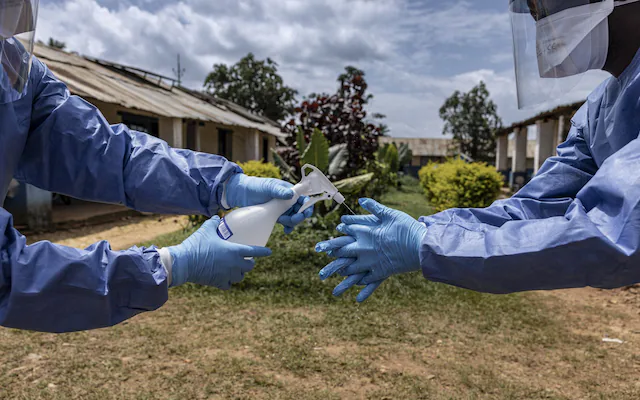
Meanwhile, World Health Organization Chief, Tedros Adhanom Ghebreyesus, has stated that the Ebola outbreak in the Democratic Republic of Congo, which has killed more than 200 people, can still be contained despite conflict in the country’s east.
Tedros Adhanom Ghebreyesus also urged armed groups in eastern Democratic Republic of Congo to declare an immediate ceasefire, warning that ongoing violence is complicating efforts to contain a worsening Ebola outbreak.
He also dismissed suggestions for international travel restrictions, saying such measures were largely ineffective in containing the outbreak. He also expressed confidence that the crisis could be overcome, promising to use every available resource and effort to support the response
The current outbreak involves the rare Bundibugyo strain of Ebola, for which no approved vaccine or treatment currently exists.
Efforts to control the disease have been severely complicated by insecurity in eastern Congo, where armed groups have fought over territory and mineral resources for decades.
The violence has intensified in recent years following renewed offensives by the Rwanda-backed M23 rebel movement, which has seized large areas of territory since 2021.
“Conflict and displacement make everything harder. I am making a direct appeal to all warring parties in this region: please, declare a ceasefire. No cause, no conflict, no grievance is worth condemning innocent people to death from a preventable disease.”
Tedros Adhanom Ghebreyesus
Despite the challenges, aid agencies have continued scaling up emergency support. WHO announced it delivered 4.6 tonnes of medical and humanitarian supplies to Bunia airport in Ituri province, while UNICEF announced it was sending 100 tonnes of assistance into the country.
READ ALSO: Ghana’s Oil Revenue Must Fund Infrastructure, Not Air Tickets – Ato Forson