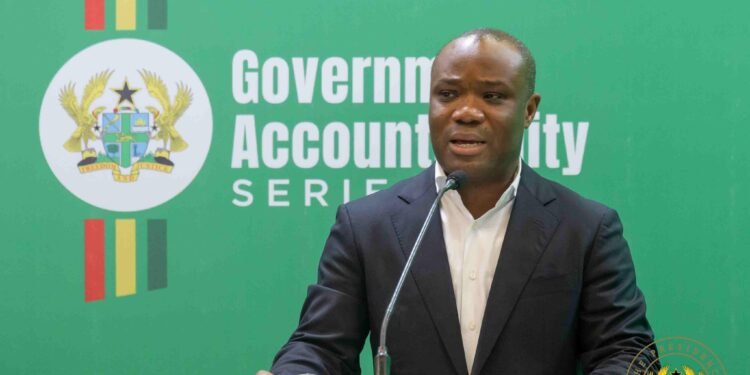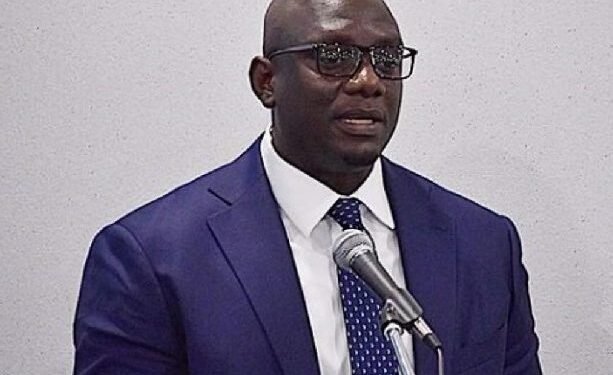

Security Consultant Richard Kumadoe has suggested that the government could effectively curb the menace of illegal mining, popularly known as galamsey, by invoking a presidential-backed restrictive measure under a certificate of urgency.
He explained that such a localized measure, backed by statutory approval laws, could be strictly enforced by law enforcement agencies to prevent further environmental devastation.
In a detailed commentary, Mr. Kumadoe emphasized the flexibility of Ghana’s legal framework in responding to crises of national proportion.
“To curtail or prevent the spread of a national disaster: A local authority backed by statutory approval laws or the national president can issue a restrictive measure under a certificate of urgency, or come under a certificate of emergency to be strictly enforced by law enforcement agencies and teams”.
Security Consultant Richard Kumadoe
For him, the use of these measures—while often misunderstood—could create the kind of controlled environment needed to contain destructive practices such as galamsey.
He explained that while both certificates of urgency and emergency may appear similar on the surface, they differ in enforcement procedures and in the kinds of restrictive environments they establish.

“From law enforcement perspectives, especially in enforcing both certificates, it is important to note, more so, for the purposes of public education, that the standard protocols and procedures, and enforcement practices may be different in nature, and the restrictive controlled environment settings may also be different, even though some low-level aspects and accessibilities may look similar”.
Security Consultant Richard Kumadoe
Growing Demands
His intervention comes at a time when calls are mounting from civil society, religious bodies, and advocacy groups for the government to declare a state of emergency in galamsey-prone areas.


These groups argue that the scale of devastation—ranging from the destruction of arable lands and forests to the pollution of major rivers—has reached a tipping point where only extraordinary measures can save Ghana’s environment from irreparable harm.
The Ghana Catholic Bishops Conference has been particularly vocal on the issue. The Conference, which, under the previous NPP administration, organized a public march to demand stronger action against illegal mining, has repeated its call under the current government.
The bishops argue that continued inaction would be tantamount to betrayal, not only of affected communities but of the future of the country itself.
Similarly, the Coalition Against Illegal Mining has pointed to trouble signs across the country, urging President John Dramani Mahama to act decisively by declaring a state of emergency.
The coalition insists that such a declaration is necessary to empower state agencies with extraordinary authority to coordinate interventions, shut down illegal operations, and enforce reclamation measures without bureaucratic delays.
President Mahama, in a recent media encounter, acknowledged the severity of the galamsey crisis but cautioned that a declaration of a state of emergency should only come as a last resort.
The President argued that while he has not ruled out the measure entirely, his administration is pursuing a multi-pronged approach that includes tightening law enforcement, expanding alternative livelihoods, and working closely with communities to achieve sustainable solutions.
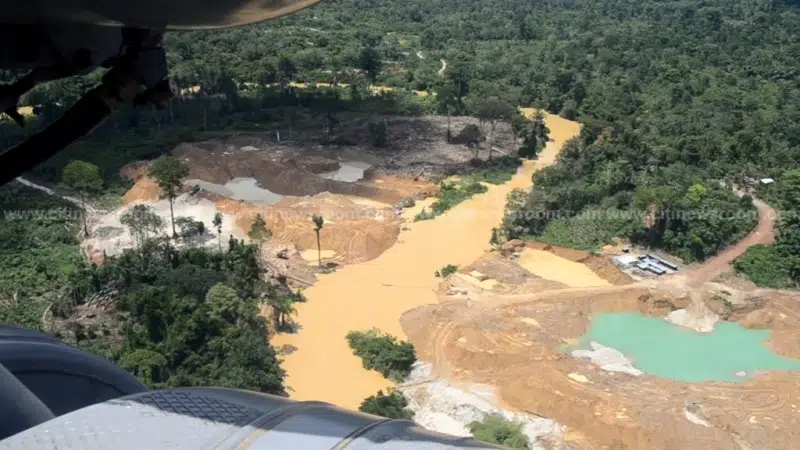
His position, however, has not silenced calls from advocacy groups who fear that delays in decisive action could worsen the crisis. With rivers like the Pra, Offin, and Ankobra heavily polluted, and cocoa farms in several regions under threat, many observers insist that Ghana is already in an emergency situation that requires urgent executive intervention.
Galamsey can be Curbed
Mr. Kumadoe stressed that the country should not treat galamsey as an intractable problem. Rather, he argued, it is a national ill that can be addressed with the right mix of political will, legal tools, and enforcement strategies.
“Galamsey can be cured; let us work at it,” he wrote, underscoring his belief that with determined action, the menace can be brought under control. Mr. Kumadoe’s proposal of a presidential-backed certificate of urgency adds nuance to the debate.
Unlike a blanket state of emergency, such a measure could be localized, targeted, and time-bound, offering authorities the flexibility to respond to specific hotspots without creating nationwide disruption.
It would also allow law enforcement agencies to apply tailored enforcement practices under clear legal authority. What remains clear is that galamsey has become one of Ghana’s most pressing national challenges, threatening food security, public health, and economic sustainability.

The choice before the government is whether to escalate its response through extraordinary legal tools or continue with existing strategies that many critics argue have yielded limited results.
As Mr. Kumadoe reminded, the question is not whether galamsey can be stopped, but whether Ghana is prepared to summon the political will and apply the right instruments to cure it.
With civil society’s impatience growing and the environment deteriorating, the debate over certificates of urgency or emergency may soon move from theory to necessity.
READ ALSO: Eni, and Partners Seal Energy Pact with Ghana to Boost Sustainable Production