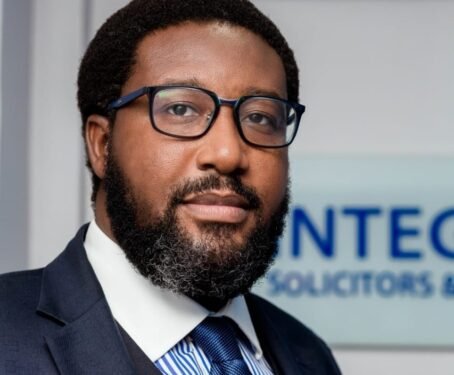
South Dayi Member of Parliament (MP) Hon. Rockson-Nelson Dafeamekpor has waded into the controversy surrounding the removal of former Chief Justice Gertrude Araba Esaaba Sackey Torkornoo, insisting that dismissal from the role of Chief Justice inevitably means removal as a Justice of the Superior Court.
He argued that under Ghana’s constitutional framework, the two roles cannot be separated because the Chief Justice is by definition both the administrative head of the judiciary and a sitting Justice of the Superior Court.
According to Hon. Dafeamekpor, the Chief Justice is not merely an administrative officer but also a juristic officer of the Superior Courts as mandated by Article 128(1) of the 1992 Constitution. He maintained that anyone elevated to the role assumes a position that binds the two functions together.
“By our Constitutional architecture, the Chief Justice of the Republic of Ghana sits in a composite capacity as both a justice of the Superior Court as well as the administrative arrowhead of the Judiciary.
“In other words, you cannot become a Chief Justice without first being a Justice of the Superior Courts. The office name speaks for itself: Chief Justice (Chief of all the justices)”
Hon. Rockson-Nelson Dafeamekpor MP for South Dayi
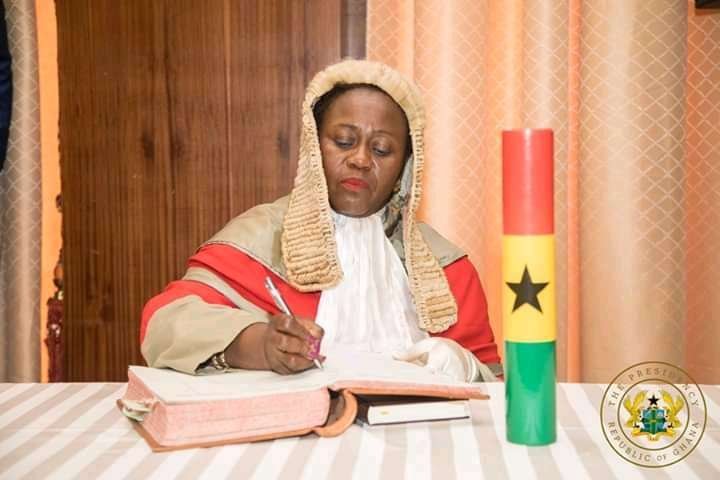
“Such an exercise therefore, is not one in demotion but excision,” he explained, stressing that proven grounds for dismissal such as misbehaviour, incompetence, or infirmity of mind render the officeholder unfit to continue serving either as Chief Justice or as a Justice of the Superior Court.
The legislator cited the Code of Conduct for Judges and Magistrates, which he described as the “judicial bible” containing all the standards and prohibitions binding on the judiciary. A breach, he said, brings a judge’s career to an end.
Hon. Dafeamekpor further recalled that nearly three decades ago, the Ghana Bar Association pursued a similar cause, seeking the removal of a sitting Chief Justice through the courts.


In the landmark case of Ghana Bar Association v. Attorney-General [1995–1996] GLR, the Supreme Court clarified that removal of a Chief Justice also results in removal as a Justice of the Supreme Court, since the qualifications and integrity requirements are inseparable.
In that ruling, Justice F.Y. Kpegah underscored that a Chief Justice found unfit to hold the highest judicial office could not continue to sit as a judge of the Supreme Court. To Hon. Dafeamekpor, that interpretation remains the guiding principle.

Torkornoo’s Legal Challenge
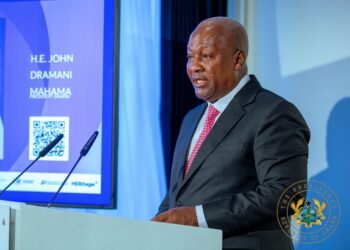
Justice Gertrude Torkornoo, however, is challenging the application of that principle in her own case. Following her removal on September 1, 2025, by President John Dramani Mahama, she filed a judicial review application at the High Court.
Through her counsel, she contends that the President acted outside his powers under the 1992 Constitution by issuing a removal warrant without recourse to the procedure outlined in Article 146.
Her motion, titled The Republic v. Attorney-General, Ex Parte Justice Gertrude Araba Esaaba Torkornoo, seeks declarations that the President’s action was unlawful and without effect. She argues that jurisdiction to hear petitions for the removal of Superior Court judges rests solely with a body established under Article 146(4), not the presidency.
The Ministry of Justice has maintained that the President acted in line with constitutional provisions, relying on the view that the Chief Justice’s position is inherently composite.
But Justice Torkornoo’s application challenges whether the constitutionally prescribed procedure was followed, bringing into sharp focus the question of executive adherence to due process.
Legal experts observe that the case carries significant implications for judicial independence and the separation of powers. While precedent suggests that removal as Chief Justice entails loss of judicial office, the High Court will be asked to determine whether the President respected the proper process.

The case has become a litmus test for Ghana’s democratic checks and balances. If the High Court rules in favour of Justice Torkornoo, it could limit presidential discretion in matters affecting the judiciary and reinforce the independence of Superior Court judges.
On the other hand, a ruling upholding the President’s decision may entrench the view that the Chief Justice’s dual role justifies removal from both offices without further inquiry.
As the matter progresses, it underscores the delicate balance between the executive’s authority and the judiciary’s independence.
For Hon. Dafeamekpor, the constitutional text and precedent already provide clarity, but Justice Torkornoo’s challenge could force the courts to revisit that understanding in the context of Ghana’s evolving constitutional order.
READ ALSO: Ghanaian Filmmakers Warned Against Obsession With Netflix