The International Monetary Fund (IMF) has begun its fifth review of Ghana’s $3 billion Extended Credit Facility (ECF) programme, a process that analysts describe as one of the most consequential moments in the country’s economic journey.
The outcome of this review could determine whether Ghana secures the next disbursement of $360 million in October 2025, while also shaping confidence about its ability to stay disciplined as the programme nears its end in 2026.
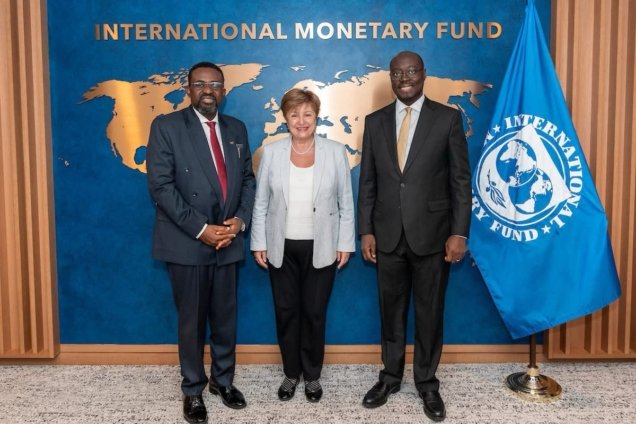
Led by Mission Chief Stéphane Roudet, the IMF delegation arrived in Accra over the weekend and will spend two weeks engaging with the Ministry of Finance, the Bank of Ghana (BoG), and other key stakeholders. The team is expected to meet the Governor of the Bank of Ghana, Dr Johnson Asiama, and the Minister of Finance, Dr Ato Forson, for high-level discussions.
This is the penultimate review before the final one scheduled for April 2026, ahead of the programme’s official conclusion in May 2026. Given its timing, the stakes are higher than ever, with markets, donor partners, and investors closely watching how Ghana navigates the IMF’s scrutiny.
What’s at Stake for Ghana
If Ghana passes this review, it will unlock another tranche of funding worth $360 million, bringing the total disbursement to around $2.66 billion since the programme began in May 2023. But the financial boost is only part of the story.
More importantly, this review will signal to markets whether Ghana has the discipline to stay on track with reforms, especially as concerns grow about the country’s ability to sustain fiscal prudence beyond the life of the programme. Some donor partners are reportedly pushing for “shock absorbers” to help Ghana maintain stability once IMF support phases out.
Sources indicate that the IMF’s focus will span several pressing areas of Ghana’s economy. A major concern is arrears clearance, as government has yet to finalise an audit on last year’s construction and project expenditures, leaving questions about how much was actually spent and whether fresh arrears are accumulating.
Inflation and monetary policy will also come under scrutiny, with the IMF expected to question whether the Bank of Ghana’s recent policy rate cuts are adequate or premature, especially in the context of reserve management. Closely tied to this is the issue of reserve build-up and dollar interventions, with the Fund set to examine whether Ghana’s foreign exchange reserves are being maintained on a sustainable path, given recent heavy interventions to stabilise the cedi.
The health of the banking sector is another area of concern, particularly weak private banks that may require recapitalisation and the fragile state of state-owned banks. In addition, the review will probe Ghana’s ability to mobilise revenue effectively, address arrears in statutory funds, and ensure that sufficient resources are directed toward protecting vulnerable groups through social spending.
Analysts Warn of Post-IMF Risks
While government officials insist that measures are in place to guarantee fiscal discipline beyond 2026, analysts are less convinced. Many warn that the real test of discipline will come after the programme ends, when the IMF’s close monitoring ceases.
Historically, Ghana has struggled to maintain fiscal prudence once donor or IMF programmes conclude, often reverting to election-year spending sprees and deficit build-ups. Analysts caution that without strong institutional reforms and credible domestic fiscal rules, the country could quickly unravel the gains made under the current programme.
Despite the concerns, the government maintains a confident stance. Finance Ministry officials argue that Ghana has already implemented structural reforms in tax, energy, and expenditure management that will outlive the IMF’s involvement.
According to the government, systems are in place to enforce disciplined spending, improve tax revenue, and strengthen social protection. Officials stress that Ghana’s return to stability is not just dependent on IMF oversight but is being built into the country’s long-term governance structures.
IMF Programme So Far
Since its approval in May 2023, Ghana’s IMF programme has disbursed about $2.3 billion and has been anchored on a set of ambitious goals. At its core, the programme seeks to restore fiscal sustainability by improving revenue mobilisation and ensuring more efficient public spending. It also prioritises protecting vulnerable groups through enhanced social interventions, while driving structural reforms across key sectors such as taxation, energy, and public financial management.
Another central objective is to preserve financial stability by providing support to struggling banks and strengthening the country’s reserves. Beyond these, the programme aims to curb inflation and rebuild both domestic and investor confidence under a flexible exchange rate regime, laying the groundwork for private investment, economic growth, and job creation.
While progress has been made, the IMF’s fifth review will judge whether the momentum is strong enough to secure lasting reforms.
The Road to 2026
The countdown to the final IMF review has officially begun. With only two reviews left, Ghana faces a make-or-break moment. Passing the current assessment will not only unlock much-needed funds but also reassure global markets of Ghana’s credibility.
However, the bigger challenge lies ahead: sustaining fiscal discipline, ensuring robust social protection, and maintaining financial stability without the IMF’s direct oversight. For Ghana, the next two weeks of IMF scrutiny will be decisive, but the years after 2026 may prove even more critical.
The IMF’s fifth review of Ghana’s programme is more than a routine check—it is a litmus test for the country’s economic resilience and reform commitment. As the mission unfolds, the question remains: will Ghana prove it has the discipline to stay the course, or will old habits return once the IMF exits?
The answer will shape not just the release of the next $360 million tranche but also the future of Ghana’s economic stability beyond 2026.
READ ALSO: GCB Bank Unveils Bold Sustainability Blueprint to Redefine Banking in Ghana