A senior energy and environmental policy advocate has outlined a mix of opportunities and serious risks as government considers acquiring Springfield Exploration and Production Limited’s stake in the West Cape Three Points Block 2.
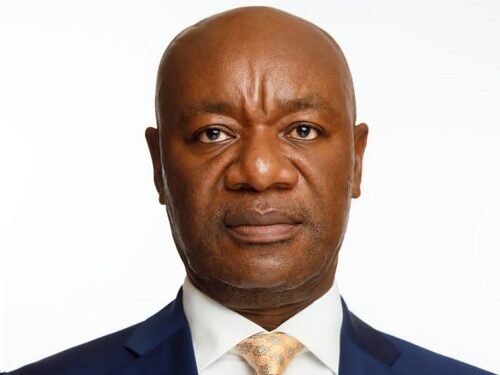
The Executive Director of the Center for Environmental Management and Sustainable Energy, Nsiah Benjamin, said the move could revive Ghana’s upstream sector if handled with discipline and backed by accurate technical assessments.
He explained that the upstream environment has suffered a sharp fall in production over recent years, and argued that renewed commitment to capital investment could help restore output.
“The first is an improvement in our declining upstream sector because some of these arrangements will ensure that the necessary commitment in terms of capital investments are done to increase production.”
Benjamin Nsiah, Executive Director of the Center for Environmental Management and Sustainable Energy
He emphasised that reversing the nearly 50% decline in production requires aggressive investment, something Springfield has been unable to deliver.

Mr Nsiah added that a government-supported intervention could also maintain employment across technical fields that depend on uninterrupted activity in offshore blocks.


He noted that a halt in operations has wider implications, saying that “if there’s a halt in any operations, it also affects employment” and that sustaining activity could help stabilise skills-driven jobs in the sector.
He pointed to the possibility of foreign direct investment being drawn into the field as government seeks private partnerships to keep operations active.
Beyond the national picture, he suggested that surrounding communities stand to gain from renewed field activity.
He said that local economies have suffered from inactivity on the block, and argued that “if the government begins to develop, it means that these local communities will be boosted” as local service providers return to work.
Operational Uncertainty Poses Serious Risks

Despite the potential benefits, Mr Nsiah warned that the government must confront a series of technical and operational gaps before making any final commitment.
“The industry doesn’t have much information with respect to its appraisal figures.
“So that is a very serious issue that the government has to take on when taking over this particular field, because then it has to be valid for money.”
Benjamin Nsiah, Executive Director of the Center for Environmental Management and Sustainable Energy
Without clarity on the quality of the resource, he cautioned that the state could assume financial risk without any guarantee of returns.
He stressed that a rushed or poorly informed takeover may leave Ghana bearing the cost of development without the benefit of commercial production.
In addition to technical uncertainty, Mr Nsiah said the government must also clarify the structure of any potential acquisition. He explained that authorities must clearly outline whether they intend to pursue a full takeover or a shared partnership with Springfield.
“It shouldn’t be in a case where Springfield benefits and Ghana doesn’t benefit. We must get the right figures, and if there’s value for money, we go into it.
“If there’s no value for money, we leave this particular project for Springfield to continue so that it doesn’t become a debt burden project on Ghanaians.”
Benjamin Nsiah, Executive Director of the Center for Environmental Management and Sustainable Energy
Ensuring Local Capacity Growth and Long-Term Value

The Ministry of Energy has highlighted local content as a major part of the proposed intervention, and Mr Nsiah said the policy environment already offers a pathway to achieve this.
He argued that if the appraisal confirms positive yields and the government decides to develop the block, the upstream industry’s local content rules will guarantee substantial Ghanaian participation.
He explained that the legal framework ensures that “most of the technical supplies or activities are done by Ghanaians” and that renewed activity on the field would therefore support the growth of local capacity.
He also rejected the idea that a state takeover would discourage foreign participation. Instead, he said that Springfield’s lack of capital is the main reason for the stalled project and that the door remains open for other Ghanaian or foreign investors who believe they can develop the field.
According to him, if Springfield had adequate funding, “it would have developed this field longer before today,” suggesting that the current situation reflects financial constraints rather than regulatory bottlenecks.
Call for Hard Evidence Before Any Final Decision

As government weighs its options, Mr Benjamin urged policymakers to avoid politically driven decisions and rely strictly on technical evidence.
He said his central advice is for the state to base its choice on the results of credible appraisal studies. In his view, a takeover is only justified if the data confirms strong commercial potential.
“If it is positive and the yields are good, we take over.
“If it is not, I don’t think that we should invest our money into this field. Otherwise, it’s going to be another wastage.”
Benjamin Nsiah, Executive Director of the Center for Environmental Management and Sustainable Energy
The debate over the future of the West Cape Three Points Block 2 is expected to intensify as stakeholders await the government’s next steps, particularly on valuation, partnership structure and fiscal implications.
READ ALSO: Publish All Contracts, Abolish Sole-Sourcing to End Procurement Rots – CDD-Ghana Fellow