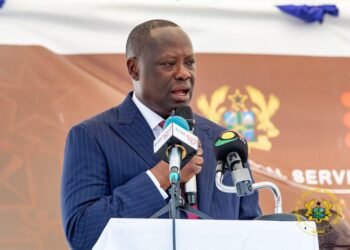
The Majority Chief Whip and the Member of Parliament for South Dayi Constituency, Hon. Rockson-Nelson Etse Kwami Dafeamekpor has leveled the unsuccessful ten percent Atlantic Lithium deal under the NPP’s erstwhile administration as unlawful.
He described the previous administration’s handling of the Ewoyaa Lithium Agreement as a trap to get the 8th parliament perpetuate illegality.
The Majority Chief Whip further accused the former Minister for Lands and Natural Resources, Hon. Sammuel Abu Jinpaor of attempting to contract against the very laws parliament enacted.
Addressing a press conference in Accra, Dafeamekpor lambasted the former minister’s actions, stating that the terms of the agreement failed to align with the existing legal framework governing the mining sector.
“We pointed out the fact that he was trying to contract against the law and therefore the terms of the agreement must align to the terms of the existing law,” Dafeamekpor asserted.
“If they were minded to contract that way, then the law must be abated to align with the terms of the agreement. In other words, the law must be amended. They failed to come to amend the law or they refused to come to Parliament for the law to be affected.”
Hon. Rockson-Nelson Etse Kwami Dafeamekpor, Majority Chief Whip
Hon. Dafeamekpor believed the deal as it then was, underscored the administration’s disregard for the proper legislative process.


Controversial Proposal
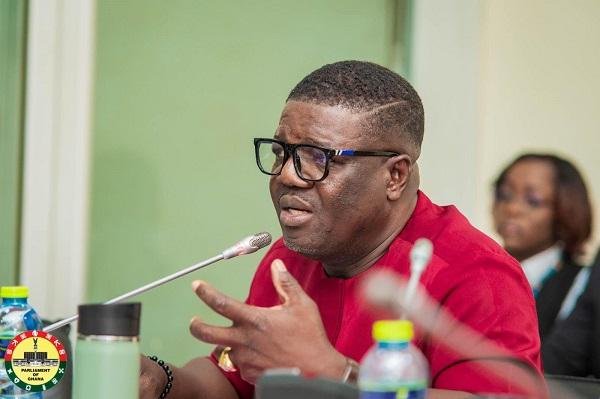
The Ewoyaa Lithium Agreement, negotiated under the previous New Patriotic Party (NPP) administration, proposed a 10% royalty rate for the Australia-based Atlantic Lithium, the company developing the project.
However, this proposal faced significant opposition from the current government, led by the National Democratic Congress (NDC), which has now revised the royalty rate to 5%.
Hon. Dafeamekpor’s comments shed light on the rationale behind the government’s decision to revisit the agreement.
He accused the then minister for lands and natural resources of rushing the deal through Parliament, without first aligning the legal framework to accommodate the proposed terms.
“I still have a copy of the agreement he brought to Parliament. And today he appears to be speaking like the PRO for the company. And that is totally unacceptable,” Dafeamekpor remarked, condemning the former minister’s perceived bias towards the project’s proponents.
Legislative Oversight and Community Interests
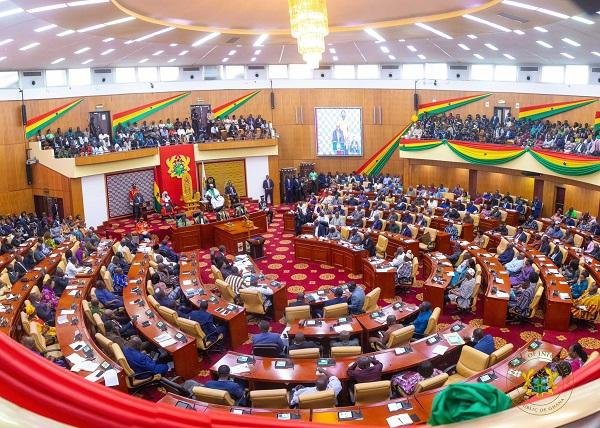
Hon. Dafeamekpor’s remarks align with the stance taken by the Parliament Select Committee on Lands and Natural Resources, as outlined by its chairman, Hon. Collins Dauda, in the same press conference.
The committee has vowed to delay the ratification of the revised Ewoyaa Lithium Agreement until extensive consultations with stakeholders have been conducted.
“We have allowed him to say a lot of things. The circumstances under which he came, he rushed to Parliament. At the time we needed things to be done properly in accordance with the law. He refused to, until they left power. And NDC having gotten the opportunity, we want to do things in accordance with the law.”
Hon. Rockson-Nelson Etse Kwami Dafeamekpor, Majority Chief Whip
According to him, the current government’s delays is as a result of the need to follow due process.
The Majority Whip’s comments further underscore the legislature’s commitment to upholding the rule of law and ensuring that the interests of the local communities are duly considered in the Ewoyaa Lithium Project.
By insisting on amending the existing legal framework before ratifying the agreement, the government aims to establish a more equitable and transparent mining regime that maximizes the benefits for the Ghanaian people, although many hold a contrary view that the previous 10% agreement serves the country better.
While the Ewoyaa Lithium Agreement navigates the parliamentary scrutiny, stakeholders, experts and the general public within and beyond the country will closely monitor the outcome, which could set a precedent for the governance of the country’s mineral resources and the protection of local communities.
READ ALSO : Oil Prices Dip as Oversupply Fears Outweigh Russian Supply Uncertainty