Nigeria’s upstream petroleum sector is preparing for a significant inflection point as the Nigerian Upstream Petroleum Regulatory Commission (NUPRC) moves to launch the much-anticipated 2025 oil licensing round on December 1.
Announcing the progress of the initiative, NUPRC Chief Executive Eng. Gbenga Komolafe stressed that the upcoming licensing round will be defined by transparency, efficiency and strict adherence to Nigeria’s reformed regulatory framework.
Speaking in Abuja during a meeting with executives from Italian energy firm Ludoil Energy, Komolafe stated that the bid portal will go live on the Commission’s website on December 1, following approval from President Bola Ahmed Tinubu.
He noted that the process will adopt a two-tier structure, beginning with a technical evaluation of applicants before advancing to commercial bidding for qualified companies.

“The licensing round will be transparent and fair in line with the provisions of the Petroleum Industry Act of 2021.
“We do not discriminate. We invite all potential investors to participate.”
NUPRC Chief Executive Eng. Gbenga Komolafe
The development comes at a time when investor confidence is gradually reclaiming strength, and exploration companies are seeking new acreage in one of Africa’s most resource-rich jurisdictions.
For Nigeria, the new bid round marks a critical step toward unlocking dormant reserves, boosting oil production and reaffirming its position as a leading investment destination on the continent.


A Transformed Petroleum Sector
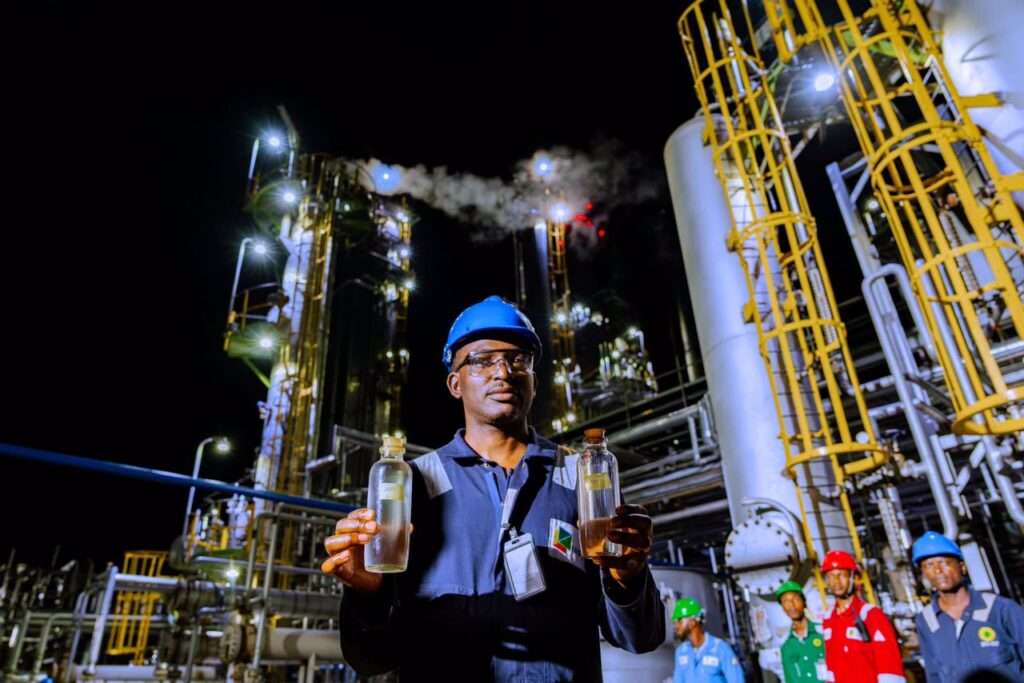
The launch of the licensing round is taking place within a significantly transformed industry landscape shaped by the implementation of the Petroleum Industry Act (PIA) of 2021.
The PIA replaced the Department of Petroleum Resources with the NUPRC and the Nigerian Midstream and Downstream Petroleum Regulatory Authority, while commercialising the Nigerian National Petroleum Company Limited (NNPC Ltd).
The reforms have introduced a clearer, more predictable regulatory regime designed to attract investment and increase efficiency.
Key policy measures ranging from new tax incentives for gas development to strengthened local content regulations are now central to Nigeria’s ambition to reposition its energy sector. The country’s “Decade of Gas” agenda has further elevated the role of natural gas in its long-term energy and industrial strategy.

Nigeria’s Minister of State for Petroleum (Oil), Senator Heineken Lokpobiri, voiced strong support for the licensing round, describing it as an essential pillar of the country’s ongoing transformation.
Welcoming the Ludoil delegation, he highlighted that Nigeria’s regulatory reforms offer a stable and profitable environment for companies across the value chain.
“Making our oil sector attractive to investors is a major measure in our ongoing transformation journey, and it is encouraging to see this effort yielding the anticipated results because our commitment to providing a conducive and profitable environment remains sacrosanct.”
Senator Heineken Lokpobiri, Nigeria’s Minister of State for Petroleum (Oil)
Lokpobiri stated, “Our doors remain open to collaboration that drives progress, innovation and sustainable development.”
Gas-Rich and Untapped Fields Take Center Stage
At the core of the 2025 licensing round is a strategic push toward developing gas-rich and fallow fields.
Nigeria is positioning natural gas as the fuel that will drive its energy transition, strengthen domestic supply, and enhance regional competitiveness.
Authorities are particularly focused on unlocking underdeveloped reserves that could add up to one million barrels per day in new production capacity over the coming years.
This ambition is buoyed by increased global interest in Nigerian assets, new final investment decisions worth over $8 billion, and robust participation from indigenous companies such as Seplat Energy and Oando.
For international operators like Ludoil Energy, the message from Abuja is direct and appealing: Nigeria is open for business and is actively working to reduce barriers to investment.
Ludoil executives expressed optimism after meeting with NUPRC leadership, highlighting the country’s scale and renewed regulatory clarity as key attractions.
“We are seeing Nigeria as our next target for growth because Nigeria is the largest producer in Africa.
“Your next round of licensing is an opportunity for us.”
Paolo Fedeli, Ludoil Energy’s Group Chief Technical Officer
Momentum Builds Despite Persistent Challenges

While Nigeria’s upstream revival faces lingering risks from security vulnerabilities in producing regions to infrastructure deficits and financing constraints the renewed momentum around regulatory stability and transparent bidding processes signals a turning point.
The digitisation of regulatory systems, clearer guidelines, and more predictable fiscal terms have strengthened investor confidence.
With the 2025 licensing round set to open on December 1, Nigeria appears poised for a potentially transformative phase in its upstream sector.
If successful, the round could serve as the catalyst that propels Nigeria’s long-anticipated production recovery while reinforcing its standing as a top-tier energy investment hub in Africa.
As the countdown begins, global and local investors alike are watching closely aware that this moment may define the trajectory of Nigeria’s oil and gas industry for the coming decade.
READ ALSO: Agric Minister Sets One-Year Completion Timeline for Bechem Poultry Processing Plant