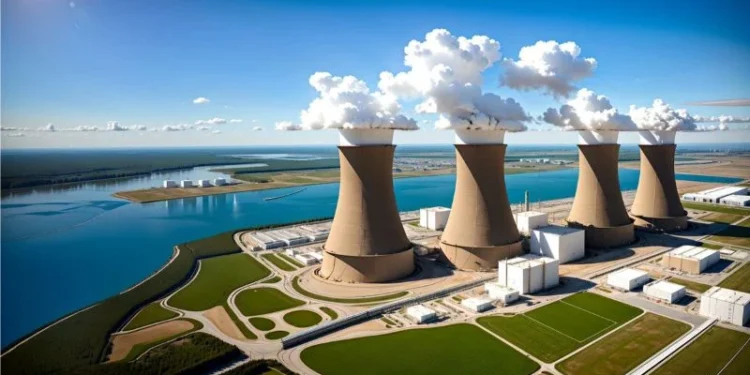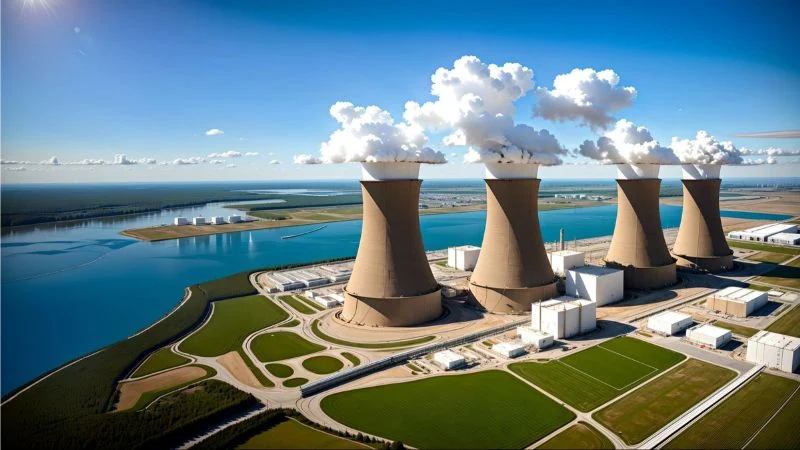
Ghana is moving steadily toward becoming one of Africa’s next nuclear-powered nations, with government confirming that construction of the country’s first nuclear power plant is expected to begin by 2027.
The initiative, led by the Ministry of Energy and Green Transition, forms a central part of Ghana’s strategy to diversify its energy sources, strengthen baseload supply, and position the country for long-term industrial growth.
According to Dr. Robert Sogbadji, Deputy Director Ministry of Energy and Green Transition, Ghana has already identified two potential sites, one in the Western Region and another in the Central Region, for the development of both large and small nuclear reactors.
The dual-site approach marks a strategic attempt to decentralize industrial power demand while ensuring national energy stability.
“We have two sites which have been identified where we want to put our new nuclear power plant.
“One site will host the large power plant and the other site will host the small power plant in an industrial enclave.”
Dr. Robert Sogbadji, Deputy Director, Ministry of Energy and Green Transition
Preparatory Work in Motion

Although the government has yet to disclose which international company will lead construction, significant preparatory activities are already underway.


Dr. Sogbadji explained that the ministry is moving ahead with land acquisition, regulatory groundwork, and power purchase arrangements needed to secure the project’s viability.
“Steps are ongoing to ensure that we acquire that land and roughly by 2027 we should be able to cut sod for construction.”
Dr. Robert Sogbadji, Deputy Director, Ministry of Energy and Green Transition
He added that the ministry is working toward achieving 90% national electricity access within six months—an ambitious target aligned with Ghana’s energy transition roadmap.
Nuclear power is expected to play a major role in meeting both industrial and domestic electricity demand, especially as existing hydropower and thermal plants face increasing strain.
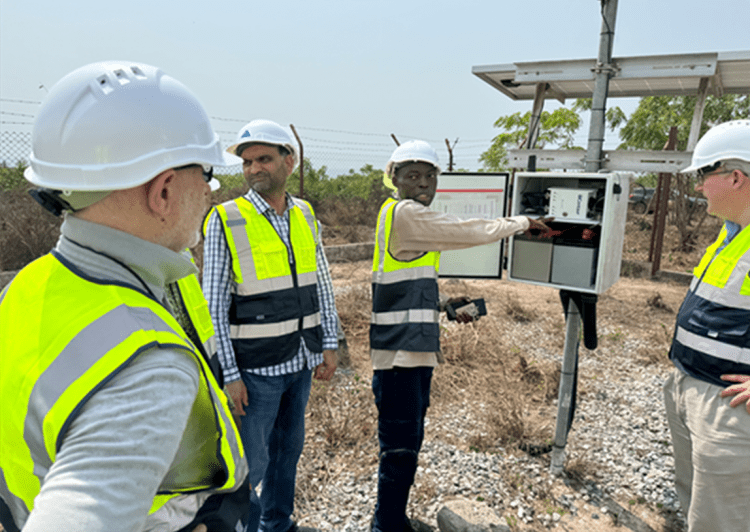
Ghana’s progress follows an important step earlier in 2025, when the International Atomic Energy Agency (IAEA) conducted its first Site and External Events Design (SEED) Review Mission in the country.
Experts from Pakistan, Turkey, the United Kingdom, and the United States assessed the proposed nuclear sites and the overall selection process.
Ghana’s Strong Safety and Planning Measures
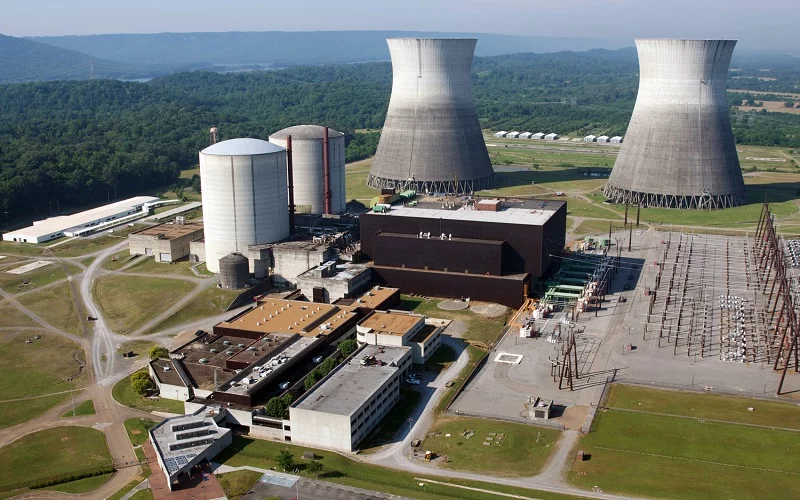
The SEED mission reviewed two proposed sites, Nsuban in the Western Region, selected as the preferred location, and Obotan in the Central Region as a backup option.
The team evaluated criteria such as environmental suitability, seismic stability, water availability, and long-term operational safety.
Mission leader Kazuyuki Nagasawa expressed confidence in Ghana’s approach, stating that “the implementing organisation and management system are well-designed, and the Site Approval Report has been thoroughly prepared.”
He added that Ghana had “followed IAEA safety standards in the site selection process,” an endorsement likely to boost investor and international confidence.
This progress places Ghana ahead of several nations in the region that are still at preliminary assessment stages in their nuclear development plans.
Although Ghana has not officially named a construction partner, interest from major energy and nuclear giants has grown rapidly.
A Reuters report indicated that companies vying for the contract include France’s EDF, U.S.-based NuScale Power, Regnum Technology Group, and China National Nuclear Corporation.
South Korea’s Korea Hydro & Nuclear Power Corporation (KHNP) and Russia’s Rosatom, now one of the most dominant nuclear players on the continent, are also in contention.
Russia’s Rosatom has expanded its influence across Africa over the past decade, providing financing, reactors, and training to emerging nuclear markets.
Its footprint includes Egypt’s El Dabaa Nuclear Power Plant, Rwanda’s Centre for Nuclear Science and Technology, and Zambia’s upcoming nuclear research facility. Nigeria remains in discussions with Rosatom over its long-delayed first commercial nuclear plant.
Ghana’s selection is expected to shape its nuclear energy trajectory for decades, given that nuclear power partnerships typically span construction, training, waste management, and operational support for up to 100 years.
Despite progress, Ghana must navigate significant hurdles, including securing multi-billion-dollar financing, strengthening regulatory capacity, addressing public safety concerns, and establishing long-term waste disposal solutions.
Nevertheless, officials remain confident that nuclear power will provide a transformative boost for Ghana’s energy sector.
READ ALSO: Otumfuo Concludes Bawku Peace Talks, Set to Submit Final Report to Mahama