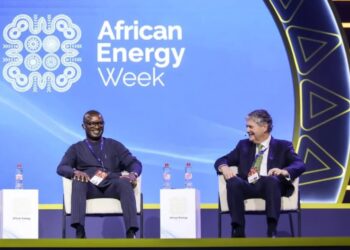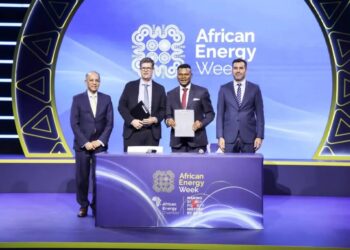

Nigeria has officially launched the 2025 Petroleum Licensing Round, offering 50 oil and gas blocks in a bid to unlock an estimated 2 billion barrels of new reserves and attract as much as $10 billion in fresh investment.
The Nigerian Upstream Petroleum Regulatory Commission (NUPRC) says the initiative marks a decisive step toward revitalising an industry affected by declining exploration, capital flight and production instability.
Announcing the commencement of the round, NUPRC Chief Executive Gbenga Komolafe emphasised that the bid process aligns fully with the Petroleum Industry Act (PIA), ensuring fairness, transparency and competitiveness.
“The Nigerian Upstream Petroleum Regulatory Commission is proud to formally announce the commencement of the Nigeria 2025 licensing round.
“This announcement is in line with Section 73 of the Petroleum Industry Act, which prescribes a fair, transparent, and competitive bidding process.”
NUPRC Chief Executive Gbenga Komolafe
Komolafe added that the government intends for the round to not only expand reserves but also rebuild investor confidence after years of uncertainty across Nigeria’s oil sector.
50 Blocks Across Multiple Terrains

The 2025 Licensing Round will offer a total of 50 blocks, comprising 15 onshore blocks, 19 shallow-water blocks, 15 frontier blocks, and one deepwater block.
NUPRC projections indicate that full-scale development across these assets could deliver as much as 400,000 barrels of additional daily oil production over the next decade, depending on the speed of investment and the eventual results of exploration.
Komolafe stressed that the round could add “up to 2 billion barrels to the country’s reserves,” an objective Nigeria hopes will stabilise long-term oil output and improve its position in global supply chains.
A key feature of the 2025 round is the adoption of automated and fully digital workflows. This, according to the Commission, reduces bureaucratic delays, enhances transparency and ensures that only qualified applicants advance through the process.
“The bid process will be automated and digital. Winners will emerge at the commercial bid stage.”
NUPRC Chief Executive Gbenga Komolafe
Applicants must pass a qualification phase before being invited to submit technical and commercial bids. The Commission has also tightened eligibility requirements, focusing on bidders’ technical competence, financial capacity and development track record.
Komolafe clarified that the age of a company is no longer relevant, explaining that “the Commission now prioritises technical competence, financial capacity, and credible development plans.”
Bid Guarantees to Prevent Asset Dormancy

To prevent a repeat of past rounds where companies secured licences but failed to advance to development, the NUPRC has introduced a Bid Guarantee Requirement. This measure obliges winners to provide financial assurances demonstrating they have the capacity to advance the asset.
Komolafe said the guarantee will discourage speculative bidding, noting: “If a winner fails to develop the asset, the bidder loses, not Nigeria.”
He argued that such reforms are crucial to protecting the country’s revenue prospects and strengthening the credibility of the licensing framework.
Nigeria’s oil sector has faced several challenges in recent years, including pipeline vandalism, theft, underinvestment, divestments from major international oil companies and volatile production levels. Komolafe insisted that recent reforms have begun reversing these negative trends.
He highlighted that the 2024 licensing round was widely praised by transparency observers and concluded without petitions or litigation, an outcome he said contributes to renewed confidence. He added that rising rig counts show that exploration activities are slowly picking up.
Global Roadshows to Attract Big Capital
In a bid to attract companies with deep financial and technical capacity, the Commission announced plans for international roadshows, including a major investor engagement in Beijing.
Komolafe stressed that the global energy transition has intensified competition among resource-rich nations for investment capital. He warned, “Hydrocarbon-rich nations must compete more aggressively for investment or risk being left behind.”
Nigeria hopes that showcasing its reformed regulatory regime and large geological potential will help reposition the country as a prime destination for upstream capital.
The federal government expects that the 2025 Licensing Round will deepen indigenous participation, attract global energy companies, and stabilise long-term oil production. Officials say the six-month process will set the foundation for renewed exploration activities in 2026 and beyond.
The NUPRC believes the round, backed by PIA-mandated transparency and new accountability mechanisms, will restore credibility to Nigeria’s licensing framework and reset the country’s global energy standing.
As investments and exploration interest begin to recover, the government hopes this round will play a pivotal role in strengthening Nigeria’s energy future and ensuring sustainable economic growth.
READ ALSO: Otumfuo Concludes Bawku Peace Talks, Set to Submit Final Report to Mahama