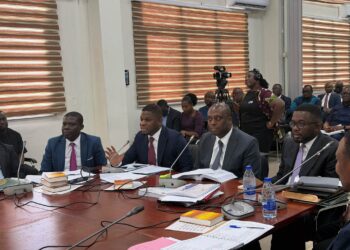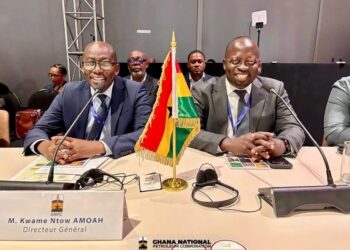
Sammy Gyamfi, Chief Executive Officer of the Ghana Gold Board (GoldBod), has detailed a total expenditure of 38,915,495 Ghana cedis classified under specialized operational expenses for the 2025 financial year.
The statutory body’s spending breakdown highlights critical investments aimed at regulatory oversight, institutional building, and enforcement across the country’s extractive value chain.
The disclosures by the CEO to the Parliament’s Public Account Committee form part of broader transparency mechanisms implemented by the state gold trading authority to account for administrative and field operational overheads incurred during the year under review.
“The breakdown of specialized expenses for 2025 can be found on page 41 of our audited financials, which is published on our website. They are as follows: Assorted services expenses: 618,206 Ghana cedis. Diamond exports and gold smelting expenses: 374,748. Gold board establishment expenses: 5,804,739 Ghana cedis. Monitoring and inspection: 1,004,267. Task force deployments, which is the biggest: 14,284,116. Corporate social responsibility: 11,248,172. Special intervention programs expenses: 5,263,873. Gold board tribunal expenses: 200,221 Ghana cedis. Funerals and other donations: 107,154. So the total gives you 38,915,495 Ghana cedis.”
Sammy Gyamfi
The published balance sheet outlines specific allocations designed to maintain systemic integrity within the precious mineral’s framework.
Leading the outlay is the task force deployment budget, which represents the single largest financial component at 14,284,116 Ghana cedis, followed closely by corporate social responsibility commitments totaling 11,248,172 Ghana cedis.

Operational compliance efforts were further funded through 5,804,739 Ghana cedis dedicated to gold board establishment expenses, 5,263,873 Ghana cedis towards special intervention programs, and 1,004,267 Ghana cedis allocated for monitoring and inspection activities.
Additional specialized items include 618,206 Ghana cedis for assorted services, 374,748 Ghana cedis for diamond exports and gold smelting, 200,221 Ghana cedis for the gold board tribunal, and 107,154 Ghana cedis assigned to funerals and other donations.
Curbing Illicit Financial Flows and Illegal Mining
The substantial capital injection into specialized operations addresses long-standing structural vulnerabilities within Ghana’s artisanal and small-scale mining (ASM) sectors.
Historically, unmonitored extraction has led to massive revenue leakages through illicit gold smuggling, environmental degradation, and severe water body pollution.
prioritizing “task force deployments” alongside dedicated “monitoring and inspection” machinery, the Gold Board establishes a firm physical presence across mining districts to enforce statutory compliance and curb unauthorized gold trading.

Furthermore, establishing dedicated tribunal expenses creates an expedited dispute-resolution framework to resolve regulatory infractions without burdening traditional court systems.
Specialized spending ensures that legal and logistical tools are fully deployed to stabilize the domestic supply chain, allowing the state to channel official gold output into national reserves and export channels.
Sustaining License to Operate Through Community Investment
Beyond field enforcement, allocating over 11 million Ghana cedis to corporate social responsibility highlights a strategic shift toward community-centered resource governance.
Mining host communities frequently bear the environmental burdens of mineral extraction, leading to socio-economic friction between local populations, small-scale miners, and state regulators.

Direct capital investment in community development initiatives helps build institutional trust and secures the social license required for smooth operations.
These localized intervention programs mitigate operational disruptions by fostering economic synergy between local chiefdoms and regulatory authorities.
Combining social welfare funding with formal enforcement mechanisms aligns Gold Board’s financial strategy with broader sustainable development targets across the nation’s extractive hubs.
Fortifying Institutional Capacity and Traceability
The establishment and special intervention allocations reflect crucial institutional capacity-building measures needed to maintain international bullion standards.
Meeting London Bullion Market Association (LBMA) standards requires rigorous supply chain auditing, precise smelting oversight, and clear certification from point of origin to foreign markets.

Spending directed toward “diamond exports and gold smelting expenses” ensures that technical processing meets strict global compliance rules.
With audited accounts now open to public scrutiny, the Gold Board’s financial disclosures set a benchmark for fiscal transparency in state-owned resource management agencies.
Maintaining detailed account breakdowns reinforces public confidence in the board’s mandate to formalize the small-scale gold trading sector while maximizing economic returns for the state treasury.
READ ALSO: ‘Kumasi Rising Dialogue’ Set for KNUST Ahead of Rapperholic