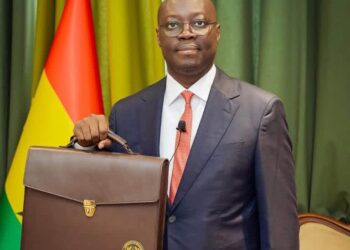
Ghana stands on the edge of something big. Finance Minister Dr Cassiel Ato Forson prepares to present the 2027 Budget to Parliament on November 12, and the air already crackles with anticipation.
After years of tough adjustments and hard-won stability, this budget looks set to shift the national conversation from surviving to thriving. At its core sits an ambitious US$10 billion New Economy programme running from 2027 to 2030, designed to turn recovery into real jobs, stronger local industries and wider prosperity.
The proposed theme, “New Economy, New Ghana: Jobs and Prosperity,” captures the mood perfectly. Officials and sources close to the process say the plan moves beyond fiscal repair and into production-led growth. Growth targets hover around five percent, with inflation aimed near eight percent. Yet the real excitement lies in the concrete opportunities this budget could open across farms, factories and boardrooms.
Jobs Take Centre Stage in a New National Push
Young Ghanaians have waited long enough. The recovery demanded sacrifices from households and businesses alike. Now Dr Forson insists those gains must deliver decent work. In recent remarks he stressed that the next phase needs to put young people into proper jobs, lift farmer incomes and give Ghanaian companies space to expand and hire.
The New Economy programme aims to do exactly that. It will channel resources into commercial agriculture, agro-processing and agribusiness. Large-scale farming and value addition sit high on the priority list. Instead of shipping raw cocoa, cashew or other crops abroad with little processing, more of the work stays at home. That means new processing plants, packaging facilities and related services springing up in rural and peri-urban areas. Farmers gain better prices for higher-quality produce while new roles open in logistics, quality control and marketing.
Local manufacturers also stand to benefit. The plan seeks to cut reliance on imported finished goods by boosting domestic production. Factories that once struggled with high costs and unstable conditions may find a more supportive environment. Banks, according to earlier signals from the ministry, should feel freer to lend as macroeconomic stability holds. Businesses that expand can hire more staff, creating a virtuous cycle of activity and employment.
Agriculture and Industry: The Twin Engines of Opportunity
Picture the transformation on the ground. A young graduate in the Brong-Ahafo region might find work not only on a commercial farm but in a nearby processing facility turning produce into packaged goods for local shelves and export markets. A small manufacturing firm in Tema could scale up operations, confident that policy will favour local content and value addition. These are not distant dreams. The budget is expected to outline specific investments that attract private capital alongside public funds.
Gold refining offers another vivid example. Dr Forson has spoken openly about the need to process more of Ghana’s gold locally rather than sending it overseas. Even modest numbers of refining jobs, he notes, can spark secondary businesses around them. Over time Ghana could position itself as a regional hub, drawing material from neighbouring countries and locking more value inside the economy.
The programme also looks beyond traditional sectors. Infrastructure completion, capital market deepening and external buffer building all form part of the foundation. With debt sustainability still a priority, the government plans careful use of fiscal space. A modest reduction in the primary surplus target could free resources specifically for productive investments without undoing recent gains.

Stability Creates the Room for Bold Moves
Ghana completed the final review of its IMF-supported programme earlier in 2026. Growth hit six percent in the second quarter and inflation cooled to around five percent by September. Those numbers give policymakers breathing room. The 2027 Budget intends to protect that progress while directing fresh energy into job-rich sectors.
Private sector voices have already engaged with the ministry. Meetings with industry leaders underlined the shift from stabilisation to production and wealth generation. Businesses want clearer signals on where government will put its money and how it will support expansion. Early indications suggest the budget will deliver those signals, showing which projects receive priority funding in the first year of the four-year programme.
Investors watching from outside also have reason to pay attention. A more predictable macroeconomic environment, combined with deliberate support for local processing and commercial agriculture, can change risk calculations. Capital that once stayed on the sidelines may find Ghana an attractive destination for long-term commitments.
Everyday Lives Stand to Change
Behind the big numbers sit ordinary stories. A trader in Kumasi whose suppliers suddenly offer more processed Ghanaian goods. A rural family whose children no longer need to migrate to the city for work because processing jobs appear nearby. A small exporter who finds new markets for value-added products because government policy actively encourages local content.
These possibilities rest on disciplined execution. Dr Forson has repeatedly underlined the need to maintain fiscal care while opening space for growth. The budget is expected to balance ambition with caution, ensuring that new spending stays inside the broader debt and fiscal framework.
As November 12 approaches, the sense of possibility grows stronger. The 2027 Budget arrives at a moment when Ghana has stabilised enough to look outward and upward. By placing jobs, local production and value addition at the centre, Ato Forson’s statement could unlock doors that have stayed closed for too long. Farmers, entrepreneurs, young job seekers and investors all have reason to watch closely. The next chapter of Ghana’s economic story is about to be written, and it looks far more expansive than the last.
READ ALSO: Cooperatives Council Partner Fisheries Ministry to Boost Sector Governance