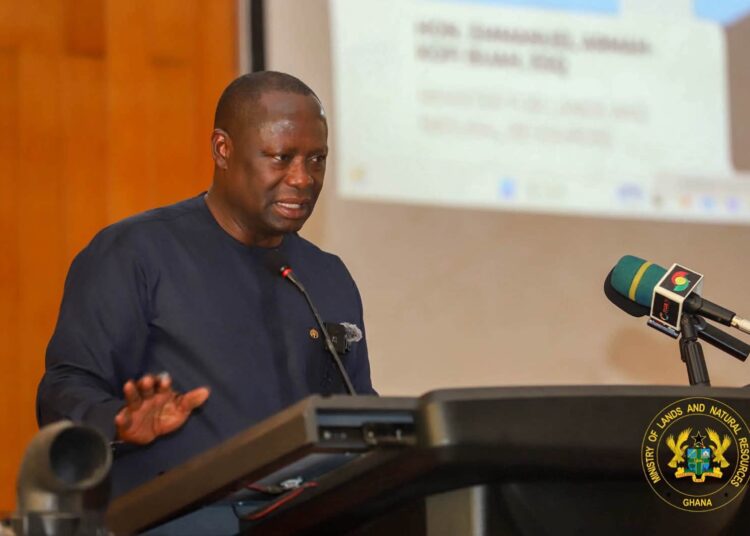
Minister of Lands and Natural Resources, Hon. Emmanuel Armah-Kofi Buah, has issued a passionate call to young Ghanaian professionals to actively step up and take command of the nation’s extractive sector to ensure local wealth creation.
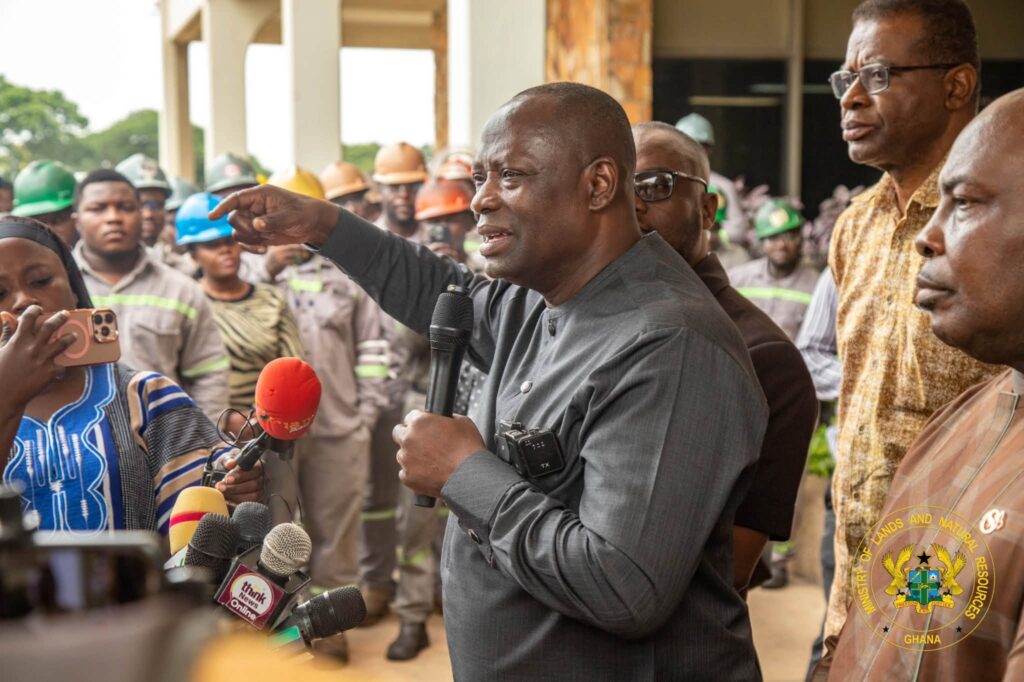
Speaking during an official visit to his alma mater, the Kwame Nkrumah University of Science and Technology (KNUST), the Minister emphasized that natural resource extraction must directly benefit the citizens who own the land.
He noted that transitioning Ghana from a mere raw material exporter to a fully value-additive economy hinges on the readiness of the next generation of domestic experts to manage, govern, and innovate within the mineral value chain.
“My message to the young engineers was that Ghana’s resources will only work for Ghanaians when skilled, disciplined and principled young people are ready to take charge.”
Hon. Emmanuel Armah-Kofi Buah,
The Minister’s engagement at KNUST featured a comprehensive series of strategic events aimed at bridging academia, policy, and field operations.
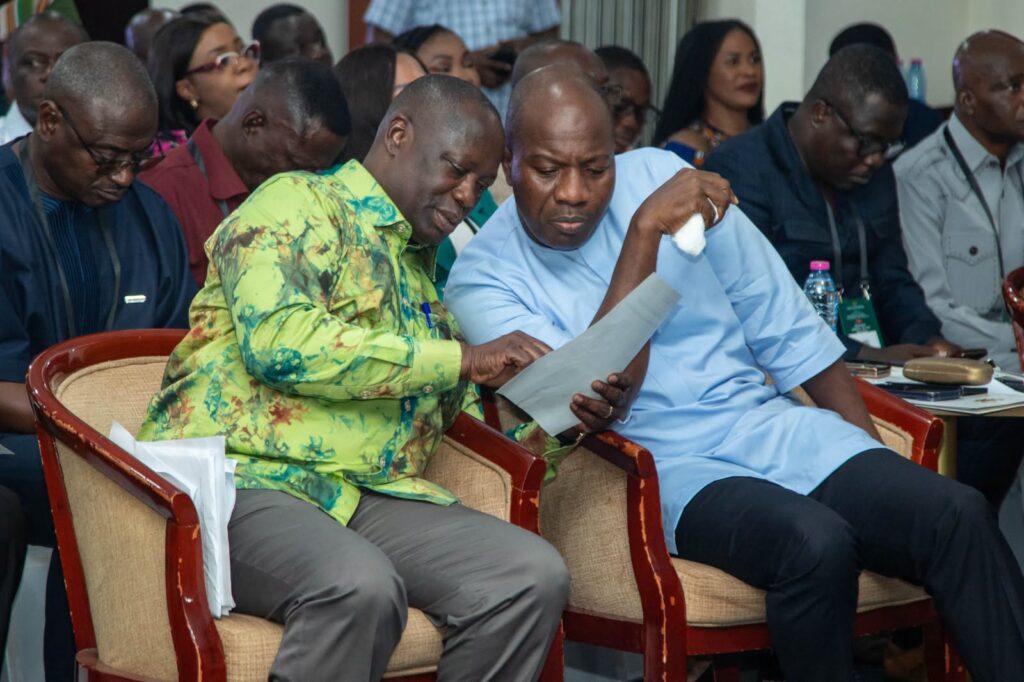
Emmanuel Armah-Kofi Buah initiated his visit with a high-level courtesy call on KNUST Vice-Chancellor, Professor Christian Agyare, and senior management to forge strong institutional research and training partnerships between the Ministry and the university.
Following this, he delivered the keynote address at the Geological Engineering Students’ Society seminar, centered on the theme “From Rocks to Resources to Results.” During the address, he outlined the Ministry’s policy direction regarding human capital development, local content enforcement, and technological modernizations needed to restructure Ghana’s mining sector.
Fostering Homegrown Technological Solutions for Natural Resources
Beyond legislative reform and traditional classroom education, the Ministry is actively creating institutional mechanisms to drive technological transformation within the extractive economy.
The flagship highlight of the Minister’s visit was the official commissioning of the KNUST Fintech Venture Studio a collaborative innovation platform uniting academia, industry, and government stakeholders.
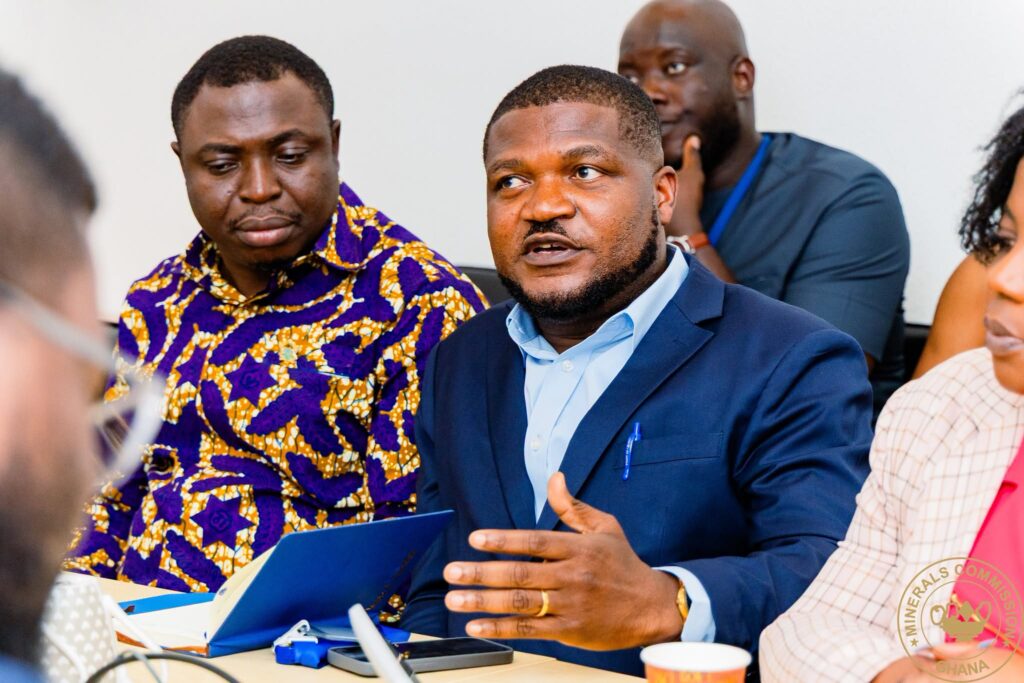
Designed to serve as an incubator, the studio aims to transform local academic ideas into commercially viable startup ventures and sustainable employment opportunities for engineering and technology graduates.
To ensure the new venture studio directly targets pressing operational and governance gaps within the minerals sector, Emmanuel Armah-Kofi Buah directly tasked its pioneer cohort of founders to prioritize critical national challenges.
Specifically, he challenged the innovators to engineer practical, scalable solutions focused on three vital areas:
Overcoming Structural Gaps in Ghana’s Extractive Economy
The Minister’s call for youth leadership comes at a pivotal moment for Ghana’s mining and natural resources landscape.
For decades, Africa’s top gold producer has faced structural bottlenecks that have limited the local capture of economic value across the mineral supply chain.
Despite rich reserves of gold, bauxite, manganese, and lithium, significant segments of technical oversight, mineral processing, and industrial supply services have historically depended on foreign expertise and imported capital.

Furthermore, the unchecked proliferation of illegal small-scale mining (galamsey) has severely impacted local river bodies and forest reserves, presenting a threat to water security and agricultural livelihoods.
Resolving these persistent challenges requires a shift away from sole reliance on security enforcement toward integrating scientific research, geological mapping, and technological oversight directly into artisanal and small-scale operations.
Building Capacity for Local Content and Sustainable Governance
To permanently reverse the resource curse paradigm, national policy must align higher education outputs with actual field realities.
Equipping young geological, mining, and software engineers with technical competencies, regulatory awareness, and ethical discipline provides the foundation for enforcing local content laws effectively.
Through institutional synergy between government ministries, tertiary research centers, and venture incubators, Ghana is laying the groundwork for a transparent, tech-enabled, and ecologically responsible extractive industry.
By placing trained Ghanaian youth at the center of mineral exploration, processing, and financial management, the nation ensures that its mineral wealth translates into measurable socioeconomic development for present and future generations.
READ ALSO: Ghana, US Deepen Industrial Ties to Boost Exports