

West Africa’s competition for oil and gas investment is increasingly being shaped by more than the availability of hydrocarbon resources.
The quality of regulatory frameworks, the readiness of projects and the ability of governments to connect investors with viable opportunities are becoming equally important.
That is the thinking behind a new Investment Track being introduced at the MSGBC Oil, Gas & Power 2026 conference in Dakar, Senegal, from December 1 to 3.
The initiative is designed to bring governments, financiers, project developers and energy companies into more direct engagement, with the aim of moving discussions beyond investment promotion towards partnerships and projects capable of attracting capital.
Although Ghana is not part of the MSGBC basin, the development carries implications for its own petroleum investment ambitions. As the country seeks to revive exploration, attract new upstream capital and advance undeveloped resources, neighbouring markets are also strengthening the platforms through which they present opportunities to international investors.
The emerging competition is therefore not simply about which country has the largest resource base. It is also about which jurisdiction can make investment decisions easier, reduce project-development risks and demonstrate a credible pipeline of opportunities.
MSGBC Seeks To Close The Gap Between Interest And Investment
The MSGBC basin comprises Mauritania, Senegal, The Gambia, Guinea-Bissau and Guinea-Conakry. Its energy prospects have attracted growing attention as governments pursue offshore exploration, gas development, infrastructure expansion and opportunities for regional energy integration.
The new Investment Track will introduce three principal engagement platforms: a Ministerial Leadership and Global Capital Roundtable, a Project Development Clinic and structured business-to-business matchmaking.

The ministerial roundtable will bring energy ministers and investors together to examine the policy and financing conditions required to accelerate capital flows.
Discussions are expected to cover regulatory alignment, fiscal incentives and investment frameworks, including Mauritania’s 2025 investment code reforms.
The Project Development Clinic is particularly significant because it shifts attention towards the practical obstacles that can prevent projects from progressing.
Rather than focusing exclusively on broad investment opportunities, the clinic will allow project developers, government representatives and investors to discuss financing bottlenecks, project structuring and development challenges that could delay projects from reaching final investment decisions.
Business-to-business matchmaking will provide another route for connecting operators, service companies, investors and public institutions around potential partnerships.
Energy Capital & Power says the objective is to make the platform more commercially focused.
“The Investment Track is designed to move beyond dialogue and into deal facilitation, bringing together decision-makers who can directly shape the next phase of energy investment across the region,”
Sandra Jeque, Events and Project Director.
The distinction matters. Conferences can generate visibility and investor interest, but those outcomes do not necessarily translate into capital commitments.
The more difficult task is ensuring that projects have credible commercial structures, clear regulatory pathways and financing arrangements that investors can support.
Ghana Faces A Similar Investment Challenge
Ghana has been pursuing its own strategy to attract upstream investment, particularly as production from existing fields faces decline and the country seeks to replace reserves through new exploration and development.
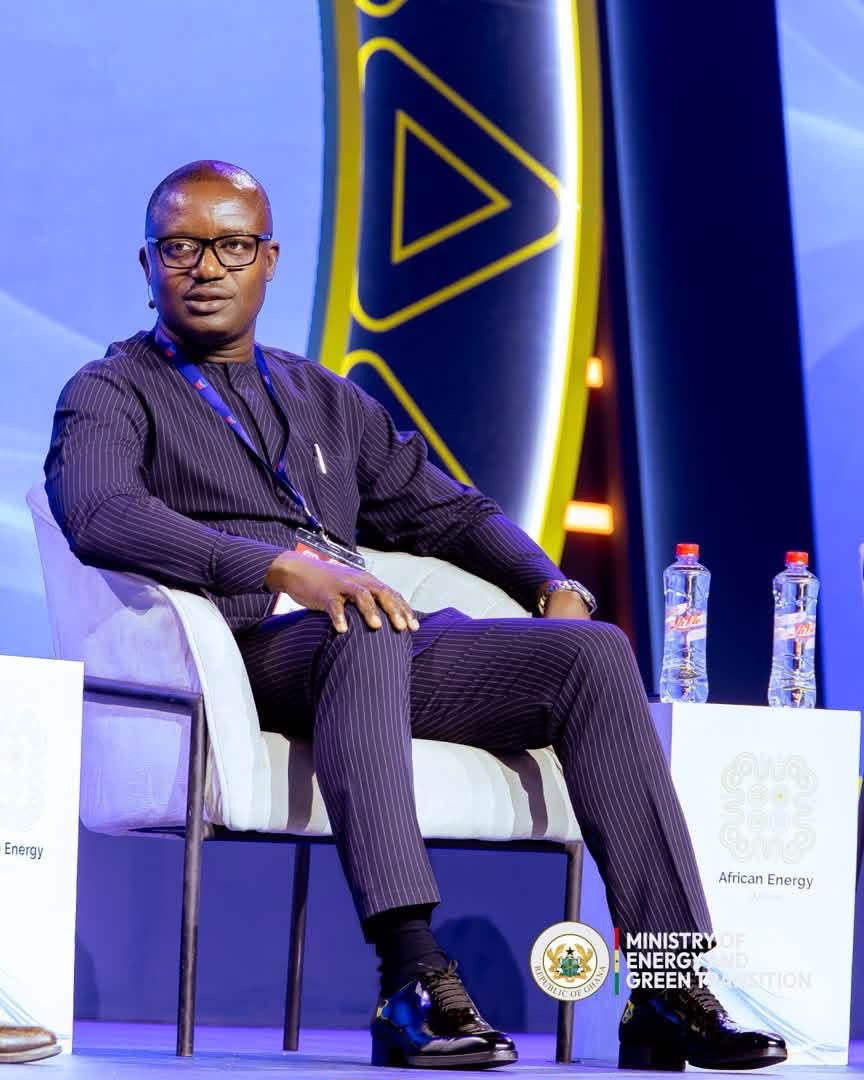
At the 2026 Africa Oil Week in Accra, the government renewed its call for investment into exploration and production, with Energy and Green Transition Minister John Abdulai Jinapor identifying sustained capital expenditure as essential to unlocking the country’s remaining petroleum potential.
The government has also been advancing proposed changes to the upstream legislative and fiscal framework.
These include fiscal terms based on water depth, a reduction in GNPC’s initial carried interest, longer petroleum agreements and more flexible exploration and relinquishment provisions.
The reforms are intended to improve the competitiveness of Ghana’s petroleum sector and make it more attractive to exploration and production companies.
There have also been efforts to translate investor engagement into specific opportunities. During Africa Oil Week, the Ministry of Energy and Green Transition signed a memorandum of understanding with Shell and Chevron concerning agreed terms that would form part of a future petroleum agreement for the South Deep Water Tano Block in Ghana’s offshore Western Basin.
These developments indicate that Ghana is not standing still in the regional investment competition. However, the central test remains whether regulatory reforms and investor engagements can produce sustained exploration activity, new discoveries and projects that advance towards development.
The MSGBC Investment Track offers a useful comparison because it places project preparation and financing challenges alongside the traditional ministerial and investor discussions.
For Ghana, this is an important distinction. Improving fiscal terms may attract attention, but investors must also be able to assess the commercial viability of available acreage, obtain reliable technical information and understand the regulatory and contractual processes governing their participation.
Project Readiness May Matter As Much As Resource Potential
One of the most important features of the MSGBC programme is its emphasis on project development rather than resource promotion alone.
Senegal, for instance, is expected to use the conference to present opportunities around its upcoming licensing strategy, onshore acreage, offshore production expansion and gas-to-power plans. PETROSEN is also advancing work on the Yakaar-Teranga gas project, with a final investment decision targeted for December 2026.
The conference will provide a platform for governments across the five-country basin to present licensing opportunities and project pipelines to potential partners.
A separate Data Room initiative is also expected to give investors access to acreage information, subsurface data and joint-venture opportunities.
This kind of technical engagement can help reduce information gaps between governments and prospective investors, although access to data alone does not guarantee that exploration or development projects will proceed.
The broader lesson for Ghana is that investment promotion must be supported by projects that are sufficiently prepared to withstand commercial and technical scrutiny.
A country may have prospective acreage and attractive fiscal terms, but investors still need clarity on geological risks, development costs, infrastructure availability, market access and the time required to secure approvals.
The proposed Project Development Clinic reflects an understanding that these issues can be as important as the initial decision to enter a market.
Ghana could strengthen its own investment engagements by giving greater attention to the readiness of individual opportunities, including the technical information available to investors, the status of negotiations and the infrastructure required to bring discoveries into production.
Regional Competition Also Raises The Question Of Local Value
The investment drive across West Africa also has implications beyond attracting foreign capital.
Large oil and gas projects require engineering services, fabrication, logistics, technical expertise and supporting infrastructure. The extent to which domestic companies participate in these activities will influence how much economic value remains within producing countries.
The MSGBC conference is expected to address regional supply chains, including the potential for shared fabrication facilities and improved port and rail networks to support project delivery and local workforce development.

This is relevant to Ghana’s own ambition to ensure that petroleum investment produces wider economic benefits.
At Africa Oil Week, Jinapor argued that the success of the upstream sector should not be measured only by production volumes and petroleum revenues, but also by local enterprise development, technology transfer, employment and industrial growth.
That objective will require investment frameworks that balance the need to attract international operators with opportunities for Ghanaian businesses to participate in the supply chain.
The same challenge applies across the MSGBC basin. Regional infrastructure and cross-border cooperation could improve project economics, but the benefits will depend on how effectively local companies and workers are integrated into the resulting activities.
For Ghana, the regional investment push should therefore be viewed as both a competitive pressure and an opportunity to strengthen its own approach to petroleum development.
The country has established upstream infrastructure, producing fields and a regulatory framework that it is seeking to reform.
Its next challenge is to turn those advantages into a pipeline of commercially viable projects that can compete for capital.
The MSGBC Investment Track will not, by itself, determine where investors commit their money. But its emphasis on project preparation, financing solutions and direct investor engagement highlights the changing nature of the competition.
As West African producers seek capital for their next phase of energy development, Ghana’s ability to attract investment will depend not only on what lies beneath its waters, but also on how effectively it prepares, presents and delivers opportunities above ground.