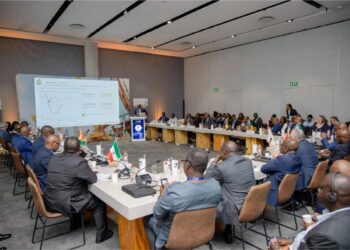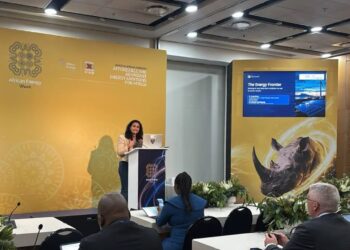
Ghana will use African Energy Week (AEW) 2026 in Cape Town to make a case for a new phase of investment in its petroleum industry, seeking to convert a recovery in crude oil production into expanded refining capacity, stronger gas infrastructure and greater domestic value from its natural resources.
The pitch comes with a striking contradiction at the centre of the country’s energy economy: Ghana is producing approximately 126,000 barrels of crude oil per day, yet domestic refineries supply only about 13% of the fuel the country consumes.
Petroleum imports cost an estimated $3 billion annually, leaving Ghana exposed to international price movements despite its own oil production.
At AEW, scheduled for October 12–16 at the Cape Town International Convention Centre, the government-backed investment case will be presented through a dedicated session, “Invest in Ghana: Scaling from Extraction to Production to Meet National Energy Ambitions.”
The objective is to attract capital into a petroleum industry that has shown renewed upstream momentum but still faces the harder task of building a competitive, integrated value chain at home.
For Ghana, the conference is therefore more than an opportunity to showcase new discoveries and investment commitments.
It is a test of whether the country can persuade investors that its next phase of petroleum development offers commercially credible opportunities beyond extracting crude for export.
From Production Recovery To A Bigger Investment Proposition
Ghana’s crude production has risen from approximately 90,000 barrels per day to 126,000 barrels per day, following new investment commitments worth about $3.5 billion from Jubilee partners and Eni.
The commitments include approximately $2 billion for the Greater Jubilee Plan of Further Development, which is expected to support up to 20 additional wells across the Jubilee and TEN fields.
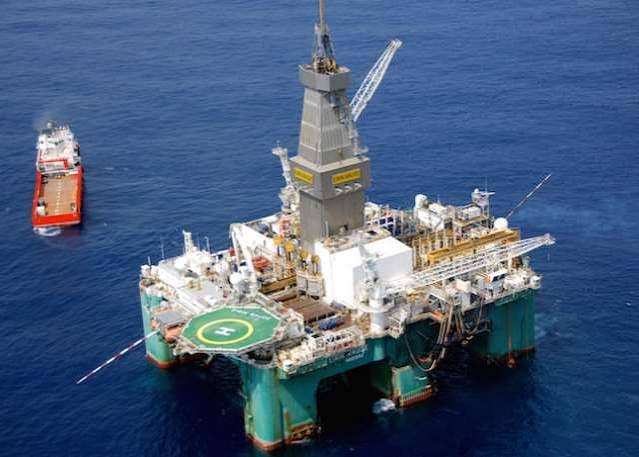
A separate $1.5 billion agreement involving Eni’s OCTP partners covers the Eban-Akoma discoveries and gas infrastructure upgrades intended to add 350 million cubic feet per day of supply by 2028.
These projects provide Ghana with a stronger platform from which to pursue further investment.
However, production growth alone does not guarantee that the country will capture a proportionate share of the economic benefits generated by its petroleum resources.
The strategic question is how to connect additional crude and gas production to domestic processing, industrial activity, employment and technology transfer.
That distinction is central to Ghana’s investment pitch. Investors must see not only opportunities to develop oilfields, but also a regulatory environment and supporting infrastructure capable of sustaining projects across the petroleum value chain.
The government is reviewing upstream petroleum laws and regulations to improve the country’s competitiveness, with five new petroleum agreements expected before the end of 2026.
The effectiveness of these reforms will depend on whether they provide investors with predictable commercial and regulatory conditions while ensuring that new investment advances Ghana’s longer-term development objectives.
The Refining Gap Is Ghana’s Strongest Case For Investment
The most compelling part of Ghana’s proposition may lie downstream, where the gap between crude production and domestic fuel supply presents both a challenge and an investment opportunity.
Despite producing its own crude, Ghana imports substantial volumes of refined petroleum products because domestic refining has not consistently met national demand.
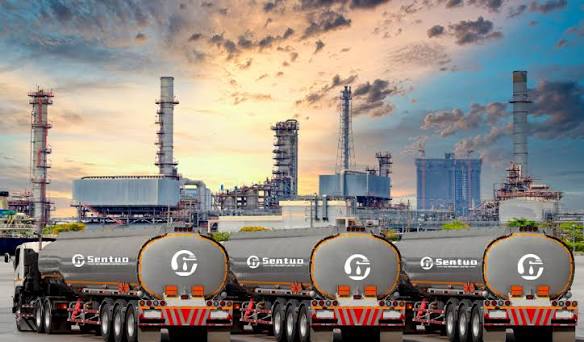
The government is seeking to change that balance, with a target of meeting 70% of domestic fuel demand through local refining. Achieving this would require a major increase from the current estimated domestic contribution of approximately 13%.
Sentuo Oil Refinery is expanding its capacity from 40,000 to 100,000 barrels per day, supported by a $200 million loan coordinated by Ecobank Ghana. Tema Oil Refinery has also begun processing Jubilee crude domestically.
The proposed petroleum hub at Jomoro represents a much larger ambition. The Petroleum Hub Development Corporation is advancing plans for an integrated complex featuring a 300,000-barrel-per-day refinery, a 90,000-barrel-per-day petrochemical plant and marine port infrastructure.
The investment case is significant: refining crude locally could retain more processing activity within Ghana, support related industries and reduce the country’s dependence on imported finished products.
Petrochemical production could also create opportunities to supply industrial inputs rather than relying exclusively on the sale of raw resources.
But the distinction between proposed capacity and operational output matters. Refinery projects require substantial capital, reliable crude supply, dependable utilities, efficient logistics and markets for the products they produce. Their contribution to energy security will depend on whether those conditions can be secured over the long term.
Ghana’s pitch at AEW must therefore convince investors that its downstream ambitions can progress beyond announcements and become viable industrial operations.
Gas Infrastructure Could Make Or Break The Strategy
Ghana’s investment proposition also depends on its ability to supply enough natural gas to support electricity generation and emerging industrial demand.
The Ghana National Petroleum Corporation projects that gas demand could reach 840 million cubic feet per day by 2030, above current output.
Meanwhile, planned gas infrastructure upgrades are intended to increase supply and support future production and processing activities.
This creates a coordination challenge. Gas is essential to power generation, but it is also an important input for industrial facilities and the proposed refining and petrochemical developments.
If supply fails to keep pace with demand, new industrial capacity could face higher operating costs or unreliable fuel availability, weakening the investment case.
Conversely, well-planned infrastructure could improve the commercial prospects of multiple projects by connecting production, processing and end users.
Investors assessing Ghana will therefore need to consider the full system: the availability of gas, the capacity to process and transport it, the pricing framework and the competing demands of electricity generation and industry.
The government’s challenge is to demonstrate that these components are being developed as part of a coordinated strategy rather than as isolated projects.
Regulatory Credibility Will Matter As Much As Capital
Ghana’s renewed upstream activity and planned downstream expansion give it a stronger investment narrative, but competition for energy capital across Africa remains intense.
The country’s success will depend not only on the scale of the projects it presents, but also on the credibility of its regulatory arrangements, the pace of implementation and the commercial conditions available to investors.
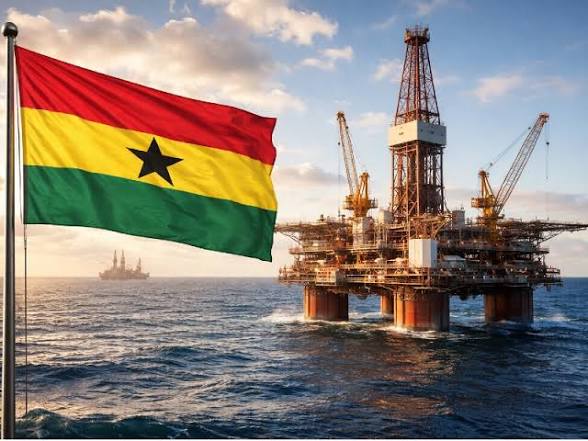
The five anticipated petroleum agreements and the proposed changes to upstream legislation will be important signals.
Investors will want clarity on the terms under which projects can proceed, the predictability of regulation and the extent to which infrastructure and government commitments can support long-term operations.
At the same time, Ghana must ensure that attracting capital translates into wider domestic benefits.
A stronger petroleum sector should be assessed not only by the volume of oil produced or the money committed, but also by the local capabilities, jobs, industrial linkages and value retained in the economy.
That broader objective has featured in the government’s recent upstream investment messaging, including at Africa Oil Week 2026, where officials emphasised value creation beyond crude production.
AEW To Put Ghana’s Ambitions Before Investors
African Energy Chamber Executive Chairman NJ Ayuk said Ghana’s upstream recovery had created an opportunity to reconsider the country’s position in the petroleum value chain.

“Ghana has spent 15 years exporting crude and importing fuel. Its upstream recovery opens a window to change the conversation, and investors at AEW will want to see how the regulatory reforms help keep the downstream capital flowing,”
The remarks capture the central tension in Ghana’s investment proposition: the country has resources and renewed upstream momentum, but it must now attract and coordinate the investment needed to process more of those resources domestically.
The $3.5 billion in upstream commitments, Sentuo’s expansion, renewed activity at Tema Oil Refinery and the proposed Jomoro hub provide the basis for that argument. Yet each project will face its own financing, infrastructure, operational and market requirements.
The estimated $3 billion annual petroleum import bill underscores the potential economic significance of expanding domestic refining, although the actual reduction in import costs will depend on refinery performance, production costs and market conditions.
Ghana’s presence at AEW 2026 is ultimately an effort to turn that opportunity into investor confidence. The country is selling more than an increase in crude production: it is presenting the prospect of a petroleum industry that links exploration and production to refining, gas processing and industrial development.
The decisive measure will be whether the investment conversations lead to projects that are financed, completed and operated reliably.
For Ghana, the next chapter of its petroleum story will be defined not simply by how much oil it extracts, but by how effectively it converts that resource into domestic production, industrial capacity and lasting economic value.
READ ALSO: UNHCR Warns Funding Crisis Threatens Refugee Protection