Ghana’s ambition to transform itself into West Africa’s leading petroleum processing and trading centre has moved closer to reality, with the government announcing that an agreement to commence the long-awaited Petroleum Hub project is nearing completion.
The development signals renewed momentum for one of the country’s most ambitious industrial and energy infrastructure initiatives, which authorities believe could redefine Ghana’s role in the regional petroleum value chain while unlocking investment, creating thousands of jobs and strengthening energy security across the sub-region.
Speaking at the Ghana International Petroleum Conference (GHiPCON) 2026 in Accra, the Minister of Energy and Green Transition, Dr John Abdulai Jinapor, said government efforts to revive the project since assuming office had reached an advanced stage, bringing the country closer to launching a development that has remained on the drawing board for years.
The announcement comes at a time when Ghana is pursuing an aggressive strategy to increase domestic value addition in the petroleum sector through expanded refining, storage infrastructure and downstream industrialisation. It also aligns with the government’s broader objective of positioning the country as a preferred destination for petroleum logistics, trading and investment within the West African region.
Beyond its physical infrastructure, the Petroleum Hub is expected to reshape Ghana’s downstream petroleum landscape by reducing dependence on imported refined products, expanding export opportunities and supporting regional energy integration through increased refining and storage capacity.
Government pushes project towards implementation
Addressing industry leaders, regulators and investors at the conference, Dr Jinapor said government had made significant progress in advancing the project after months of intensive engagement.
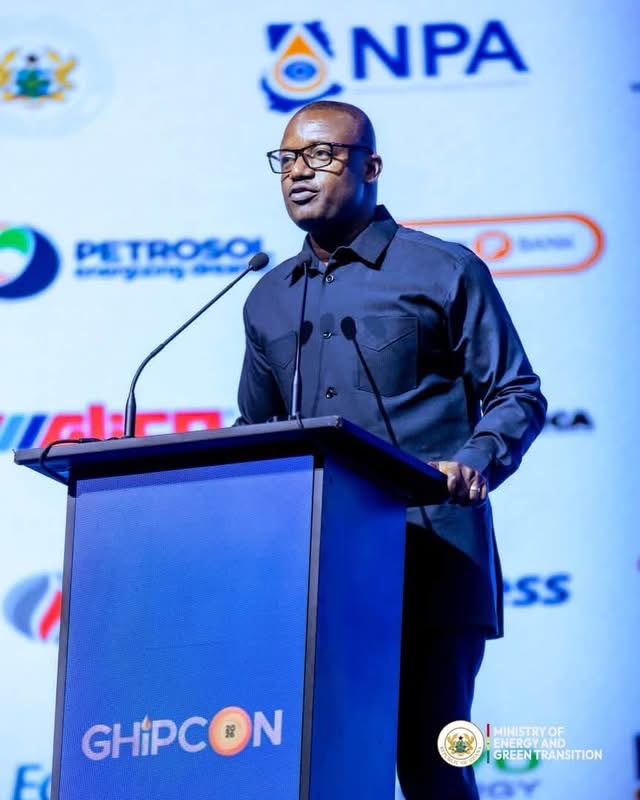
We are working with neighbouring countries so that Ghana will become a hub for fuel and other petroleum products. Since assuming office, we have been working around the clock, with Dr Toni Aubynn leading the team. We are now at the point of signing the agreement so that we can develop this potential, create jobs, and put the country on a sound economic footing. The future is bright.
Dr John Abdulai Jinapor, Minister of Energy and Green Transition
Although the minister did not disclose the specific agreement or timeline for execution, his remarks represent one of the clearest indications yet that the project is entering an implementation phase after years of planning.
He further reaffirmed government’s commitment to transforming Ghana into a major player within Africa’s petroleum industry, describing the Petroleum Hub as central to that vision.
The renewed optimism surrounding the project comes as Ghana continues to reposition its downstream petroleum sector through expanded local refining, strategic investments and policies aimed at retaining greater value from the country’s hydrocarbon resources.
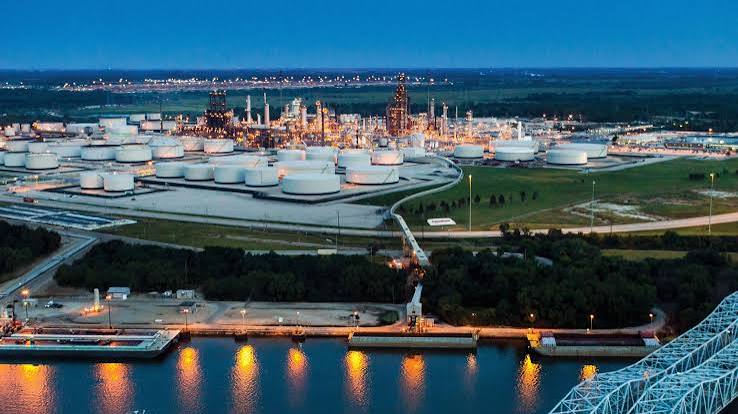
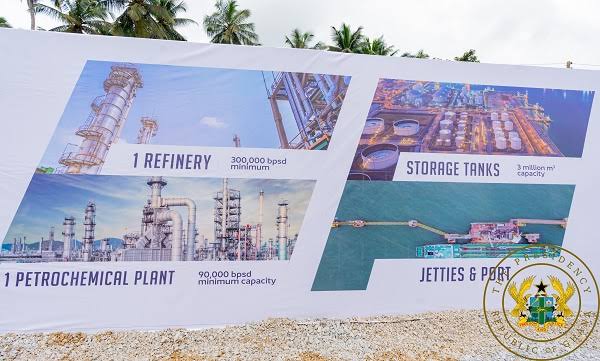
The Petroleum Hub is expected to be developed in the Jomoro Municipality of the Western Region and will comprise three refineries, five petrochemical plants, storage terminals, jetties and port infrastructure, creating what government envisions as an integrated petroleum and petrochemical ecosystem.
Regional partnerships gather momentum
Government’s renewed push has been accompanied by growing international interest in the project.
While details of the impending agreement remain undisclosed, recent engagements suggest Ghana is actively seeking strategic investors capable of supporting the hub’s development.
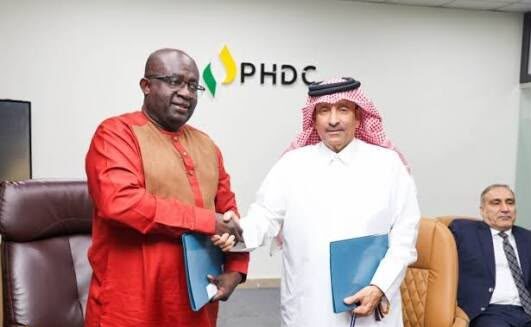
In recent months, the Petroleum Hub Development Corporation (PHDC) has intensified discussions with potential international partners as it works to mobilise capital and technical expertise required for the multi-billion-dollar project.
One of the most notable developments has been the signing of a Memorandum of Understanding with Qatar-based Al Kaabi Holding Group, signalling the company’s intention to participate in developing key infrastructure within the Petroleum Hub.
The Corporation has also confirmed discussions with the Embassy of the United Arab Emirates, where both sides explored opportunities for collaboration on the project.
These engagements underscore government’s preference for building international partnerships capable of accelerating implementation while positioning Ghana as an attractive destination for long-term energy investment.
According to reports, the Energy Minister disclosed that government was close to signing an agreement to commence the Petroleum Hub project after months of intensive work since assuming office, describing the development as a major step towards establishing Ghana as a regional petroleum hub.
Building a downstream powerhouse
The Petroleum Hub represents one of the largest proposed downstream petroleum developments on the African continent.
Unlike conventional refinery projects focused solely on fuel production, the hub is designed as a fully integrated industrial complex combining refining, petrochemical manufacturing, storage and maritime logistics.
Such an integrated model is expected to create multiple value chains extending beyond petroleum products into petrochemicals, plastics manufacturing, industrial chemicals, logistics and port services.
Industry analysts have long argued that Africa’s continued export of crude oil alongside heavy dependence on imported refined products has limited the continent’s ability to maximise economic benefits from its natural resources.
By expanding domestic refining and petrochemical capacity, Ghana hopes to capture more value locally while supplying petroleum products to neighbouring markets.
The country’s strategic location along the Gulf of Guinea, combined with its political stability and relatively developed petroleum regulatory framework, has frequently been cited as a competitive advantage for attracting regional petroleum trade.
Government believes these advantages can support its broader ambition of making Ghana a preferred destination for petroleum storage, refining and distribution across West Africa.
Supporting economic transformation
The Petroleum Hub also fits into government’s wider industrialisation agenda.
Authorities expect the project to stimulate employment across construction, engineering, logistics, manufacturing and professional services while encouraging local participation in the downstream petroleum industry.
Beyond direct employment, the hub is expected to create opportunities for small and medium-sized enterprises through supply chains supporting maintenance, fabrication, transportation, catering, security and other ancillary services.

The project could also strengthen Ghana’s export earnings by increasing production of refined petroleum products and petrochemicals for regional markets.
For government, the long-term objective extends beyond energy security.
Officials increasingly view downstream petroleum development as an industrial policy capable of driving broader economic diversification while strengthening Ghana’s position within the African Continental Free Trade Area (AfCFTA).
The latest announcement therefore represents more than progress on a single infrastructure project.
It reflects government’s determination to build an integrated petroleum economy capable of supporting industrial growth, attracting foreign direct investment and expanding Ghana’s influence within Africa’s evolving energy landscape.

With negotiations now approaching what the Energy Minister described as the agreement stage, attention will increasingly turn to implementation timelines, financing arrangements and the delivery model that will ultimately determine how quickly the Petroleum Hub moves from ambition to reality.
For Ghana’s downstream petroleum sector, the coming months could prove decisive in shaping one of the country’s most significant energy infrastructure projects in decades.
READ ALSO: GSE Opens Week with Sharp Trading Decline