
Ghana’s ambition to build a stronger industrial economy will require more than access to imported petroleum products.
It will also depend on the country’s ability to process crude locally, retain value within its economy and establish a commercially sustainable refining industry capable of competing with international suppliers.
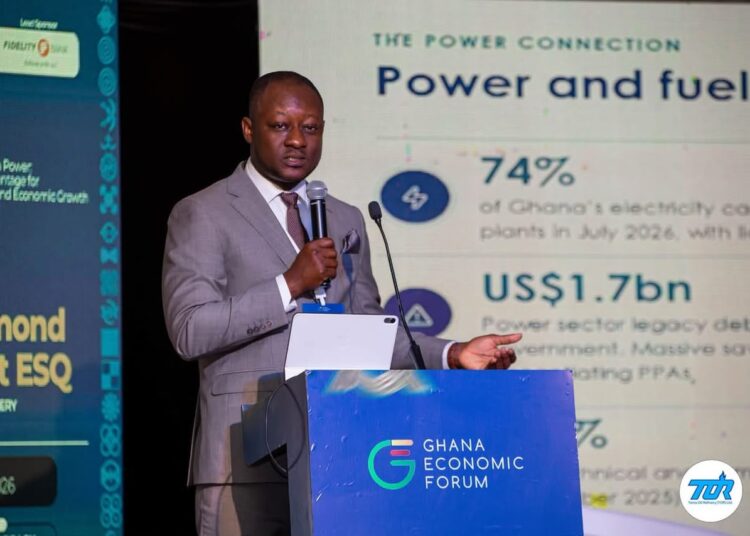
That was the central message from Tema Oil Refinery (TOR) Managing Director, Edmond Kombat, who has called for greater investment in domestic refining to reduce Ghana’s dependence on imported finished petroleum products and strengthen the energy foundations of industrialisation.
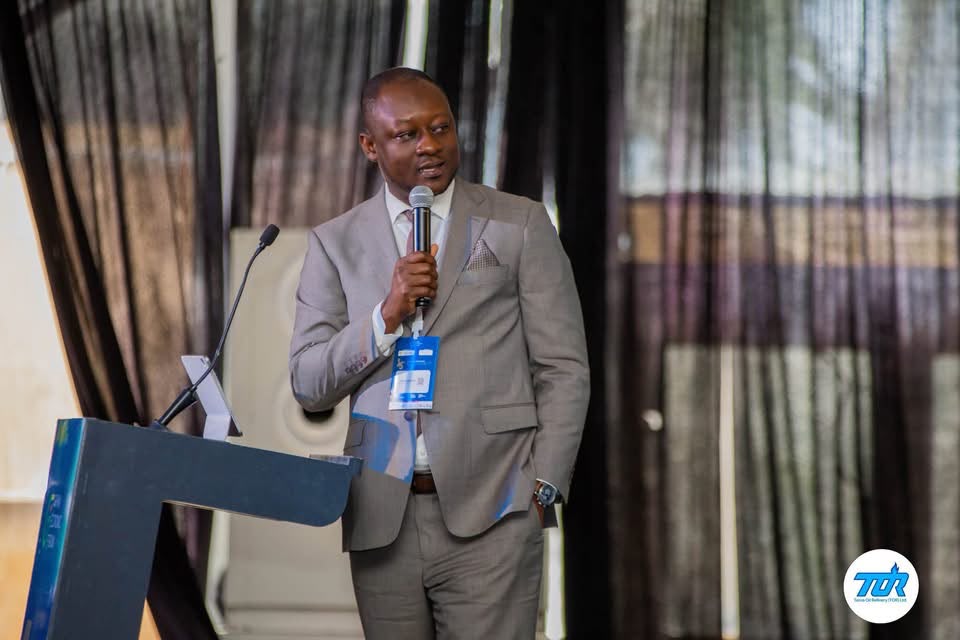
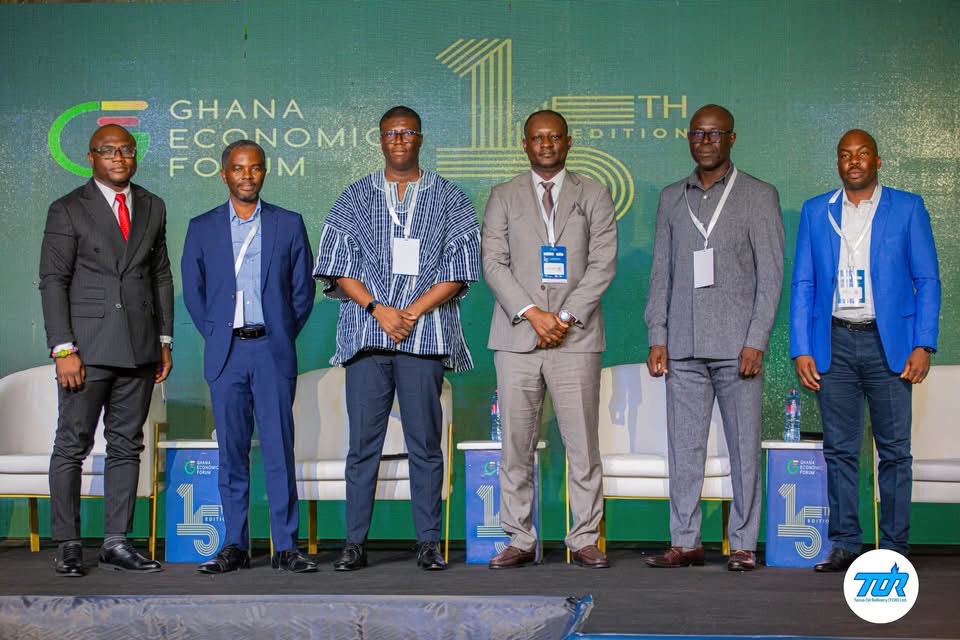
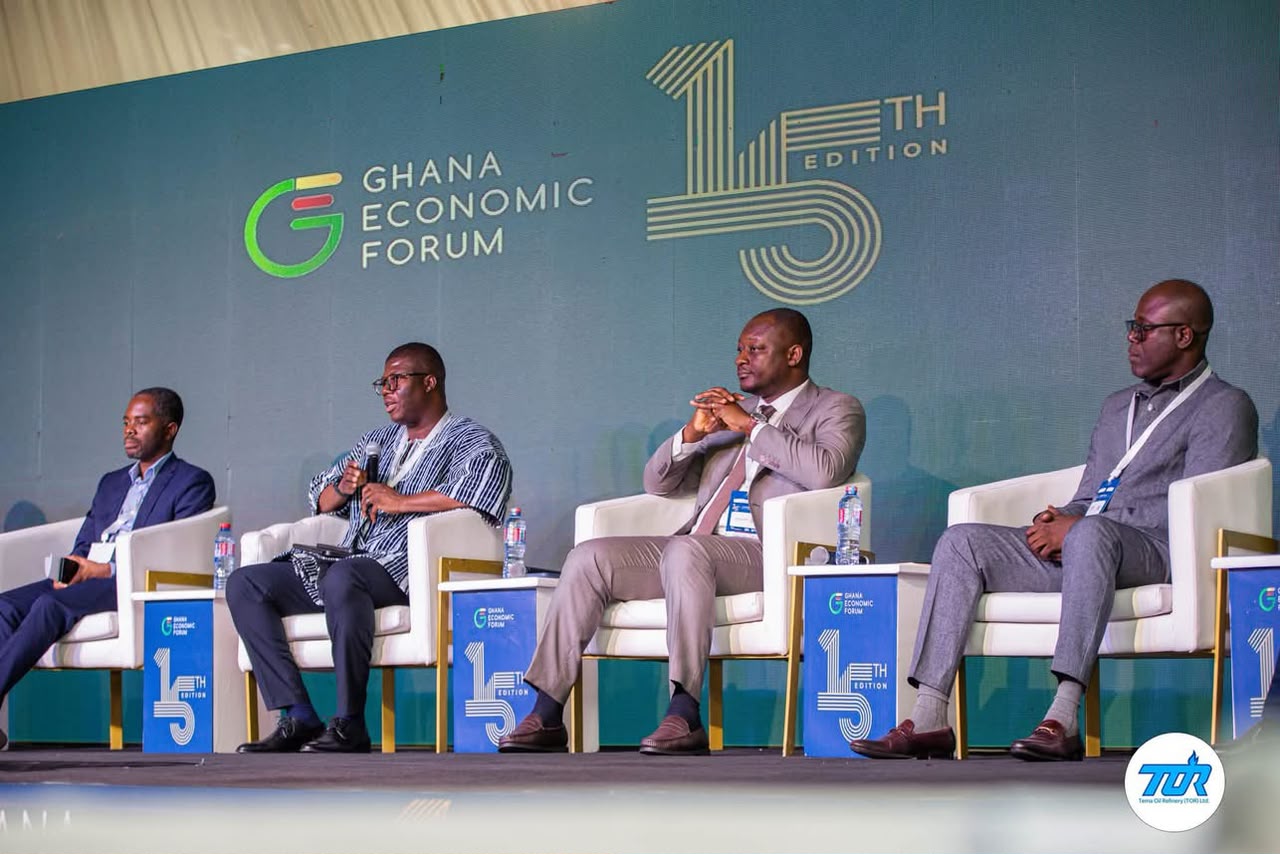
Speaking at the Energy Day of the 15th Ghana Economic Forum in Accra on Wednesday, November 11, 2026, Mr Kombat said local refining could support fuel availability, industrial production, power generation and employment, while creating opportunities in petrochemicals and other related businesses.
His appeal comes as TOR seeks to consolidate its return to crude processing, rehabilitate critical infrastructure and improve its financial position ahead of a proposed listing on the Ghana Stock Exchange in 2028.
However, the challenge facing Ghana is not simply how to increase refining capacity. It is how to make domestic refining efficient, financially viable and competitive in a downstream market where importers can continue to bring in finished petroleum products.
Import Dependence Leaves Industry Exposed
Ghana’s reliance on imported refined petroleum products exposes its economy to international supply disruptions and costs that are largely beyond domestic control.
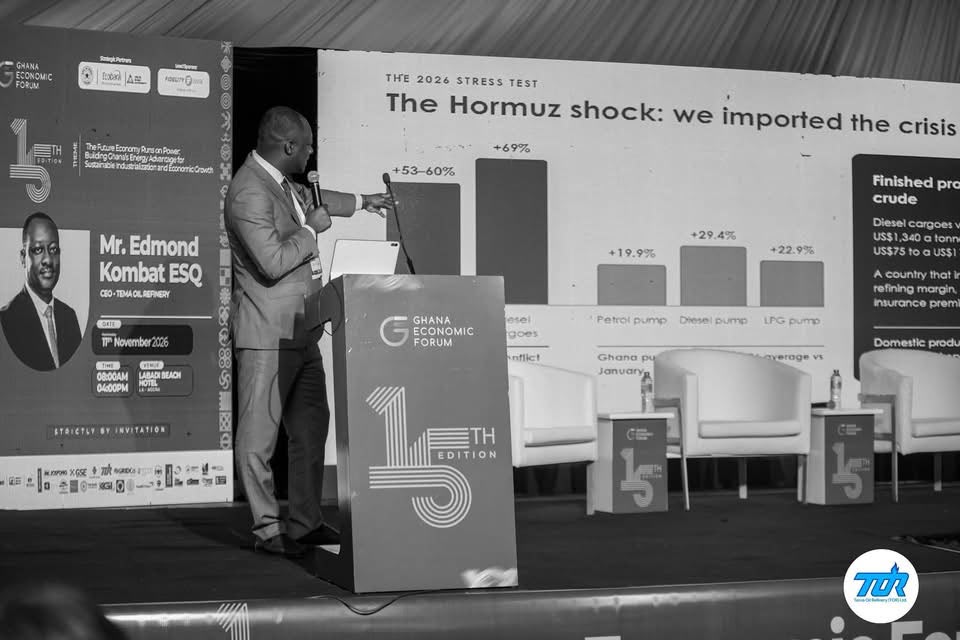
Mr Kombat pointed to instability in international petroleum markets, particularly around the Strait of Hormuz, where disruptions to shipping can increase freight charges, insurance premiums and the cost of petroleum products.
For an economy seeking to expand manufacturing and industrial production, such exposure creates an additional source of uncertainty.
Businesses that depend on petroleum products for transportation, production processes and power generation can face higher operating costs when international supply conditions deteriorate.
Increasing domestic refining capacity could help Ghana reduce its dependence on imported finished products and retain more of the economic activity associated with processing petroleum within the country.
The benefits, according to Mr Kombat, extend beyond producing petrol, diesel and other conventional fuels.
A stronger refining industry could create opportunities for petrochemical production and businesses providing engineering, maintenance, storage, logistics and other supporting services.
Yet domestic refining should not be mistaken for complete protection against international price shocks. Ghana would still need access to crude oil, financing, technology and other inputs whose costs are influenced by global markets.
The real opportunity is to develop a refinery capable of processing crude reliably and supplying products at prices that can compete with imports.
TOR’s Recovery Must Deliver Commercial Results
TOR’s return to crude processing in December 2025 provides a foundation for the renewed push towards domestic refining.
The refinery had endured several years of operational difficulties, with the shutdown of its Crude Distillation Unit limiting its contribution to Ghana’s petroleum supply.
Its resumption of processing was therefore an important development for the country’s domestic refining ambitions.
Management has since been pursuing measures to improve operational efficiency, rehabilitate critical infrastructure and expand processing capacity.
But the refinery’s long-term contribution will depend on whether it can maintain consistent operations and produce petroleum products at commercially competitive costs.
Kombat has acknowledged that TOR must adapt to the realities of Ghana’s deregulated downstream market, where oil marketing companies and bulk distribution companies have the option of sourcing finished products from international suppliers.
Speaking at the same forum, he stressed that operational efficiency, product quality and pricing would determine the refinery’s ability to retain customers.
“What will save you in an open market is your quality and then your price. So we have to run the organisation professionally and make sure that we take our customers seriously.”
Tema Oil Refinery (TOR) Managing Director, Edmond Kombat
The statement captures a central challenge for TOR. Its status as a strategic national asset does not automatically guarantee demand for its products. It must demonstrate that locally refined fuel can compete on quality, price and reliability.
Kombat also rejected the idea that Bulk Distribution Companies (BDCs) should be regarded as rivals to the refinery, describing them instead as part of its distribution chain.
“I don’t see the BDCs as an attainment to TOR. I see them as extensions of TOR because they distribute, they buy and distribute. They are not refining.”
His position suggests that TOR’s commercial recovery will require stronger relationships across the downstream market rather than an attempt to operate independently of existing distribution arrangements.
2028 Listing Tied To Financial Restructuring
A major part of TOR’s strategy to secure its future is a proposed listing on the Ghana Stock Exchange by 2028.
Kombat said management is working to restructure the refinery’s debt, strengthen its balance sheet and achieve sustained profitability before the planned listing.
The objective is to attract private-sector investment and establish stronger corporate governance arrangements that can support the refinery beyond changes in political administration.
He disclosed that TOR had inherited negative equity of GH¢7.5 billion, which had reduced to GH¢5 billion by the end of 2025.
Explaining the financial restructuring effort, he said:
“We want to clean it and move to a positive equity and restructure the debt and we are targeting 2028 to list it.”
The proposed listing is significant because TOR’s operational recovery cannot be separated from its financial condition.
A refinery burdened by substantial liabilities may struggle to secure the capital required for major rehabilitation, equipment upgrades and sustained operations.
Kombat also indicated that private participation could strengthen the refinery’s independence by bringing additional oversight into its governance structure.
“If it is listed with some level of private participation, whether it’s private pension funds or any other, that brings independent directors on the board. It will be more secured and more sustainable,”
However, the proposed listing will require more than an improved balance sheet. Investors will need confidence that TOR can generate consistent returns, manage its operational risks and compete effectively in the downstream petroleum market.
Refining Must Connect With Industrial Development
The wider significance of domestic refining lies in its potential to support industries beyond the petroleum sector.
A stronger local refining industry could provide more dependable supplies for businesses while stimulating demand for Ghanaian technical expertise, engineering services, logistics and other supporting activities.
The potential for petrochemical development is particularly important because it could expand the economic value derived from petroleum beyond conventional fuel production.
However, realising these opportunities will require coordinated investment in crude supply arrangements, refinery infrastructure, storage facilities, technical capacity and the wider downstream value chain.
Ghana must also establish a policy environment that encourages investment without insulating inefficient operations from competition.
Supporting domestic refining should not mean protecting a refinery regardless of its costs or performance.
The proposed 2028 listing could provide an important opportunity to attract capital and strengthen accountability, but the more immediate priority is demonstrating that TOR can operate consistently and supply products at competitive prices.
Ultimately, Ghana’s industrial ambitions will benefit from a stronger domestic refining industry only if the country can turn its existing infrastructure into a commercially sustainable operation.
The challenge for TOR is to ensure that its recovery becomes more than a return to processing: it must become the foundation of a competitive refining business capable of supporting Ghana’s long-term industrial growth.
READ ALSO: BoG Approves 46 International Money Transfer Operators