
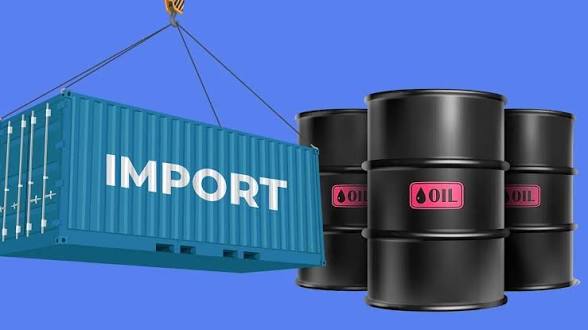
Ghana’s fuel market has spent much of 2026 demonstrating a difficult reality: when international petroleum markets move sharply, the effects can reach Ghanaian motorists and businesses with remarkable speed.
The latest increase in the National Petroleum Authority’s (NPA) price floors is therefore better understood as part of a broader six-month pattern than as an isolated September adjustment.
From March to September, Ghana’s petrol price floor has moved from GH¢10.46 per litre at the beginning of March to GH¢16 as of September 16, representing an increase of about 53%. Diesel has followed a similar trajectory, rising from GH¢11.42 to GH¢16.77 over the same period, an increase of approximately 47%.
But the numbers conceal an important feature of the market: the increase has not been constant.
A Market Moving In Both Directions
The first half of 2026 illustrates how quickly Ghana’s fuel market can change.
Petrol rose from GH¢10.46 at the beginning of March to GH¢11.57 in the second March window before climbing sharply to GH¢13.30 on April 1. Diesel experienced an even steeper movement, reaching GH¢17.10 from GH¢14.35 over the same transition.
Prices subsequently moderated.
The May 1 petrol floor was GH¢13.25, while diesel fell to GH¢14.30. Petrol then increased to GH¢15.20 for the first June window before falling sharply to GH¢13.39 in the second half of June. Diesel moved from GH¢15.49 to GH¢15.11.
July provided further relief. Petrol fell to GH¢12.79 and diesel to GH¢13.54 at the beginning of the month. By the second July window, however, both had started moving upward again, reaching GH¢13.28 and GH¢14.35 respectively.
The reversal became much sharper in August. The petrol floor rose to GH¢14.53, while diesel jumped to GH¢16.97; a 9.4% increase for petrol and 18.3% for diesel compared with the preceding window.
The second August window again brought some relief, with petrol falling to GH¢13.92 and diesel to GH¢15.19. September then reversed those reductions, first taking petrol to GH¢14.53 and diesel to GH¢15.60, before the latest September 16 adjustment pushed the floors to GH¢16 and GH¢16.77.
The pattern is revealing. Ghana is not experiencing a straight-line fuel-price crisis; it is experiencing a highly externally exposed market in which relief can be quickly erased by another international shock.
The Import Dependency Problem
This is where the fuel-price discussion becomes an energy-security issue.
Ghana produces crude oil, yet remains heavily dependent on imported refined petroleum products. Data from the Ghana Statistical Service show that fuel accounted for 26% of Ghana’s total imports in 2025, making it the country’s largest import category.
The contradiction is significant: crude is produced domestically, but much of the value chain that converts petroleum into products consumed by the domestic economy remains exposed to international markets.
The GSS captured the structural problem succinctly:
“We ship out crude oil and buy back refined fuel – value we could capture at home.”
Ghana Statistical Service
That exposure means Ghana is vulnerable through several channels simultaneously: international refined-product prices, crude prices, the cedi-dollar exchange rate, freight and insurance costs, and domestic taxes and levies.
The March market data from the Chamber of Bulk Oil Distributors illustrate the scale of the cost structure.
During the first March pricing window, taxes, levies and regulatory margins accounted for about 39.45% of the ex-pump price of petrol and 35.27% of diesel.
This means international prices are not the only determinant of what consumers pay. But they remain a major external variable over which Ghana has little control.
Why Refining Matters–But Is Not A Complete Solution
Expanding domestic refining is therefore strategically important, but it should not be presented as a guarantee of permanently cheaper fuel.
Benjamin Nsiah, Executive Director of the Centre for Environmental Management and Sustainable Energy (CEMSE), estimates that existing refineries operating at full capacity could currently meet about 60% of Ghana’s petroleum demand, leaving a significant portion dependent on imports.
His assessment highlights an important distinction between reducing import dependence and eliminating international price exposure.
“At full capacity, looking at our current consumption of about 120,000 barrels a day to 140,000 barrels a day, they are likely going to do about 60 per cent of our daily demand.”
Benjamin Nsiah, Executive Director, CEMSE
Local refining can reduce dependence on imported finished products, shorten some supply chains and retain more economic activity domestically. It can also strengthen supply security when international logistics are disrupted.
However, crude oil remains a globally traded commodity. A refinery operating in Tema still has to obtain crude at a cost influenced by international markets. Local refining therefore addresses one layer of Ghana’s vulnerability more directly than another.
This distinction matters as Ghana expands both Tema Oil Refinery and Sentuo Oil Refinery. Sentuo’s Phase II expansion is expected to take its capacity from 40,000 barrels per day to 100,000 barrels per day.
The strategic objective should consequently be broader than simply building refining capacity. Ghana needs reliable crude supply, efficient refinery operations, adequate storage, competitive financing, dependable infrastructure and a pricing system capable of transmitting genuine cost reductions to consumers.
The Cedi Remains A Critical Variable
The second major vulnerability is the exchange rate.
Petroleum imports are predominantly dollar-denominated. Consequently, even when the international price of a refined product is unchanged, depreciation of the cedi increases the local-currency cost of importing it.
The reverse is equally important.

The price reductions recorded in June and July were helped by softer international oil prices and an improving cedi. During the June 16 window, for example, the cedi weakened from GH¢11.59 to GH¢11.80 per dollar even as international crude prices fell sharply.
That episode demonstrates why domestic fuel prices cannot be analysed through crude prices alone.
The cedi effectively acts as a second oil-price variable for Ghana.
The Policy Question Is Bigger Than Pump Prices
The six-month trend suggests that Ghana’s real challenge is not simply how to prevent the next fuel increase.
It is how to make the economy less vulnerable when the next increase in global oil prices occurs.
That requires accelerating commercially viable domestic refining, ensuring locally produced crude can feed domestic refineries where economically appropriate, strengthening strategic fuel storage and improving efficiency throughout the downstream supply chain.
The recent push toward greater local refining is therefore important, but the measure of success should not be refinery capacity on paper.
It should be how much imported refined fuel Ghana actually displaces, how reliably domestic plants operate and whether the savings from shorter and more secure supply chains reach consumers.
The data from March to September make the point clearly. Petrol’s floor has risen by about 53% and diesel’s by about 47% from their March starting points, even after substantial corrections during June and July.
For an economy where fuel represented 26% of merchandise imports in 2025, repeated exposure to such external movements is not merely a transport-cost problem. It is a foreign-exchange, inflation, industrial competitiveness and energy-security problem.
The strategic objective, therefore, should not be to make Ghana immune to global oil prices, that is unrealistic. It should be to ensure that a global oil shock does not translate into the full force of that shock being absorbed by Ghanaian households, businesses and foreign-exchange reserves.
That is ultimately the test of Ghana’s emerging refining and downstream energy strategy.
READ ALSO: Close to GH¢500m Dormant Funds Expose Ghana’s Inheritance Crisis