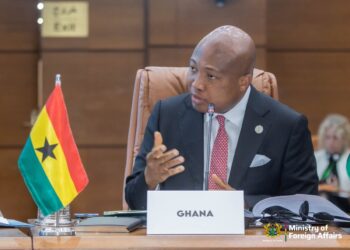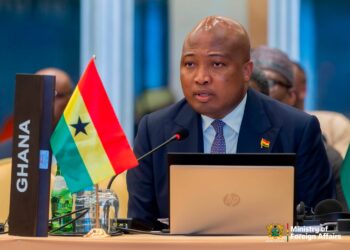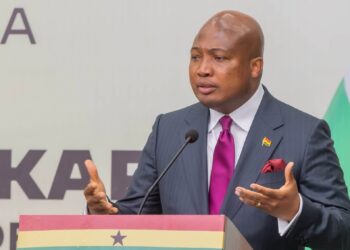
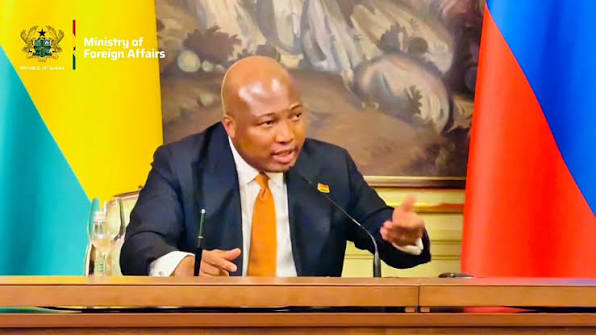
Foreign Affairs Minister Samuel Okudzeto Ablakwa has defended Ghana’s plan to join BRICS, arguing that it strengthens the country’s non-aligned foreign policy rather than weakening it. He made the argument in a media interview today, October 10, 2026.
The North Tongu lawmaker insisted that Ghana will keep its ties with the International Monetary Fund, the World Bank and Western partners while it widens its diplomatic options.
He answered critics who say the move marks a departure from the tradition set by Dr Kwame Nkrumah, and he grounded his case in Article 40 of the 1992 Constitution.
“Look, this rather confirms our non-aligned status.”
Samuel Okudzeto Ablakwa, Minister for Foreign Affairs
Hon. Ablakwa addressed the claim that BRICS membership departs from Ghana’s non-aligned posture, which he described as the defining characteristic of its foreign policy since the days of Nkrumah. Critics have also suggested the move favours some partners over others. He rejected that reading and argued that the opposite is true.
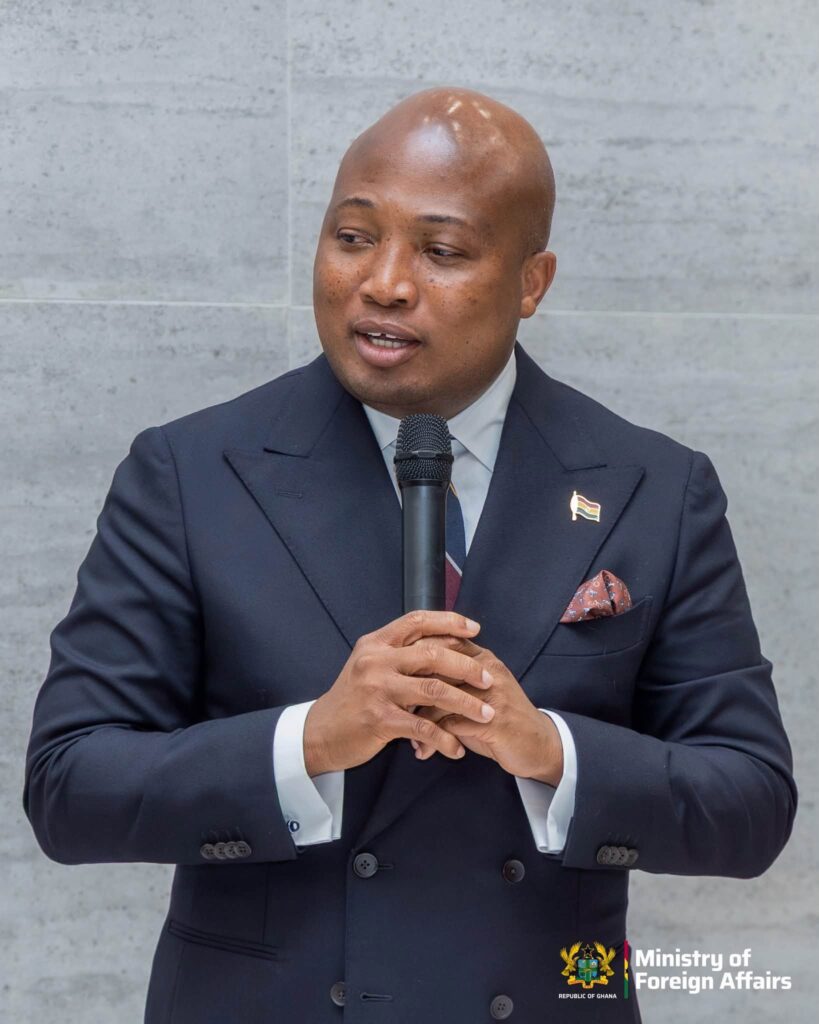
His reasoning rests on choice. The strategic decision, he stated, is “simply to give us choice.” He framed it as freedom of choice and as a way to expand Ghana’s geopolitical footprint.
Nkrumah’s Tradition at the Centre
The Minister reached back to the founding of the non-aligned movement. Ghana formed it in 1961 with Egypt, India and others, he recalled, alongside Nkrumah, Jawaharlal Nehru and Nasser.
President John Dramani Mahama visited Serbia a few weeks ago, where Yugoslavia’s Tito joined Nkrumah and others in Belgrade to mark the movement’s 65th anniversary.
Hon Ablakwa quoted Nkrumah’s line on the subject: “We look neither east nor west; we face forward.” He stated that Ghana has always worked closely with countries now in or around BRICS, including China, India, Russia, Brazil, South Africa and Indonesia.
Western Partnerships Stay
Hon Ablakwa moved to reassure partners and sceptics. During his engagement with the press in the presence of India’s external affairs minister, he recalled that he told reporters Ghana is not going to abandon its traditional ties.
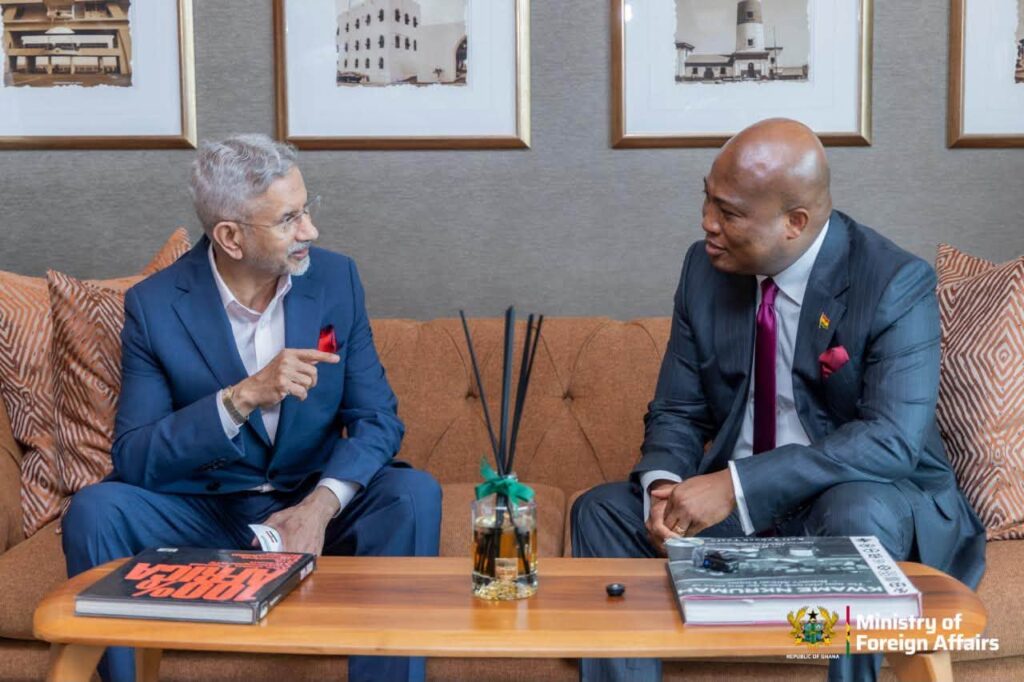
“We are not going to walk away from our traditional partnerships,” he stated. He listed the IMF, the World Bank and Western collaboration, and he pointed to a major European Union defence partnership Ghana has just signed.
“We are going to continue with all of these traditional alliances, but we are giving ourselves more options.”
Samuel Okudzeto Ablakwa, Minister for Foreign Affairs
For Hon Ablakwa, the constitutional test is simple. Article 40 states that the national interest must guide Ghana’s foreign policy at all times, he explained, and that is the first question the country must ask.
He argued that outside approval does not enter into it. “We are here first and foremost to pursue our national interest as Ghanaians,” he insisted.
Navigating Rival Blocs
A reporter pressed him on how Ghana can deal with the IMF and the World Bank while engaging BRICS countries and Iran, and with the United States president’s position on BRICS in mind.
Hon. Ablakwa answered with history. During the Cold War, he noted, Nkrumah secured United States support to build the Akosombo Dam and Russian support to establish the country’s atomic agency, in a bipolar world far less flexible than today’s.
He added that Ghana recognised the state of Palestine more than 20 years ago, and that Palestinian, Israeli and Iranian embassies operate in Accra. China and India are present too, he noted, and Ghana has missions in their capitals.
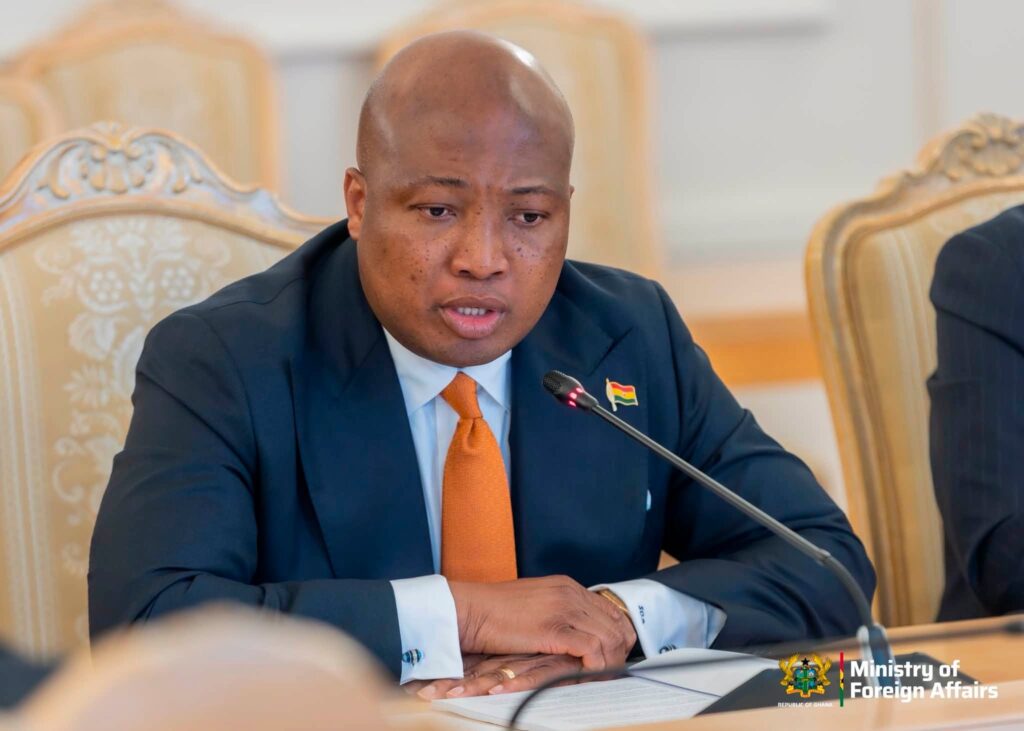
Analyst Sitsofe John Mensah has separately urged that engagement with BRICS be matched by domestic reform and a revival of active nonalignment.
“International relations is very nuanced. It’s not black and white.”
Samuel Okudzeto Ablakwa, Minister for Foreign Affairs
Hon Ablakwa closed by addressing public worries. He sought to allay the fears of Ghanaians and presented the move as another affirmation of non-aligned stature. The country, he explained, is being strategic, opening more channels and seeking more geopolitical influence and economic opportunity.
READ ALSO: Three Ghanaian Artists Named Prince Claus Seed Awardees