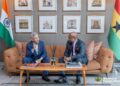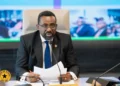
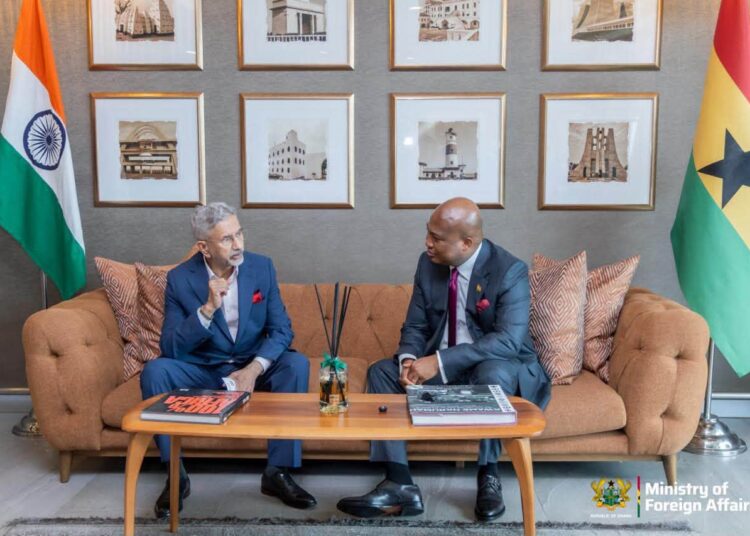
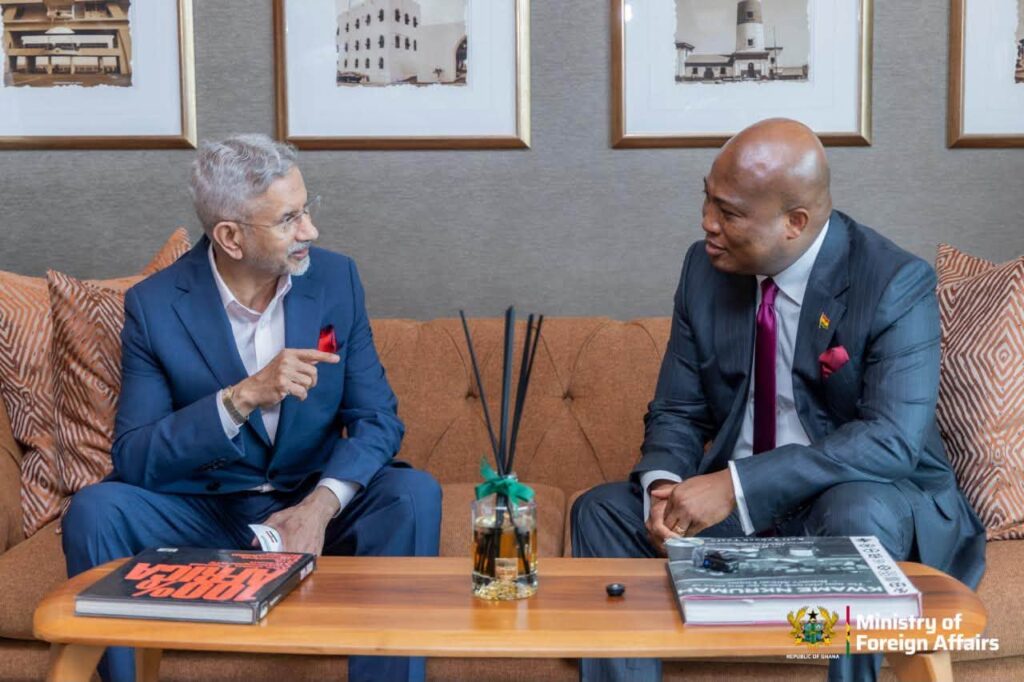
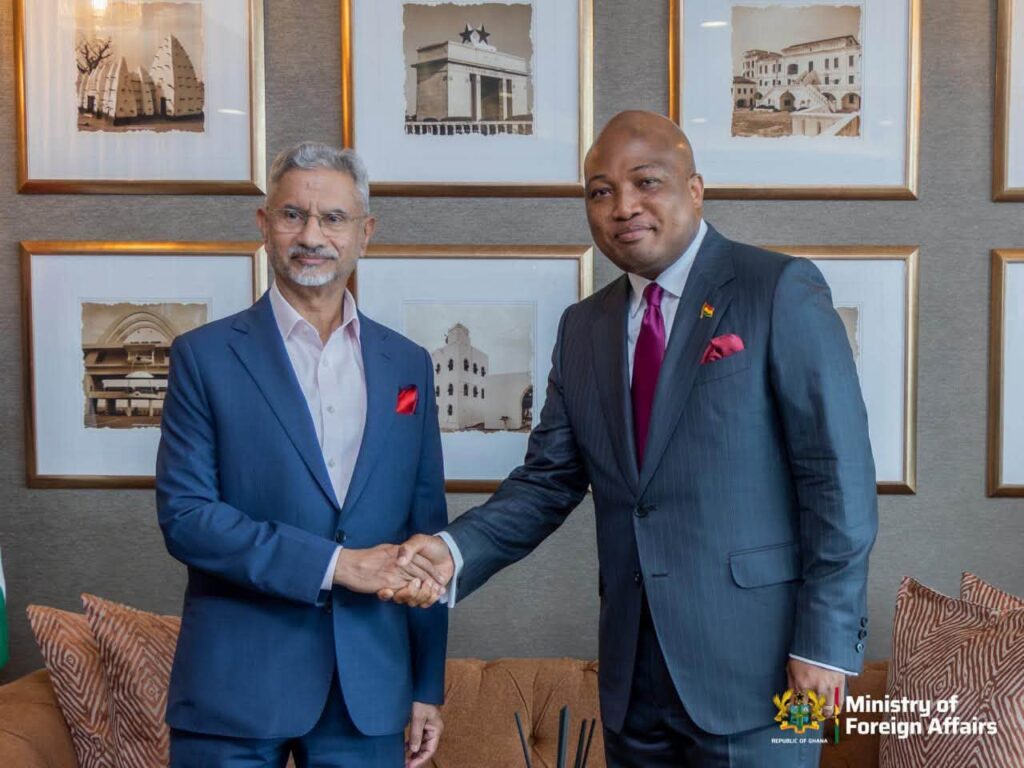
Ghana will formally apply to join BRICS, Foreign Affairs Minister Samuel Okudzeto Ablakwa has announced, saying the cabinet has approved the move. He made the announcement on Tuesday, 6 October 2026, in Accra during the official visit of India’s External Affairs Minister, Dr Subrahmanyam Jaishankar.
Ablakwa tied the decision to what the government calls the new economy, a shift from stabilisation to industrial growth that he says needs a wider circle of partners. He disclosed that Accra has already asked India for help with the application, which is a request to join rather than a membership.
Ablakwa framed the application as insurance against dependence on a few partners. “BRICS offers us that opportunity to have options in the development agenda. We want to have options,” he said.
He drew the boundary quickly. “We are not going to walk away from our traditional partners who value that relationship. But we must have new friends,” he said, pointing to historical partners such as India, Brazil and China.
Ghana remains a member of the International Monetary Fund and the World Bank, he noted, and a founding member of the African Export-Import Bank, which he said came to the country’s rescue with about 700 million dollars during the financial crisis of 2023 and 2024.
From Stabilisation To The New Economy
The government’s argument is about direction. Ablakwa said Ghana is moving from stabilisation to a transformative path, and that the cabinet has approved seven pillars under the new economy.
“We don’t want to remain at just stability. We want sustainable economic growth, which creates jobs, which industrializes our country.”
Foreign Affairs Minister Samuel Okudzeto Ablakwa
He added the demand for resource sovereignty, where Ghana is treated as an equal partner, and a refusal to keep exporting raw materials.
The aim is to add value to natural resources with partners who share history and commitments, an argument President John Dramani Mahama made at the United Nations last month when he said Africa will process its minerals at home.
India At The Centre
India is the anchor of the bid. Ablakwa said Ghana’s trade with India has more than doubled, from about three billion dollars in 2024 to roughly seven billion now. India’s membership of the bloc makes it the natural sponsor.
He also said Ghana can count on its relationships with the founding members and with newer entrants including the United Arab Emirates, Saudi Arabia and Iran, all of which have missions in Accra. He noted that the bloc had just held a summit in New Delhi, which he called very successful.
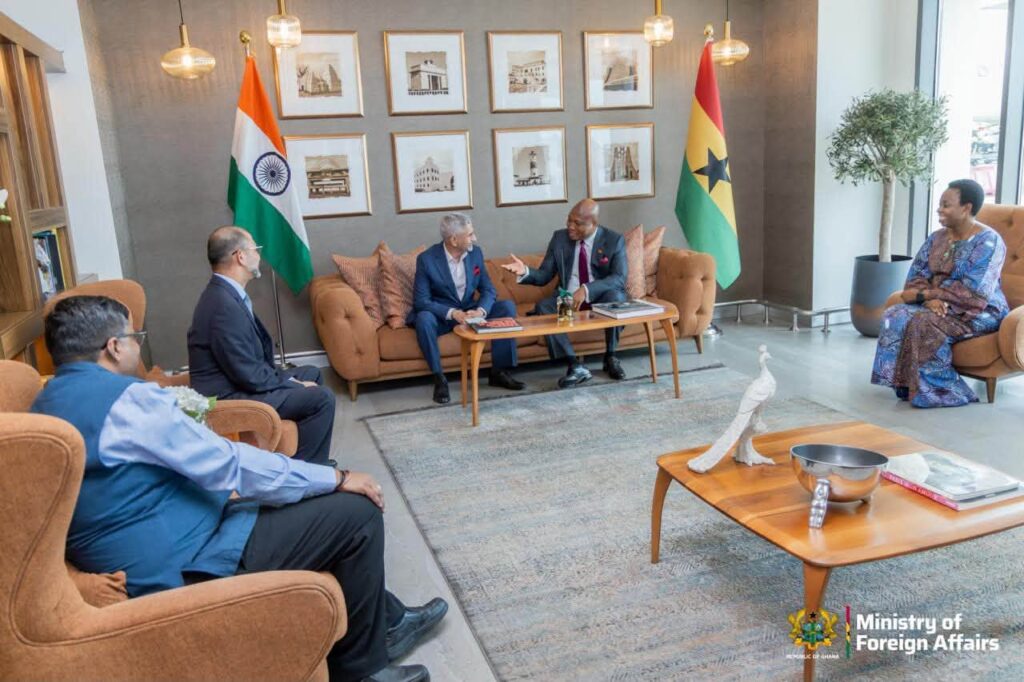
Jaishankar’s response was cordial rather than committal. He said the relationship dates to Ghana’s independence in 1957 and that Ghana’s interest in joining would be considered within the wider engagement between the two countries.
The visit also produced agreements. Ghana and India signed memoranda of understanding covering areas including agriculture, healthcare, railways and information technology.
Ablakwa noted that Ghana’s Accra Reset, Feed Ghana and One Million Coders initiatives have parallels in programmes India is running. Jaishankar welcomed Ghana’s role in the African Union and ECOWAS and called for closer cooperation at the United Nations, including on reform of the Security Council, a cause both governments share.
The visit was billed in advance as an effort to advance cooperation in pharmaceutical development, which fits Ghana’s push to build medicine manufacturing.
What An Application Does And Does Not Do
Cabinet approval starts a process. BRICS decides on new members by consensus among existing ones, and its recent growth has run partly through a partner-country tier, which Nigeria entered in 2025. Ablakwa did not say which category Ghana will seek, or when the application will be filed.
The announcement also carries diplomatic risk. Washington has threatened extra tariffs on countries it considers aligned with BRICS positions, and Ghana’s relationship with the United States has been tested this year, from the withdrawal of USAID funding to Accra’s rejection of the health compact offered in its place.
Ablakwa’s answer is that choice is healthy, since competition helps and Ghana believes in a multipolar world. That position matches the line President Mahama has pressed all year: that Ghana wants to be treated as an equal rather than a dependent.
Whether BRICS delivers it will depend on what the bloc offers beyond rhetoric. Its financing arm, the New Development Bank, and its trade links are the practical prizes, and the application will be judged by whether it brings either to Ghana.
READ ALSO: Bank Fraud Units Get New Powers Under New BoG Directive