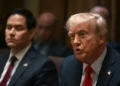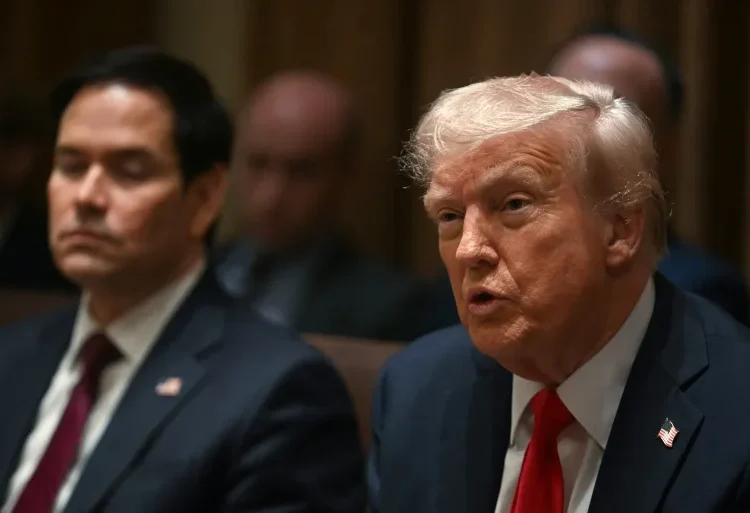
US President Donald Trump has blamed “out of control mass migration” and what he described as “Islam wanting to take over” France for the country’s escalating high school protests, despite the demonstrations being driven primarily by complaints over school conditions, staffing shortages and education funding.
Trump made the comments in a post on Truth Social as tens of thousands of students, teachers and supporters took to the streets across France on Tuesday. The protests, which began in the Paris region in September, have since spread nationwide, with demonstrators demanding improvements to France’s education system.
“What’s happening in France is nothing less than out of control mass migration. This isn’t about schools, this is about Islam wanting to take over a once great Country!”
Donald Trump
The comments came as the French government faced growing pressure to respond to a protest movement that has brought together students, parents and teachers. Demonstrators have raised concerns about deteriorating school infrastructure, teacher shortages, overcrowded classrooms and the length of the school day.
France’s Ministry of Higher Education said around 40% of public higher education institutions experienced some form of disruption on Tuesday, including blockades, closures or occupations. Organisers estimated that about 100,000 people participated in a demonstration in Paris and put the nationwide turnout at around 450,000. The French Interior Ministry gave a considerably lower estimate, saying around 250,000 people demonstrated nationwide, including about 56,000 in Paris.
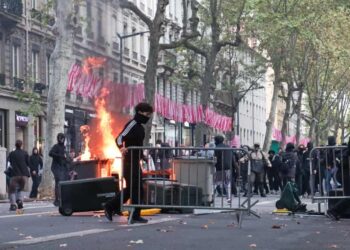
The protests have also been marked by clashes between demonstrators and police in several cities. In Paris, authorities said a group of around 300 people repeatedly confronted police during what was otherwise a largely peaceful demonstration. Tear gas was also used in Strasbourg, Lyon and Rennes, while protesters in some areas lit fires and threw projectiles.
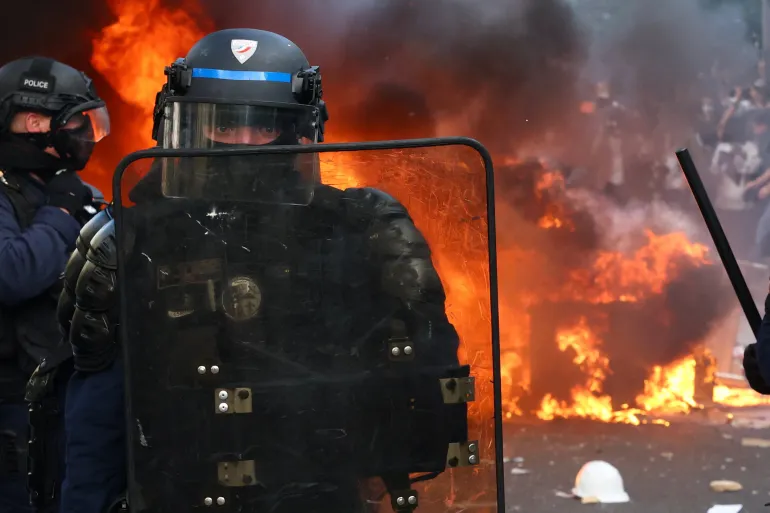
The scale of the unrest has raised concerns over the use of police force against teenagers. More than 6,100 people have been arrested since the protests began, the overwhelming majority of them minors, according to French authorities. More than 700 police officers have also been injured, while at least 215 teenagers and 85 school staff have suffered injuries.
A 15-year-old protester lost a hand in northern France after picking up a police grenade during clashes, further intensifying criticism of the authorities’ handling of the demonstrations. Rights groups, students and parents have accused police of using disproportionate force, while government officials have argued that some protests have deteriorated into violence and vandalism.
Barrot Says Rivals, Partners Are Shaping Protest Narrative
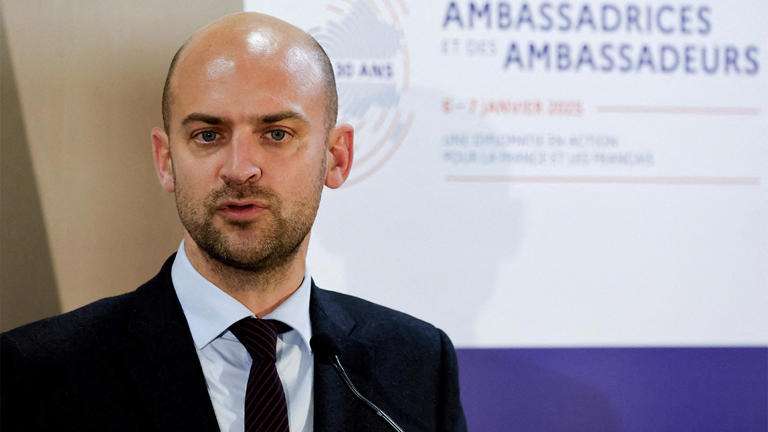
French Minister for Europe and Foreign Affairs Jean-Noël Barrot responded to Trump’s comments by saying that “all our rivals, adversaries, partners, are trying to tell” the ongoing high school protests in France “in their own way.”
Barrot was reacting to Trump’s assertion that immigration and Islam were behind the movement, as the French government continued to present the protests primarily as a dispute over education and school conditions.
Prime Minister Sébastien Lecornu has acknowledged the concerns raised by students while condemning violence around some demonstrations. He has called on the government and school leaders to listen to students and find solutions to their grievances.
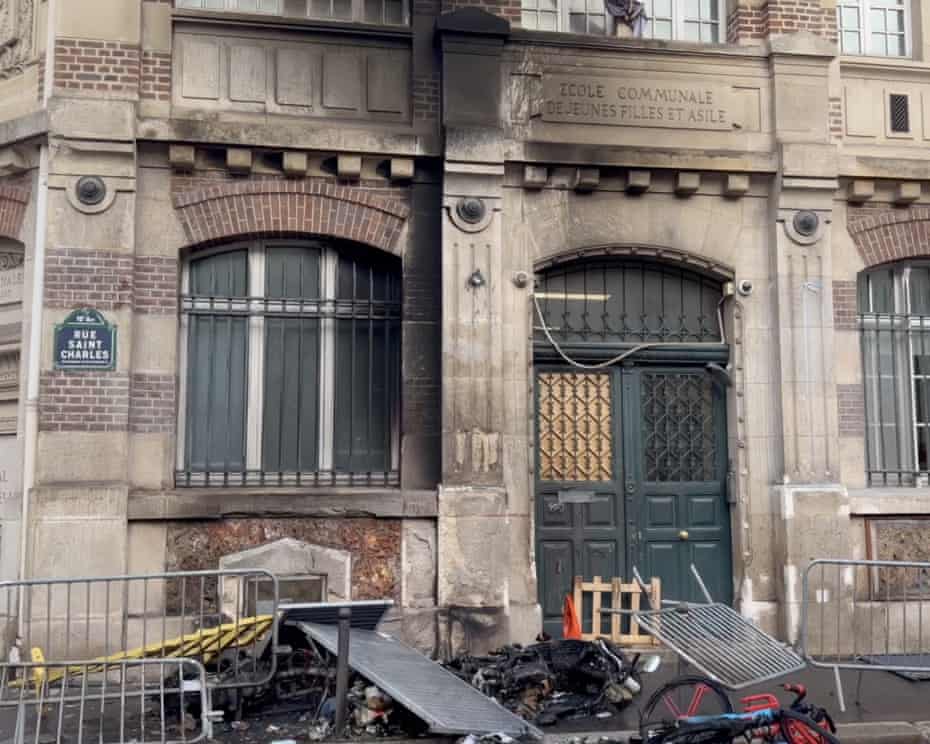
Lecornu announced that high school classes would be suspended across France for the remainder of the week, saying the measure would give headteachers, teachers and students an opportunity to pursue “internal democracy” and address concerns over school conditions. “Burning down a high school does not improve the state of high school buildings,” Lecornu said, drawing a distinction between the students’ demands and acts of vandalism.
Questioned in parliament, the Prime Minister also denounced what he called “ultra violence” threatening schools. He said any “accidents” involving police action would be investigated and rejected allegations that French police were racist, describing the accusation as a “lie.”
The government has simultaneously sought to create channels for students to communicate their concerns. France’s Education Ministry launched an online portal allowing high school students to anonymously describe problems at their schools and propose changes they believe are necessary.
The move comes as students continue to highlight basic difficulties affecting their education. Complaints include inadequate school facilities, shortages of teachers and other staff, long school days and insufficient resources, particularly in disadvantaged areas.
The protests have therefore become a broader political challenge for President Emmanuel Macron’s government, coming as France approaches its next presidential election. The demonstrations have also exposed competing political interpretations of the unrest, with the far left backing many of the students’ demands and the far right calling for a tougher response to disorder.
Trump’s intervention adds an international dimension to the dispute, placing immigration and Islam at the centre of his explanation for events that French officials and protesters have largely framed around the state of the education system.
For the French government, the immediate challenge remains finding a response to students’ demands while preventing further violence and maintaining public order. As demonstrations continue, authorities face pressure to address long-standing concerns within the education system without allowing clashes between protesters and police to further escalate the crisis.
READ ALSO: Mastercard Foundation Deepens Agricultural Learning for Youth,(Happy) Programme