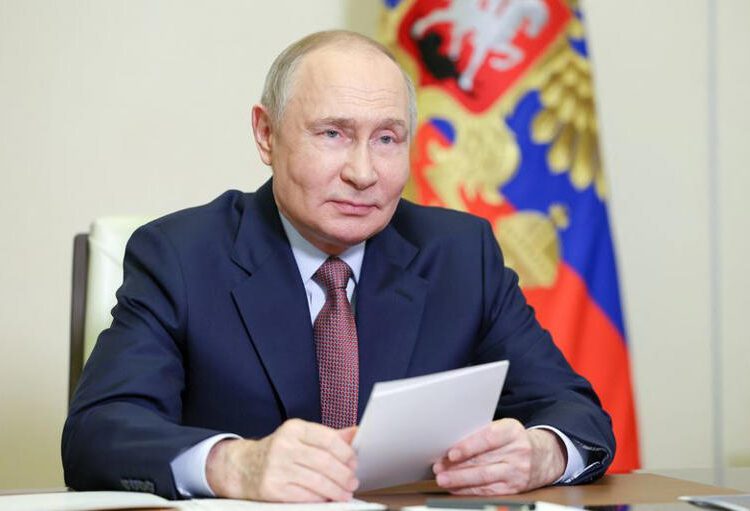
Finnish President Alexander Stubb and Norwegian Prime Minister Jonas Gahr Støre have held a telephone conversation with Russian President Vladimir Putin to discuss efforts to end the war in Ukraine ahead of expected trilateral talks in Abu Dhabi in early November.
The call followed a meeting in Oslo involving US and Ukrainian representatives last week, with the Nordic leaders seeking to advance diplomatic efforts to end Russia’s war against Ukraine.
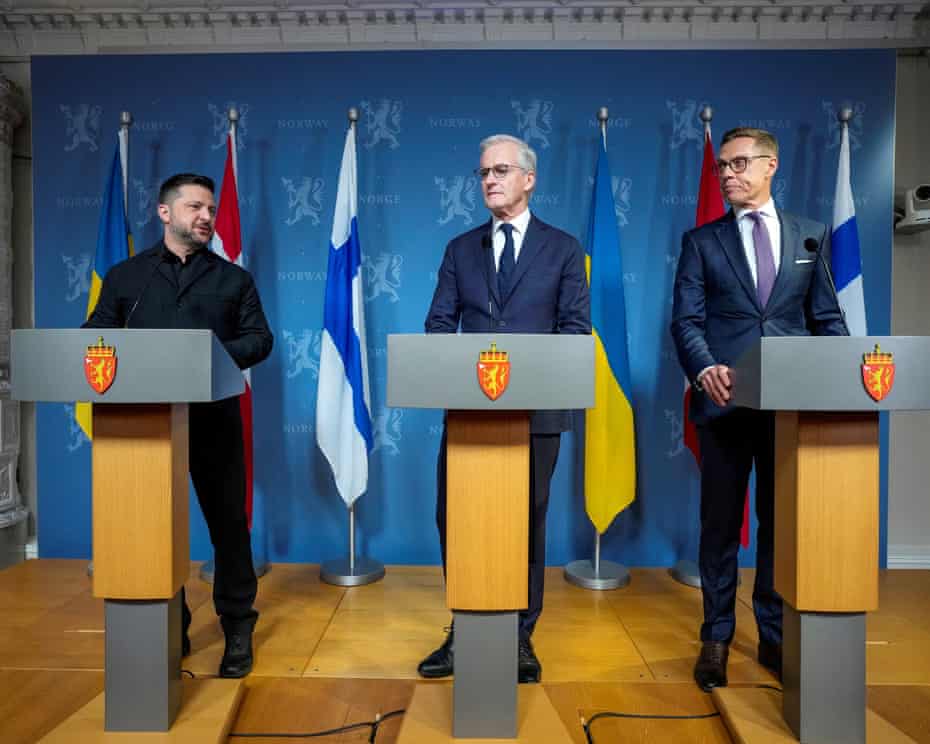
According to a statement from Stubb’s office, the conversation was intended to convey messages directly to Putin regarding future negotiations and was connected to upcoming meetings involving Russia, Ukraine and the United States in the United Arab Emirates. The statement noted, “Finland and Norway border Russia,” adding, “They are firm supporters of Ukraine.”
It added that the call was related to the upcoming meetings in Abu Dhabi.
The discussions come as diplomatic efforts continue alongside the fighting, with the Nordic countries emphasising the importance of regional stability and security.
According to a Russian news agency, the conversation was the first telephone contact between Putin and the two leaders since Russia launched its full-scale invasion of Ukraine in February 2022.
Stubb and Støre Stress Need For Direct Negotiations
Following the conversation, Stubb described the discussions as “frank and substantive”, arguing that direct engagement with Moscow was necessary to bring the war to an end.
Støre also highlighted the human and material costs of the conflict, warning that the consequences of the war would extend across generations.
“The war comes with enormous human and material costs. The suffering and destruction will impact generations. In the call we stressed the importance of de-escalation.”
Jonas Gahr Støre
The leaders also discussed peace and security in northern Europe, particularly the Baltic Sea region and the High North, where Finland and Norway share an interest in stability and predictability.
Their offices stressed that the two leaders had acted in their national capacities rather than representing Europe as a whole. “Norway and Finland have always promoted peace and security in our region,” the statement said, adding that the importance of regional stability had been highlighted during the call.
The diplomatic initiative reflects an effort by the two neighbouring countries to maintain channels of communication with Moscow while continuing to support Ukraine.
However, the extent to which the discussions could influence Russia’s position ahead of the proposed Abu Dhabi meetings remains unclear.
Kremlin Repeats Demands For Russia’s Interests To Be Considered
The Kremlin’s account of the conversation offered a different emphasis, highlighting Moscow’s longstanding position on the causes of the war and the conditions it believes are necessary for a settlement.
According to the Kremlin, Putin “recalled the root causes” of Russia’s invasion of Ukraine and insisted that any peace agreement must take Russia’s interests into account.
The Russian President stressed that a settlement could only be reached with “full and unconditional considerations of the legitimate interests of the Russian Federation.”
The Kremlin also criticised what it described as the “confrontational policies” of the European Union and NATO, arguing that these policies were prolonging the hostilities.
The statements underline the continuing differences between Moscow and Western governments over the origins of the war and the terms required to end it.
While Stubb and Støre have emphasised direct negotiations and de-escalation, Russia’s position suggests that any potential agreement will involve difficult discussions over competing security demands and political objectives.
Following their conversation with Putin, the Finnish and Norwegian leaders briefed Ukrainian President Volodymyr Zelenskyy on the discussions.
Stubb confirmed the subsequent conversation with Zelenskyy in a post on X, saying that Finland and Norway would continue supporting Ukraine and efforts to achieve a just and lasting peace.
The briefing showed the Nordic leaders’ stated intention to keep Kyiv informed of their diplomatic contacts with Moscow.
Denmark Questions Independent Nordic Initiative
The telephone call has also exposed differences among European leaders over how diplomatic engagement with Russia should be conducted.
Danish Prime Minister Mette Frederiksen expressed strong reservations about the initiative, telling the country’s broadcaster that she was “very sceptical” because the discussions had not been coordinated with other European governments. “It has not been coordinated with the rest of us,” Frederiksen said.
She questioned whether Moscow was genuinely interested in peace, pointing to what she described as continuing hybrid warfare and Russian attacks in Ukraine.
“I see no signs that Russia desires peace with Europe – neither in the hybrid warfare taking place every single day, nor in Ukraine, where they are launching fierce and aggressive attacks on a daily basis.”
Mette Frederiksen
Frederiksen argued that European countries should maintain a united position rather than pursue separate diplomatic initiatives. “I believe we should keep Europe united, rather than going it alone,” she said, adding that she did not understand what the Finnish and Norwegian leaders expected to achieve through the call.
The Danish Prime Minister also referred to previous instances in which European leaders had pursued separate contacts with Moscow, arguing that the continent needed to stand together in its approach to Russia.
“We have previously emphasised – in very clear terms, on behalf of the rest of Europe – whenever others have gone it alone and travelled to Moscow, that it is crucial for us Europeans to stand together. That is something many of us have fought for all these years,” she said.
Frederiksen’s criticism highlights a broader question facing European governments: how to pursue diplomatic opportunities without undermining coordination among allies.
With trilateral talks involving Russia, Ukraine and the United States expected in Abu Dhabi in early November, the Nordic leaders’ discussions with Putin could provide another channel for diplomatic engagement.
However, Moscow’s stated demands and European concerns about unity underline the obstacles that remain. Whether the contacts can help narrow differences and advance negotiations will depend on the positions taken by the parties in the upcoming discussions.
Keywords: Alexander Stubb, Jonas Gahr Støre, Vladimir Putin, Ukraine war, Russia, Finland, Norway, Mette Frederiksen, Denmark, Volodymyr Zelenskyy, Abu Dhabi talks, US-Ukraine negotiations, European unity, peace negotiations, diplomatic efforts.