Category: News

  • Cyber Security Authority Warns Over Rising Food Delivery Scams in Ghana

    Cyber Security Authority Warns Over Rising Food Delivery Scams in Ghana

    The Cyber Security Authority (CSA) has issued a public alert over a sharp rise in food delivery scams involving fraudsters impersonating legitimate restaurants and food vendors on Google Search, Google Maps, and other online platforms. The warning, issued by the authority, follows a significant increase in reported cases and financial losses during the first half of the year.

    According to the CSA, cybercriminals are manipulating business listings, replacing genuine contact details with fraudulent phone numbers and payment channels to deceive customers into paying for food orders that are never delivered.

    The Authority has urged the public and businesses to verify contact details, avoid suspicious payment requests, and strengthen online security measures to prevent further losses.

    Food Delivery Scams Record Sharp Increase

    The Cyber Security Authority said it is tracking a growing trend of restaurant and food vendor impersonation scams targeting unsuspecting customers across Ghana. Between January and June 2026, the Authority recorded 112 reported cases involving vendors and customers, compared with 61 cases during the same period last year.

    Financial losses also rose sharply. Victims lost a combined GHS296,083.68 during the first six months of 2026, up from GHS84,592.00 recorded over the corresponding period in 2025. The Authority attributed the increase to cybercriminals exploiting online business listings to impersonate legitimate restaurants and food vendors.

    Acting Director-General of the Cyber Security Authority (CSA), Divine Selase Agbeti
    Director-General of the Cyber Security Authority (CSA), Divine Selase Agbeti

    The CSA explained that fraudsters either create fake business profiles or alter the contact details of legitimate restaurants on Google Search, Google Maps, and similar online platforms.

    According to the Authority, the criminals typically exploit Google’s “suggest an edit” feature, claim unverified business profiles, or create duplicate listings that replace genuine business telephone numbers with fraudulent ones.

    In some instances, the fraudsters purchase sponsored search advertisements to ensure their fake contact details appear prominently at the top of search results, increasing the likelihood that customers will contact them instead of the legitimate business.

    Unsuspecting customers then place food orders, believing they are dealing directly with a genuine restaurant or food vendor.

    Victims Lose Money Through Mobile Money and Fake Payment Links

    After receiving customers’ orders, the fraudsters instruct victims to transfer payment to a designated mobile money account before delivery. Once payment is completed, communication stops and the ordered food is never delivered.

    The Cyber Security Authority also warned that some victims are directed to fraudulent payment links under the pretext of confirming orders or processing payments. These malicious websites request personal information including customers’ names, delivery addresses, and mobile money numbers.

    Once victims provide the requested details, cybercriminals use the information to conduct unauthorised transactions, resulting in additional financial losses beyond the initial food payment.

    CSA Advises Public to Verify Business Details

    The Cyber Security Authority urged consumers to verify restaurant and food vendor contact information before placing online orders. The Authority advised customers to confirm business details through official websites, verified social media pages, or trusted food delivery platforms instead of relying solely on search engine results.

    Consumers were also urged to exercise caution when asked to make payments through unfamiliar links. The CSA encouraged customers to insist on paying only after food has been delivered and inspected where possible.

    It further warned the public never to disclose mobile money PINs, one time passwords, banking credentials, or other sensitive personal information to any website or individual.

    The Authority also advised customers not to approve mobile money payment prompts they did not initiate and to verify payment instructions directly with restaurants using independently confirmed contact details.

    In addition, consumers were encouraged to regularly monitor their mobile money accounts for unauthorised transactions and immediately report suspicious activity to their mobile network operators.

    Restaurants Urged to Secure Online Business Profiles

    The Cyber Security Authority also outlined measures for restaurants, food vendors, and other online businesses to protect themselves against impersonation. Businesses have been encouraged to claim and verify their Google Business Profiles to take control of their online listings.

    According to the Authority, businesses with existing but unverified profiles should search for their listing on Google Maps, select “Claim this business,” choose “Manage now,” and complete Google’s verification process.

    The CSA further advised businesses to display their official telephone numbers and approved payment channels prominently on their verified websites and social media pages. Restaurants and vendors should also inform customers that they will never request mobile money PINs or one time passwords.

    Director-General of the Cyber Security Authority (CSA), Divine Selase Agbeti
    Director-General of the Cyber Security Authority (CSA), Divine Selase Agbeti

    The Authority urged businesses to regularly review their listed phone numbers and profile information, enable notifications for profile changes, monitor suggested edits, and check for duplicate listings.

    Where fraudulent profiles or unauthorised changes are detected, businesses should report them directly to Google through the Business Redressal Complaint Form.

    CSA Offers Cybercrime Reporting Support

    The Cyber Security Authority reminded the public that it operates a 24 hour Cybersecurity and Cybercrime Incident Reporting Point of Contact to assist victims and provide guidance on online security incidents.

    Members of the public can report suspected cybercrime by calling or texting 292, sending a WhatsApp message to 0501603111, or emailing [email protected]. The Authority said timely reporting can help limit financial losses and support investigations into cybercriminal activities.

    With online food ordering becoming increasingly popular, the Cyber Security Authority urged both consumers and businesses to remain vigilant against evolving cyber threats.

    The Authority emphasised that verifying business information, protecting personal and financial credentials, and promptly reporting suspicious activity remain essential steps in reducing the growing threat posed by restaurant and food vendor impersonation scams.

  • We Cannot Risk An Election Without Proper Processes — NPP Deputy Secretary

    We Cannot Risk An Election Without Proper Processes — NPP Deputy Secretary

    The Deputy Secretary of the New Patriotic Party, Haruna Mohammed, has defended the postponement of the party’s United States branch elections, arguing that the process lacked essential arrangements required to guarantee a credible vote. The Chairman of the NPP Elections Committee explained that unresolved appeals, an incomplete voter register, disagreements over the electronic voting platform and difficulties surrounding proxy voting created serious challenges ahead of the scheduled polls.

    Mr Mohammed explained that the NPP released guidelines covering elections across the party’s structures from the polling station level to the regional level. Under the arrangements, branch and regional elections were expected to take place within the same electoral framework.

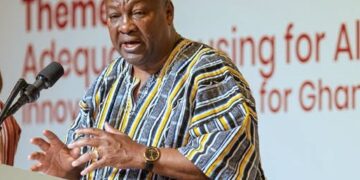
    Haruna Mohammed

    The process, however, encountered difficulties after disagreements emerged between the national party and the NPP USA branch. According to the Deputy Secretary, the US branch sought to proceed with arrangements that differed from guidelines issued by the National Council.

    The National Party subsequently opened discussions with the branch in an attempt to resolve the differences. Mr Mohammed disclosed that he engaged the US branch alongside the General Secretary and the Acting National Chairman as the party explored possible concessions to facilitate the election.

    A major point of disagreement involved the electronic voting system developed by the NPP. The system, which belongs to the party, was rejected by the US branch despite efforts to explore how it could be used alongside physical voting.

    The process also became complicated after about five aspirants were disqualified during vetting. Mr Mohammed explained that the affected individuals were entitled to appeal and that the National Party had established an Appeals Committee to consider their cases.

    By Wednesday, with the election scheduled for Saturday, the appeals remained unresolved. The voter register was also incomplete while the proposed proxy voting arrangements had yet to go through the necessary authorisation, identification and signature verification processes.

     “How could I ensure a credible election on Saturday? The appeals had not been heard and the proxy system had not been completed.”

    Haruna Mohammed

    The NPP Deputy Secretary subsequently engaged the Chairperson of the NPP USA branch, over the use of the electronic platform. When the branch maintained its opposition to the system, Mr Mohammed requested a formal explanation that could be reviewed by the national party.

    A letter from the US branch was later referred to the NPP’s technical team headed by Dr Augustine Blay. The technical assessment, according to Mr Mohammed, challenged several claims contained in the letter and added to the uncertainty surrounding the proposed election arrangements.

    With the election only days away, the Chairman of the Elections Committee determined that the outstanding issues prevented the process from proceeding. He therefore referred the matter to the National Party for further determination and postponed the election for a limited period.

    Alhaji Haruna Mohammed, the Deputy General Secretary of NPP

    Mr Mohammed explained that the decision fell within his responsibility as Chairman of the Elections Committee. He argued that the authority to intervene becomes necessary when unresolved administrative and technical matters could affect the integrity of an election.

    US Branch Polls Await Fresh Clearance After Process Disputes

    The postponed NPP USA elections will remain on hold until the national party and the US branch resolve outstanding technical, administrative and legal matters. Mr Mohammed explained that the election had been referred back to the National Party for a decision on the way forward.

    The next stage will require direct engagement between the information technology teams of the two sides. The NPP Deputy Secretary indicated that the Ghana and US technical teams must examine the problems surrounding the electronic voting system and resolve the outstanding issues through an agreed process.

    He also ruled out the use of a third party platform to bypass the official electoral arrangements of the NPP. According to Mr Mohammed, the national party’s approved procedures must guide the election regardless of where a branch operates.

    The appeals process forms another condition for any new election date. The Appeals Committee established by the National Party must hear the cases of disqualified aspirants before the electoral process can advance.

    The voter register also requires completion before the party can determine a new date. Mr Mohammed explained that the proxy system must equally be finalised so that members who cannot attend physically can participate through a transparent and verifiable process.

    Against this background, the Chairman of the Elections Committee warned that any election held outside the party’s approved guidelines could face serious legal and organisational consequences. He referred to previous instances in Ghana where elections annulled after procedural requirements were not followed.

    Haruna Mohammed

    The dispute has therefore moved beyond a disagreement over the date of the election. It now involves the relationship between the national party and its overseas branch, the authority of the NPP’s electoral structures and the use of technology in internal party elections.

    For the NPP, the matter also presents a test of how its internal democratic processes operate across international branches. The party’s electoral guidelines are expected to provide a common framework for its structures regardless of their geographical location.

    Mr Mohammed’s position is that the election can proceed once the technical, appeals, voter registration and proxy arrangements have been properly resolved. The National Party will therefore determine the next steps after the outstanding issues have been reviewed.

    Until that process takes place, the NPP USA branch election remains postponed. The final decision on a new timetable will depend on the outcome of the consultations and the determination of the party’s national leadership.

  • Fiscal Discipline Must Become Ghana’s National Culture, Ato Forson Declares

    Fiscal Discipline Must Become Ghana’s National Culture, Ato Forson Declares

    Finance Minister Dr Cassiel Ato Forson has called for fiscal discipline to become a permanent national culture rather than the policy of a single government, insisting that Ghana must never repeat the economic crisis that gripped the country before the current administration assumed office. He made the remarks in a post-Mid-Year Budget Review interview.

    The Finance Minister said the economic gains recorded in the first half of 2026 demonstrate the importance of prudent fiscal management, warning that every Ghanaian has a responsibility to safeguard the country’s macroeconomic stability.

    He argued that recent improvements in growth, inflation, public finances, and international reserves show that disciplined economic management can restore confidence and place the economy on a sustainable path.

    Speaking after the presentation of the Mid Year Budget Review, Dr Ato Forson stressed that the budget presented to Parliament reflected the collective vision of President John Dramani Mahama and his Cabinet rather than that of the Finance Ministry alone.

    Ghana's Minister for Finance, Dr Cassiel Ato Forson
    Ghana’s Minister for Finance, Dr Cassiel Ato Forson

    He said the administration remains firmly committed to protecting fiscal discipline and embedding it into Ghana’s national governance culture. According to the Minister, Ghana must move beyond treating prudent public financial management as a temporary policy objective.

    “I said yesterday that fiscal discipline should no longer be a policy of a minister. It is time that it becomes the culture of our country. We have seen the consequences of fiscal indiscipline in this country. If we don’t learn from it, the next crisis may be worse than what we’ve seen before.”

    Ghana’s Minister for Finance, Dr Cassiel Ato Forson

    He urged all Ghanaians to see themselves as custodians of the country’s economic stability: “So all of us has a responsibility to protect it. Not only me, not only His Excellency the President, not only his cabinet, all of us.”

    Finance Minister Recounts Economic Crisis Inherited in 2025

    During the Mid Year Budget Review presented to Parliament, Dr Ato Forson revisited the economic conditions inherited by the Mahama administration in January 2025. He told Parliament that President Mahama assumed office at a time when Ghana’s economy had been severely weakened by what he described as years of poor economic decisions.

    The Minister argued that the 2022 economic crisis resulted from deliberate policy failures rather than unforeseen events. He attributed the crisis to reckless spending, excessive borrowing, weak accountability, and a failure to disclose the true state of the economy to the Ghanaian people.

    Finance Minister Dr Cassiel Ato Forson
    Finance Minister Dr Cassiel Ato Forson

    According to the Finance Minister, those decisions produced far reaching consequences, including unprecedented cedi depreciation, inflation above 50 percent, declining real incomes, soaring interest rates, collapsing investor confidence, shrinking international reserves, sovereign credit downgrades, loss of access to international capital markets, painful domestic and external debt restructuring, significant losses for bondholders and financial institutions, business closures, job losses, and rising hardship for households.

    This is an honest account of the economy we inherited,” he stated. Dr Ato Forson stressed that recalling these events was intended to reinforce the importance of sound economic management rather than assign blame.

    He added that the painful lessons from the crisis should strengthen the country’s determination to preserve macroeconomic stability.

    Strong First Half Performance Supports Government’s Strategy

    The Finance Minister said Ghana’s economic performance during the first half of 2026 demonstrates the effectiveness of the government’s fiscal reforms. He announced that overall Gross Domestic Product growth reached 6.4 percent during the first quarter of 2026, exceeding the government’s full-year growth target of 4.8 percent.

    Non oil Gross Domestic Product also expanded by 6.3 percent, outperforming the annual target of 4.9 percent. Inflation declined sharply from 13.7 percent in June 2025 to 5.3 percent by the end of June 2026, significantly below the government’s year end target range of 8 percent plus or minus one percentage point.

    President John Dramani Mahama (R) and Finance Minister Dr Cassiel Ato Forson (L)
    President John Dramani Mahama (R) and Finance Minister Dr Cassiel Ato Forson (L)

    Fiscal Performance Exceeds Budget Expectations

    Dr Ato Forson told Parliament that the government’s fiscal performance between January and June 2026 outperformed expectations across several indicators. He explained that provisional fiscal outcomes reflected continued prudence in expenditure management and strengthened the government’s fiscal consolidation programme.

    Domestic revenue reached 7.7 percent of Gross Domestic Product against a target of 7.8 percent, while total revenue and grants stood at 7.8 percent compared with the projected 7.9 percent.

    Government expenditure remained well below budget projections. Total expenditure on a commitment basis reached 8.0 percent of Gross Domestic Product, significantly lower than the half year target of 9.9 percent. Primary expenditure also remained below expectations at 6.6 percent compared with the projected 8.1 percent.

    Interest costs declined to 1.3 percent of Gross Domestic Product against the target of 1.8 percent, generating savings equivalent to about 0.5 percent of Gross Domestic Product through lower interest rates and improved debt management.

    According to the Finance Minister, these outcomes demonstrate the administration’s determination to make difficult policy decisions while maintaining consistent fiscal discipline.

    Ghana's Minister for Finance, Dr Cassiel Ato Forson
    Ghana’s Minister for Finance, Dr Cassiel Ato Forson

    Dr Ato Forson maintained that preserving these gains requires collective national commitment, insisting that fiscal discipline must become a lasting national value if Ghana is to sustain economic transformation and avoid repeating the costly mistakes of the past.

    Overall, Dr. Ato Forson framed fiscal discipline as a national obligation rather than a government slogan. He argued that the painful lessons of Ghana’s recent economic crisis should compel citizens, policymakers, and future administrations to embrace prudent economic management as a permanent national value.

    For the Finance Minister, fiscal discipline means rejecting the cycle of reckless public spending, excessive borrowing, weak accountability, and economic mismanagement that pushed Ghana into its worst economic crisis in decades.

    He maintained that the country cannot afford to repeat those mistakes, warning that another episode of fiscal indiscipline could produce even more severe consequences than those experienced in 2022.

    His appeal was therefore directed not only at the current administration but also at Parliament, public institutions, political actors, and the wider Ghanaian public.

  • GARID Allegations Amount To Complete Falsehoods — Techiman South MP

    GARID Allegations Amount To Complete Falsehoods — Techiman South MP

    The Member of Parliament for Techiman South and Ranking Member on Parliament’s Works and Housing Committee, Honourable Martin Adjei Mensah Korsah, has rejected allegations by the majority in government concerning the implementation of the Greater Accra Resilient and Integrated Development (GARID) project. The former Works and Housing Minister described the claims as inaccurate and argued that available World Bank reports did not support the accusations being made against the programme.

    Honourable Korsah argued that the allegations needs to be assessed against the reports produced by the World Bank during the implementation of GARID. He cited a September 2024 report and another issued in May 2025 as important documents for understanding the financial and administrative status of the project.

    Honourable Martin Adjei Mensah Korsah, The Ranking Member of Works and Housing Committee and Member of Parliament for Techiman South

    According to the Techiman South MP, neither report identified wrongdoing or misuse of funds in the implementation of GARID. Instead, he indicated that the World Bank had drawn attention to the failure to release funds needed for the completion of projects under the programme.

    “These are heavy untruths, complete falsehoods. At nowhere does the World Bank flag any wrongdoing or misuse of money.”

    Honourable Martin Adjei Mensah Korsah

    Honourable Korsah argued that the position of the World Bank creates a sharp contrast with the claims being made by the Finance Minister. He suggested that the government needs to address the issue of delayed funding for the project instead of shifting attention towards accusations unsupported by the donor’s reports.

    The Ranking Member also questioned the level of coordination among government institutions involved in the programme. He noted that the Attorney General, the Ministry of Finance, the Ministry of Works and Housing and other agencies needed to work together on matters involving a major public project.

    From his perspective, the absence of a coordinated approach could create conflicting accounts about the same programme. He argued that officials sitting within the same government structure should possess a common understanding of the issues surrounding GARID.

    The parliamentary process, Honourable Korsah indicated, also provided a different picture of the allegations. He recalled a meeting held on July 7 involving the Works and Housing Committee, the Ministries of Finance, Works and Housing and Sanitation, among other institutions.

    The meeting, chaired by Honourable Isaac Adongo, focused on issues concerning the payment of consultants under the programme. The Finance Ministry, represented by its Deputy Minister, did not raise the allegations of financial wrongdoing now being discussed publicly.

    Honourable Martin Adjei Mensah Korsah

    Instead, the former minister explained that the concern presented at the meeting involved plans to terminate payments to consultants. He therefore questioned the emergence of a different account outside Parliament after the matter had been discussed before the relevant committee.

    The issue, he suggested, extends beyond the GARID project itself. It also touched on the manner in which government institutions communicate about major national programmes and the consistency of their positions in public and parliamentary settings.

    World Bank Funds Remain Unreleased As GARID Projects Await Progress

    Honourable Martin Adjei Mensah Korsah also accused the Ministry of Finance of failing to release funds available for the GARID programme while government officials raise allegations about the project’s financial administration. The Techiman South MP claimed that more than $200 million remains in an account controlled by the Finance Ministry for the implementation of GARID.

    The Ranking Member linked the delayed release of funds to the slow progress of projects under the programme. He recalled that the Works and Housing Committee raised the issue with the World Bank as far back as October 2025.

    Honourable Korsah explained that the World Bank repeatedly indicated that loans provided for the programme were not being used at the required pace. The position, he noted, placed responsibility on the authorities controlling the release of the funds.

    “The World Bank has been consistent: We have given you loans, and unfortunately, you are not using them.”

    Honourable Martin Adjei Mensah Korsah

    Turning to the administrative expenses cited in the allegations, the former minister argued that project vehicles, staff training, travel and other operational costs formed part of the approved structure of donor funded programmes. He explained that a project implementation unit requires staff and logistical support to carry out its work across different locations.

    Honourable Martin Adjei Mensah Korsah, The Ranking Member of Works and Housing Committee and Member of Parliament for Techiman South

    For the Techiman South MP, such expenditure could not automatically be presented as evidence of financial abuse. He pointed out that the World Bank participated in the design and approval of the project, including the administrative arrangements required for its implementation.

    The parliamentary committee, he added, also warned that changes to the approved structure of a World Bank funded programme required engagement with the institution. Honourable Adongo, he recalled, told the Deputy Finance Minister that government could not unilaterally remove or alter components of the programme.

    Any major change, according to the Ranking Member, requires a review by the World Bank. The position means that decisions affecting consultants and other elements of the project needed to follow the conditions attached to the funding.

    Beyond the financial administration, Honourable Korsah pointed to contractors who waited for extended periods for payment. He linked the delays to the slow movement of work under GARID and argued that the World Bank’s reports provided evidence of a funding problem.

    The former minister therefore challenged the Finance Minister to produce any World Bank report that identified financial wrongdoing in the programme. He argued that the public deserved to see the specific document supporting the allegations.

    At the centre of the dispute, he suggested that there was a clash between the approved structure of a donor funded project and the political presentation of its administrative costs. Vehicles, training and staff support, he explained, forms part of the practical requirements of implementing a project across multiple communities.

  • GES Releases Recruitment Update

    GES Releases Recruitment Update

    Ghana Education Service (GES) has announced that applicants who applied for recruitment can finally check the status of their applications later today, ending week of anxious waiting for thousands of hopefuls across the country, with results being released in two separate batches depending on the category applied for.

    In a statement issued by its Public Relations Unit in Accra, GES said the application status update forms part of its ongoing recruitment process and urged affected applicants to log onto the recruitment portal at the specified times to view their results.

    The announcement is likely to bring some relief to applicants who have been refreshing the portal in vain over the past few weeks, hoping for word on whether their applications made the cut.

    According to the notice application status for pre-secondary level applicants, covering Early Childhood and Primary education, will be available at 5:00pm today. Status updates for secondary level applicants, covering both Junior High and Senior High categories, will follow later at 9:00pm the same day.

    “Management of the Ghana Education Service wishes to inform the general public, particularly applicants who applied for recruitment, that the status of their applications will be available today, 24th July.”

    Ghana Education Service

    The staggered release appears designed to manage portal traffic and processing across the different applicant categories rather than releasing all results simultaneously, a practical measure that should help avoid the kind of system slowdown that often accompanies high-demand portal openings.

    Teachers Association

    For many applicants, the four-hour gap between the two release times may feel like a small eternity, but it is a modest wait compared to the weeks many have already spent watching their phones and refreshing browser tabs for any sign of movement on their application.

    Applicants Directed to the Recruitment Portal

    GES confirmed that applicants would need to log onto the official recruitment portal to view their individual application status once each release window opens, rather than expecting results through any other channel. The Service did not indicate that status updates would be communicated via text message, email, or any alternative platform, meaning applicants eager for news will need to check the portal directly at the stated times.

    Given the scale of interest that typically accompanies GES recruitment exercises, applicants may want to log in slightly ahead of the release windows and be prepared for the possibility of temporary delays as the portal absorbs a wave of simultaneous visits from candidates across the country.

    GES Thanks Applicants for Their Patience

    The Service used the notice to acknowledge the wait applicants have endured throughout the recruitment process, expressing gratitude for their continued cooperation as the exercise moves toward completion. It was a small but notable gesture, one that recognised the uncertainty many applicants have carried while awaiting word on their professional futures.

    Ghana Education Service.

    The notice signed by Daniel Fenyi, Head of Public Relations at GES, and forms part of the Service’s ongoing communication with the public as it processes recruitment applications for the education sector. It reflects a broader effort by GES to keep applicants informed at each stage of the process, rather than leaving candidates to guess when updates might arrive.

    The recruitment drive itself has attracted considerable attention in recent weeks, with applicants spanning both the pre-secondary and secondary levels of Ghana’s education system keenly awaiting confirmation of their status.

     For many young graduates hoping to enter the teaching profession, today’s release represents a pivotal moment, one that could determine whether months of preparation and application translate into an actual opportunity to serve in the classroom.

    What Applicants Should Do Next

    Applicants awaiting results are advised to visit the recruitment portal at the appropriate time, 5:00pm for pre-secondary applicants and 9:00pm for secondary applicants, to confirm their application status as GES moves forward with the next stages of its recruitment exercise.

    Director General of Ghana Education Service Prof. Ernest Kofi Davis

    Those who successfully clear this stage should also stay alert for further communication from the Service regarding next steps, as the recruitment process typically continues with additional verification and onboarding procedures once initial status checks are complete.

    With today’s release, GES appears to be closing one chapter of the recruitment cycle while opening another, as successful applicants prepare for what comes next and unsuccessful ones look toward future opportunities within the Service.

  • Ghana Teacher Licensure Examination Registration Begins August 1

    Ghana Teacher Licensure Examination Registration Begins August 1

    Teacher Trainees’ Association of Ghana (TTAG) has announced key registration and examination dates for the 2026 Ghana Teacher Licensure Examination (GTLE 2), directing all eligible Level 400 trainees and resit candidates to begin the process next month.

    In a notice from its National Secretariat in Accra, TTAG said the National Teaching Council (NTC) has released the official indexing and registration modalities for the exam, targeting Level 400 trainees across the country’s forty-nine public Colleges of Education as well as candidates seeking to resit the examination.

    According to the notice, the registration period for the GTLE 2 will run from August 1 to August 21, 2026, giving eligible candidates a three-week window to complete the process before it closes. The examination itself has been scheduled for September 14 to 16, 2026.

    TTAG was direct in stressing that the registration timeline is fixed, warning candidates against waiting until the final days to begin the process.

    “Registration must be completed within the stipulated period. No extension will be granted.”

    Teacher Trainees’ Association of Ghana (TTAG)
    Teachers in Ghana

     Fees Structured by Candidate Category

    The notice laid out a detailed fee structure covering both fresh candidates and those resitting the examination. Fresh candidates sitting all three papers are required to pay GH₵450.00, alongside a separate indexing fee of GH₵50.00 that must be settled as part of the registration process.

    For resit candidates, fees have been structured according to the number of papers being retaken. Those resitting a single paper will pay GH₵150.00, candidates resitting two papers are required to pay GH₵210.00, while those resitting all three papers will pay GH₵385.00. The tiered structure appears designed to ease the financial burden on candidates who only need to retake a portion of the examination rather than the full set of papers.

    Strict Requirements Guide the Registration Process

    Beyond the fees, TTAG outlined several requirements candidates must satisfy before their registration can be considered complete. Fresh candidates have been instructed to confirm their personal details on the NTC Indexing Portal before making any payment, a step intended to prevent errors or mismatches in candidate records ahead of the examination.

    The Association also flagged a requirement that has previously caught candidates off guard in past examination cycles, cautioning that photograph submissions are final once uploaded.

    Candidates have further been urged to keep their PIN and Serial Number secure throughout the process, as these credentials will be required to access examination results once released by the National Teaching Council.

    Teacher Licensure Examination

    Zoom Orientation Sessions Planned for Candidates

    To help candidates navigate the registration and examination process, TTAG disclosed that it will collaborate with the National Teaching Council to organise Zoom orientation sessions ahead of the registration deadline.

    These sessions are expected to offer further clarification on the indexing modalities, payment procedures and other requirements candidates must meet, giving trainees a direct channel to raise questions before committing to registration.

    The Association did not specify exact dates for the orientation sessions in the notice, suggesting further communication is likely to follow as the registration period approaches.

    TTAG used the notice to strongly encourage candidates to avoid last-minute registration, framing early compliance as the surest way to avoid the kind of technical or administrative setbacks that have affected candidates in previous licensure examination cycles.

    “We urge all eligible candidates to register early and comply with all NTC guidelines.”

    Teacher Trainees’ Association of Ghana (TTAG)

    Teacher Trainees’ Association of Ghana

    The notice was signed by TTAG’s General Secretary, Sandra Atweneba Coffie, and its President, Prince Boakye, and was addressed to all local TTAG presidents across the country’s Colleges of Education, signalling an expectation that the information will be cascaded down to trainees at the grassroots level ahead of the registration window.

    TTAG President

    With registration set to open August 1, eligible Level 400 trainees and resit candidates are expected to begin preparing the necessary documentation, including confirming their details on the NTC Indexing Portal, ahead of the three-week window.

    Given TTAG’s explicit warning that no extensions will be granted, candidates who miss the August 21 deadline risk being locked out of the September examination entirely, making early action critical for anyone hoping to sit for the 2026 Ghana Teacher Licensure Examination.

  • Mahama Pledges to Walk in Mills’ Footsteps at Memorial Service

    Mahama Pledges to Walk in Mills’ Footsteps at Memorial Service

    President John Dramani Mahama has pledged to continue walking in the footsteps of the late President John Evans Atta Mills, speaking at the Wreath Laying and Memorial Service held at Asomdwee Park to mark 14 years since Mills’ death in July 2012.

    The ceremony brought together senior government officials, traditional leaders, party members and the Mills family to honour the memory of the former President. President Mahama opened his remarks by acknowledging the wide range of dignitaries present at the memorial, reflecting the continued national significance attached to Mills’ legacy.

    Those in attendance included Speaker of Parliament Rt. Hon. Alban Sumana Kingsford Bagbin, traditional leaders, members of the Council of State, Chief of Staff Julius Debrah, NDC General Secretary Fifi Fiavi Kwetey, Majority Leader Hon. Mahama Ayariga, government ministers, members of Parliament, and members of the Mills family.

    Memory Sharpens Even as Grief Softens

    Reflecting on the passage of time since Mills’ passing, President Mahama observed that while grief tends to soften with the years, memory of the late President’s character has only grown clearer.

    President John Dramani Mahama delivers a tribute during the wreath laying and memorial service for former President John Evans Atta Mills at Asomdwee Park, reaffirming his commitment to uphold the late statesman's legacy of integrity, humility, and national unity.
    President John Dramani Mahama delivers a tribute during the wreath laying and memorial service for former President John Evans Atta Mills at Asomdwee Park, reaffirming his commitment to uphold the late statesman’s legacy of integrity, humility, and national unity.

    “Every year we return to this quiet place known as the Asomdwee Park not merely to lay wreaths but to renew our gratitude for a life that enriched and strengthened our nation. Time has a way of softening grief and pain, but it also has a way of sharpening memory”.

    President John Dramani Mahama

    He described what continues to define Mills’ legacy fourteen years after his death, emphasising the man behind the presidency rather than the office itself. “14 years after Professor John Evans Atta Mills left us, I find that what endures most after his departure is not merely the memory of a president but the memory of a man, a gentle soul whose character was his greatest strength,” he said.

    President Mahama drew a distinction between leaders who command attention through personality and those who earn respect through conviction, placing President Mills firmly in the latter category.

    “President Mills commanded respect by the strength of his character and his values. He believed that kindness was not a weakness and that humility was not timidity and that decency was not incompatible with effective leadership. He demonstrated that one could occupy the highest office of the land without losing one’s humanity”.

    President John Dramani Mahama

    A Firsthand Account of Mills’ Leadership Style

    Drawing on his own experience serving alongside Mills, President Mahama offered a personal account of the late President’s approach to leadership, describing a man defined by patience and quiet reflection.

    President John Dramani Mahama exchanges greetings with members of the late President John Evans Atta Mills' family during the memorial service at Asomdwee Park.
    President John Dramani Mahama exchanges greetings with members of the late President John Evans Atta Mills’ family during the memorial service at Asomdwee Park.

    “I had the rare privilege of serving by his side. Beyond the cabinet meetings, the official engagements and the weighty affairs of state, I came to know a leader who listened more than he spoke, who reflected before he acted, and who never allowed the burdens of office to diminish his compassion for the ordinary people that he led”.

    President John Dramani Mahama

    President Mahama argued that Mills’ leadership offers an important lesson for contemporary politics, particularly at a time when public discourse often leans toward division and impatience.

    “Professor Mills’ leadership was anchored in conscience. In today’s world where our public discourse is often dominated by anger, division and impatience, the life of President Mills reminds us that history ultimately judges leaders not by the volume of their voices but by the depth of their convictions, not by the bitterness of political contests but by the lasting impact of their service”.

    President John Dramani Mahama

    He credited Mills with instilling a particular understanding of what public office should represent. “He taught us that public office is not a prize to be claimed, but a trust given by the people to be honored. He understood that leadership is at its best when it seeks to unite a people rather than divide them, to heal rather than injure, and to inspire rather than intimidate,” he said.

    Mills’ Example Continues to Guide Present Decisions

    President Mahama revealed that he continues to draw on the example of late President Mills as he carries out his own responsibilities as President, describing the late leader’s temperament as a recurring point of reflection.

    President John Dramani Mahama lays a wreath at the graveside of former President John Evans Atta Mills in honour of the late statesman, whose leadership and service continue to inspire Ghana's democratic journey
    President John Dramani Mahama lays a wreath at the graveside of former President John Evans Atta Mills in honour of the late statesman, whose leadership and service continue to inspire Ghana’s democratic journey

    “As I reflect on the responsibilities that the people of Ghana have entrusted on me today, I often recall his quiet wisdom and steady temperament. These values continue to remind me that every decision that I take must ultimately serve the people of Ghana and strengthen the democratic institutions that would outlive us all”.

    President John Dramani Mahama

    President Mahama argued that the most meaningful way to honour Mills’ memory extends beyond annual commemorations, resting instead in a genuine commitment to the values he upheld throughout his life and career.

    “The greatest tribute we can pay to him lies in our commitment to the principles that he cherished and lived for, and that is integrity in public life, respect for democratic institutions, tolerance of different views, compassion for the vulnerable, and an unwavering belief that Ghana’s progress must benefit each and every one of its citizens”.

    President John Dramani Mahama

    A Personal Pledge to Continue Mills’ Work

    President Mahama closed his tribute with a direct and personal pledge to continue building on Mills’ unfinished vision for the country, describing the late President’s dream as a shared national responsibility rather than a closed chapter.

    President John Dramani Mahama joins senior government officials, traditional leaders, Members of Parliament, clergy, and other dignitaries during the memorial service marking the 14th anniversary of the passing of former President John Evans Atta Mills
    President John Dramani Mahama joins Speaker of Parliament, senior government officials, traditional leaders, Members of Parliament, clergy, and other dignitaries during the memorial service marking the 14th anniversary of the passing of former President John Evans Atta Mills

    “His dream of a peaceful, just, and prosperous Ghana remains a work in progress, and I pledge, in memory of President Mills, that I shall continue to walk in the footsteps that he left. Professor Mills’ dream now belongs to all of us, and we must continue to work to fulfill that dream”.

    President John Dramani Mahama

    President Mahama concluded his address by expressing appreciation to Mills’ widow, Mrs Ernestina Naadu Mills, and the wider Mills family, thanking them on behalf of the nation for the life and legacy they shared with Ghana.

    The memorial service at Asomdwee Park continues a longstanding annual tradition of honouring Mills’ contribution to Ghana’s democratic development, drawing together political leaders across government and party lines to reflect on a presidency remembered less for its length than for the character and conviction it embodied.

    President Mahama’s remarks, delivered fourteen years after Mills’ passing, reaffirm the late President’s continued influence on the values shaping Ghana’s current political leadership.

  • Macroeconomic Stability the Foundation of Job Creation – Mr. Owusu

    Macroeconomic Stability the Foundation of Job Creation – Mr. Owusu

    Technical Advisor to the Minister of Finance, Mr. Fredrick Amissah Owusu, says government’s overriding priority for the remainder of the year is translating eighteen months of economic stabilisation into real jobs for young Ghanaians, describing employment as the country’s most pressing challenge despite recent gains in fiscal discipline.

    Speaking in a televised interview, Mr. Amissah Owusu said government had spent its first year and a half in office laying a macroeconomic foundation, and that President John Dramani Mahama is preparing to launch a “new economy” model before November 2026, built specifically around linking government spending to job creation.

    The remarks come at a time when public conversation has increasingly shifted from questions of fiscal stability toward the more urgent matter of whether that stability is being felt in ordinary households across the country.

    Debt Placed on What Officials Call a Sustainable Path

    Addressing concerns over Ghana’s public debt stock, which currently stands at figures near 47 billion, Mr. Amissah Owusu cautioned against reading debt sustainability purely through absolute numbers, arguing that a country’s capacity to service its obligations matters more than the raw figure itself.

    He illustrated the point with a simple comparison of two individuals earning different incomes but carrying different debt loads, explaining that the person with the higher income and higher debt is often better positioned to manage repayment than someone earning far less, even if their nominal debt figure is smaller.

    “In public debt analysis, you don’t use what we call the absolute figures. You look at the ability and the capacity to pay.”

    Minister of Finance, Mr. Fredrick Amissah Owusu

    He said falling treasury bill rates offered evidence that government was managing its finances prudently, adding that the current administration has avoided heavy market borrowing in favour of living within available revenue.

    Job Creation, the Youth working

    He described this approach as marking a clear departure from the practices of previous economic managers, whom he said had not always exercised the same discipline in deciding what to spend and where, a contrast he returned to repeatedly throughout the interview as evidence of a shift in fiscal culture.

    A Push to Return Ghana to Investment Grade

    Mr. Amissah Owusu said government’s broader fiscal strategy is aimed at restoring Ghana’s investment grade status, a rating he described as the country’s rightful position on international credit markets.

    He linked this ambition directly to Ghana’s ongoing engagement with the International Monetary Fund under its ECF/PCI arrangement, expressing confidence that the target could be achieved within three years.

    He further spoke of an effort to build long-term resilience into the economy, one strong enough to withstand future mismanagement regardless of which government holds power.

    Using the phrase “idiot proof” to describe the ambition, he explained that the goal was to entrench sound fiscal practices so firmly that any future administration, whatever its political stripe, would find it difficult to unravel the gains made in the current term.

    Minister of Finance, Mr. Fredrick Amissah Owusu

    Jobs Identified as the Country’s Central Economic Challenge

    Pressed on what concrete steps government has taken to address youth unemployment, Mr. Amissah Owusu was candid about the scale of the problem confronting the country, acknowledging that the current stock of jobs remains far below what the economy needs to absorb its growing youth population.

     “The job situation is a big challenge. There are not enough jobs in the economy, and that is why macroeconomic stability is the foundation upon which we build.”

    Minister of Finance, Mr. Fredrick Amissah Owusu

    He compared the process to constructing a house, explaining that the stabilisation measures undertaken over the past eighteen months were never intended as an end in themselves, but rather as groundwork upon which job creation, business growth and fresh investment could eventually be built. Without that foundation, he argued, any attempt at large-scale job creation would risk being unsustainable.

    Government to Launch New Economic Model Focused on Job Creation

    Mr. Amissah Owusu revealed that President Mahama is set to unveil a new economic model before November 2026, describing it as a deliberate attempt to correct a pattern in which past periods of economic growth failed to translate into meaningful employment for the country’s youth.

    He said the defining feature of the new approach would be a direct link between government spending decisions and job outcomes, effectively conditioning public expenditure on its capacity to generate employment.

    He acknowledged the difficult conditions government inherited on taking office, describing the economy at the time as having derailed and standing at the edge of a cliff, before pivoting to what he framed as the next phase of government’s work now that stabilisation has taken hold.

    “The actual work begins now to ensure that this stability translates to the kitchen table, translates into the pocket. That is what a lot of people want, and that is what President Mahama is going to launch.”

    Minister of Finance, Mr. Fredrick Amissah Owusu
    President John Dramani Mahama

    Taken together, Mr. Amissah Owusu’s remarks point to a government seeking to strike a balance between continued fiscal restraint and mounting public pressure to show tangible results, particularly around employment.

    While he maintained that debt levels remain manageable and market confidence is improving, his comments suggest that government recognises stability alone will not satisfy a population eager to see economic growth reflected in actual jobs, a gap officials say the forthcoming “new economy” agenda is designed to close in the months ahead.

  • Government Expands FPHC to 150 Underserved Districts with Health Kiosks, Mobile Units

    Government Expands FPHC to 150 Underserved Districts with Health Kiosks, Mobile Units

    Government has rolled out the first phase of its Free Primary Health Care Policy to 150 underserved sub-districts across the country, backed by the distribution of more than 24,000 pieces of medical equipment and the construction of health kiosks and container-based health posts in hard-to-reach communities.

    The disclosure was made by the Finance Minister, Dr. Cassiel Ato Baah Forson during the 2026 Mid-Year Budget Review presented to Parliament, as government provided an update on progress made since the policy’s launch in April 2026, a scheme designed to guarantee every Ghanaian access to primary health care regardless of income or location.

    The Minister told Parliament that since the policy’s launch, implementation had moved beyond planning into active rollout, with the initial phase deliberately targeted at sub-districts that have historically lagged in access to basic health services.

     “Government remains committed to ensuring that every Ghanaian has access to quality primary health care regardless of income or location. Following the launch of the Free Primary Health Care Policy in April 2026, the first phase of implementation is targeting 150 underserved sub-districts across the country.”

    Finance Minister, Dr. Cassiel Ato Baah Forson

    The policy to prioritise 150 underserved sub-districts reflects a broader government strategy of directing early resources toward communities that have long faced the widest gaps in healthcare access, rather than concentrating investment in already well-served urban centres.

    Health Kiosks or containers

    Over 24,000 Pieces of Medical Equipment Distributed

    To support the expanded rollout, government disclosed that more than 24,000 pieces of medical equipment have already been distributed nationwide, aimed at strengthening capacity across several critical areas of care. The equipment is intended to bolster diagnostics, emergency response, and maternal and neonatal services, areas that have traditionally suffered from resource shortages in many rural and peri-urban facilities.

    The scale of the distribution signals an attempt to move quickly from policy announcement to tangible impact on the ground, equipping frontline health workers with tools needed to handle a wider range of cases without requiring patients to travel to distant, better-equipped facilities.

    Motorbikes and Mobile Units Reach Remote Communities

    Recognising that equipment alone cannot bridge Ghana’s healthcare access gap, government also detailed efforts to improve mobility for health workers serving hard-to-reach areas.

    Motorbikes, tricycles and mobile outreach equipment have been deployed to help health personnel physically reach communities that remain cut off from conventional health infrastructure due to poor roads or long distances to the nearest facility.

    This mobility push is expected to be particularly significant for communities in the country’s more remote northern and coastal districts, where distance to the nearest health facility has historically been a major barrier to timely care, especially in emergencies involving mothers and newborns.

    Health Kiosks and Container-Based Posts Take Shape

    Beyond equipment and mobility support, government confirmed that physical infrastructure expansion is actively underway, with health kiosks and container-based health posts being established in underserved areas alongside upgrades to existing primary health care facilities.

     These smaller, faster-to-deploy structures are designed to extend basic health services into communities that may not yet warrant a full-scale clinic but still require a reliable point of care.

    The container-based model, increasingly used in low-resource settings, allows government to establish functional health posts more quickly and at lower cost than traditional brick-and-mortar construction, potentially accelerating the pace at which the 150 targeted sub-districts gain access to consistent primary care services.

    Ghana Health Service deployment of motor cycles

    Expanded Screening for Non-Communicable Diseases

    Alongside infrastructure and equipment gains, government reported that community screening programmes for hypertension, diabetes, cancer and other non-communicable diseases have been scaled up as part of the Free Primary Health Care rollout.

    The expanded screening reflects growing recognition of the rising burden of non-communicable diseases in Ghana, conditions that often go undetected until they reach advanced, more costly and harder-to-treat stages.

    By integrating preventive screening into the primary care rollout from the outset, government appears to be positioning the policy not only as a response to acute illness but as a tool for early detection and long-term disease management within underserved populations.

    A Policy Still in Its Early Stages

    While the figures presented to Parliament point to significant early activity, the Minister’s update makes clear that the Free Primary Health Care Policy remains in its first phase of implementation, with the current focus confined to 150 sub-districts rather than a nationwide rollout.

    Questions remain over the timeline for expanding coverage beyond this initial cohort, as well as how quickly the ongoing construction of health kiosks and container-based posts will be completed across the targeted areas.

    Finance Minister Dr. Cassiel Ato Forson

    For now, government’s presentation to Parliament signals a policy moving from announcement into visible, measurable action, with equipment distribution, mobility support and infrastructure development all reported as actively underway less than four months after the policy’s official launch.

     Further details on phase two of the rollout are expected in subsequent budget updates as implementation continues.

  • Why Oil Prices Climb Above $100

    Why Oil Prices Climb Above $100

    Author: Prince Agyapong, Energy & Extractives Journalist, and Africa Extractives Media Fellow

    Oil prices have crossed a psychological threshold that traders have been watching for months. Brent crude settled above $100 per barrel for the first time since May, closing at $100.69 per barrel, while West Texas Intermediate (WTI) climbed to $92.19 per barrel.

    The rally is not simply another short-term reaction to geopolitical headlines. It reflects a market increasingly convinced that supply risks are becoming more than just a possibility.

    At the centre of the latest surge is the growing conflict across the Middle East. Attacks on Saudi-flagged tankers in the Red Sea, coupled with threats to disrupt both the Red Sea and Strait of Hormuz shipping lanes, have injected a level of uncertainty that commodity markets rarely ignore.

    Energy traders understand a simple truth: when major oil transport corridors come under threat, prices respond immediately.

    Shipping Routes Are Driving the Market

    The Red Sea and the Strait of Hormuz are among the world’s most strategic oil transit routes. Recent attacks have already altered shipping patterns.

    Bab al-Mandab crude flows averaged 2.6 million barrels per day during the first 20 days of July, less than half June’s average of 5.5 million barrels per day.

    Although vessel movements through Hormuz recovered slightly during the week, the composition of those shipments reveals continued caution, with a significant share linked to Iranian trade.

    The disruption extends beyond the Middle East. Kazakhstan’s crude exports have also been affected after the Caspian Pipeline Consortium (CPC) suspended Black Sea loadings following tanker attacks.

    With roughly 80% of Kazakhstan’s crude exports moving through that route, global supply concerns have intensified further.

    Refining Markets Signal Tight Supply

    The strength in crude prices is being reinforced by activity across refined petroleum products.

    Gasoline margins remain elevated as Middle East supply uncertainty combines with healthy US blending demand. Gasoil and ultra-low sulphur diesel markets have also strengthened, supported by tighter regional availability and higher refinery demand.

    Perhaps the clearest signal comes from the futures market.

    Brent’s six-month backwardation has widened to its strongest level since May, indicating buyers are paying a premium for immediate supplies rather than future deliveries. That pricing structure is rarely seen when markets believe supply is comfortable.

    Naphtha has also posted one of the strongest gains in recent months, while fuel oil markets continue to tighten as traders question how quickly disrupted supply chains can recover.

    What This Means for Global Energy Markets

    Higher oil prices rarely remain confined to trading screens.

    Sustained crude prices above $100 per barrel could feed into higher fuel costs, transportation expenses and inflation, particularly for oil-importing economies.

    Countries heavily dependent on imported petroleum products may also face increased pressure on foreign exchange reserves and energy budgets.

    For producing nations, however, stronger prices create an opportunity to improve export earnings and fiscal revenues. The challenge will be balancing those gains against heightened geopolitical uncertainty and market volatility.

    The market’s attention will remain fixed on developments in the Middle East. Any further disruption to shipping routes or production infrastructure could tighten supplies even more. On the other hand, signs of de-escalation could quickly cool the current rally.

    For now, traders are pricing risk as aggressively as they are pricing oil.

    Bottom Line

    The latest rally in oil prices is being driven by more than speculation. It reflects genuine concerns about supply security at a time when key shipping lanes are under pressure and physical crude markets are already tightening.

    Brent’s return above $100 per barrel is a reminder that geopolitics remains one of the most powerful forces shaping global energy markets.

    Whether this becomes a prolonged bull run or another short-lived spike will depend less on economic data and more on events unfolding in one of the world’s most important oil-producing regions.