The New Patriotic Party (NPP) has called on the government to secure actual secondary school placements for the 54,985 BECE candidates who were initially left without school assignments.
The party argued that allowing 53,887 affected candidates to return to the Computerised School Selection and Placement System (CSSPS) portal for self-placement does not resolve the underlying problem facing the families.
In a statement dated September 7, 2026, the NPP cautioned that the success of the intervention should be measured by the number of children who secure seats in classrooms, not by the number who gain access to an online platform. The party further contended that many candidates who return to the portal could find their preferred schools and programmes already filled, leaving them with limited options that could create additional financial pressure for their families.
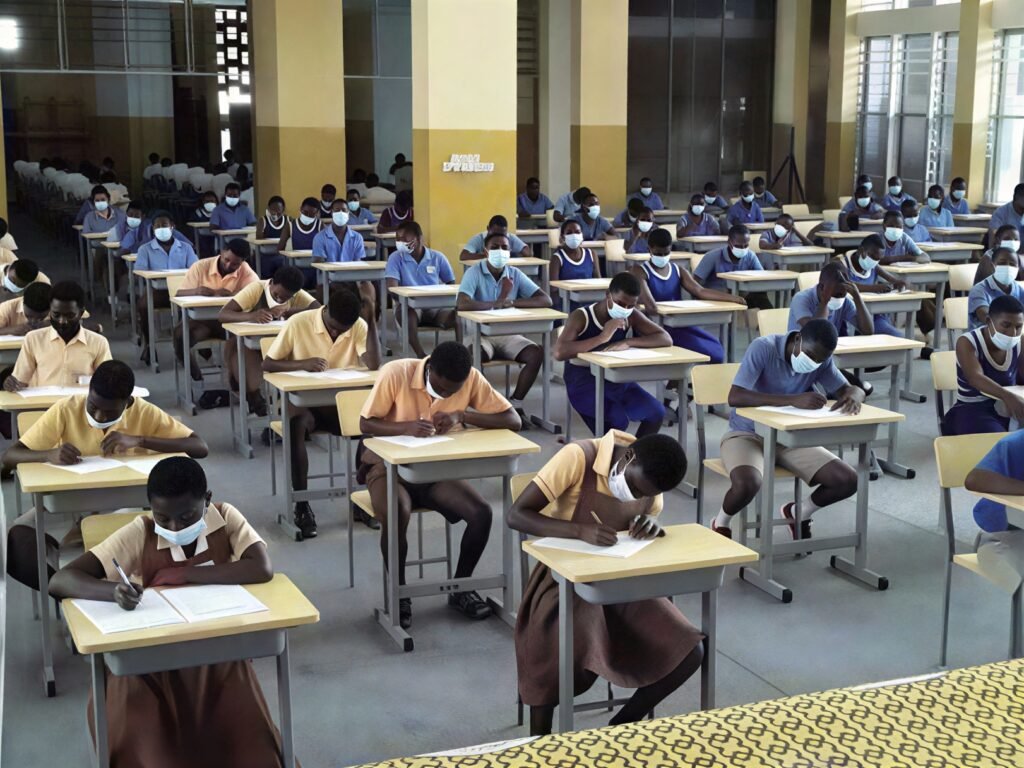
According to the NPP, some parents could be forced to accept schools far from their homes, unwanted programmes or arrangements that require substantial expenditure on transportation and accommodation. The party also challenged the argument that Ghana lacks sufficient capacity to accommodate the affected candidates, pointing to government figures indicating 859,828 vacancies for 623,072 BECE candidates.
However, it noted that the challenge lies largely in the distribution of available places, particularly within highly demanded Category A schools. The NPP disclosed that 313,283 candidates selected Category A schools as their first choice, while only 76,417 vacancies were available across those institutions.
Additionally, the party urged the government to explore ways of expanding capacity in schools that continue to have unused spaces, including through the provision of teachers, laboratories and improved programmes. It also proposed the utilisation of 85 private schools participating in the Free SHS programme to absorb some of the affected candidates.
Furthermore, the NPP requested clarity on the pass mark and selection rules applied during this year’s placement exercise, including when those criteria were approved. The party insisted that parents and candidates deserve to understand the standards governing placement before examinations are taken, rather than discovering them after results have been released.
The NPP therefore urged the government to publish the final placement outcome for all affected candidates to enable the public to establish how many ultimately secured school places. It stressed that the immediate priority should be getting the children into classrooms, warning that prolonged uncertainty could disrupt their education and impose additional burdens on their families.
NPP Calls For Expanded Training Options For 183,233 WASSCE Graduates
The New Patriotic Party (NPP) also urged the government to expand alternative education, apprenticeship and skills training opportunities for the 183,233 WASSCE graduates who did not obtain a credit in Core Mathematics.
The party described the situation as a major challenge for young people seeking to progress into tertiary education, technical training or employment after completing senior high school.
In its statement, the NPP noted that a credit in Core Mathematics remains an important requirement for admission into many degree programmes, meaning thousands of school leavers could face restricted opportunities because of their examination results. The party also questioned the trajectory of this year’s WASSCE performance, particularly in English Language and Core Mathematics, compared with results recorded in 2024.
Although Mathematics recovered from the sharp decline recorded last year, the NPP pointed out that the improvement has not returned performance to the level recorded before the current administration took office. English Language, it added, has recorded a decline for two consecutive years, raising the need for a broader examination of the factors influencing student performance.
The party further rejected the explanation that stricter invigilation could account for poor results, arguing that examination outcomes are shaped by several factors within the education system. Among these factors, it identified teaching quality, learning time, instructional materials, attendance and student support as areas requiring sustained intervention.
Beyond the immediate examination results, the NPP urged the government to strengthen existing programmes designed to support students who fall short of required grades. It pointed to academic intervention programmes available in public senior high schools and remedial opportunities for candidates preparing to resit their examinations.
Additionally, the party highlighted Free TVET programmes operating across 186 institutions as another pathway for young people who may not immediately qualify for university education. The National Apprenticeship Policy and the Ghana Jobs and Skills Project were also identified as existing mechanisms that could provide practical opportunities for affected school leavers.
The NPP contended that these initiatives were inherited by the current administration and should therefore be deployed on a scale that matches the number of young people requiring assistance. It consequently called for government to publish the number of available TVET, apprenticeship and job training opportunities across the country.
The party wants the figures broken down by region and trade so that available opportunities can be matched directly with the 183,233 graduates requiring alternative pathways. The NPP emphasised that a weak examination outcome should not permanently close the door to education, skills development or employment for young Ghanaians.
READ ALSO: Hungary Expels 10 Russian Diplomats