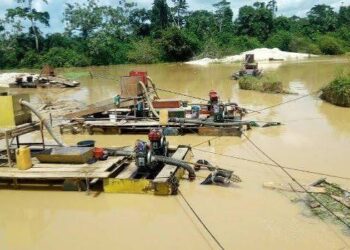
The Press Secretary and Spokesperson to the Vice-President, Ms Ama Pratt, has warned that illegal mining, or galamsey, poses a growing public health risk, following research that found mining-related toxins in vegetables grown in affected districts.
Ms Pratt disclosed that the research recommends regular testing of vegetables, farm soils and irrigation water, and that the government is acting on every link in the chain of consequences. She cautioned, however, that the war on galamsey has not been won.
“Galamsey is no longer just an environmental conversation; it is a health conversation. The consequences of our actions are on our plates, and we are consuming them.”
Press Secretary and Spokesperson to the Vice-President, Ms Ama Pratt
Ms Pratt observed that people used to link the damage from galamsey to water or land in a particular place. The concern, she stated, now reaches food.

According to the findings discussed in the interview, galamsey toxins have been found in vegetables, which raises serious food safety concerns across mining districts.
Government Response: From Promises to Action
Ms Pratt argued that the government has moved “from promises to action” in the fight against illegal mining. She pointed to legislative changes, stronger laws, the establishment of a dedicated enforcement body operating in the field, and tighter controls on the gold trade as evidence of progress.
She also expressed confidence in the sector ministers, particularly the Ministry of Lands, and said she believed the right decisions would be made now that the Ministry of Food and Agriculture had been brought into the discussions.
However, she cautioned against declaring victory prematurely, stressing that much work remained to be done.

“I cannot sit here and say that the war has been won. Nobody can say that.”
Press Secretary and Spokesperson to the Vice-President, Ms Ama Pratt
A Long Struggle Ahead
Ms Pratt described it as a “juvenile fantasy” to believe that the damage caused by illegal mining over the years could be reversed within a decade. She stressed that addressing the problem would be a long-term struggle that the country must confront with urgency and sustained commitment.
Highlighting the broader implications of illegal mining, she noted that people were already being advised to wash their fruits and exercise caution when choosing where to buy food. This, she suggested, raised serious concerns about the extent to which the effects of illegal mining had begun to affect everyday life.
She questioned how much longer the country should continue relying on existing approaches before considering more drastic measures. According to Ms Pratt, some people believe that the time for such action has already arrived.
She pointed to the slow progress in persuading miners to comply with regulations and providing them with alternative livelihoods. Enforcement efforts against mining in rivers and protected forest reserves have also been slower than expected.
A Targeted, Not Wholesale, Approach
Ms Pratt disclosed that the government is taking a “targeted approach”. The response is not wholesale, she explained, because the issues are nuanced, specific and complex.

She acknowledged that the situation is tricky. When people have lived a certain way, and have even been empowered to operate in that manner, sudden enforcement can provoke resistance. The state, she argued, is the body that checks those instincts and tells people to stay within the rules.
She concluded that, in her view, the government is keenly aware of how tough and complex the issue is. It understood the problems when it was in opposition only to speak about them, she stated, and it knows what the issues are now and is dealing with them.
READ MORE: NAIMOS Destroys 1,970 Changfang Machines In Anti-Galamsey Operations