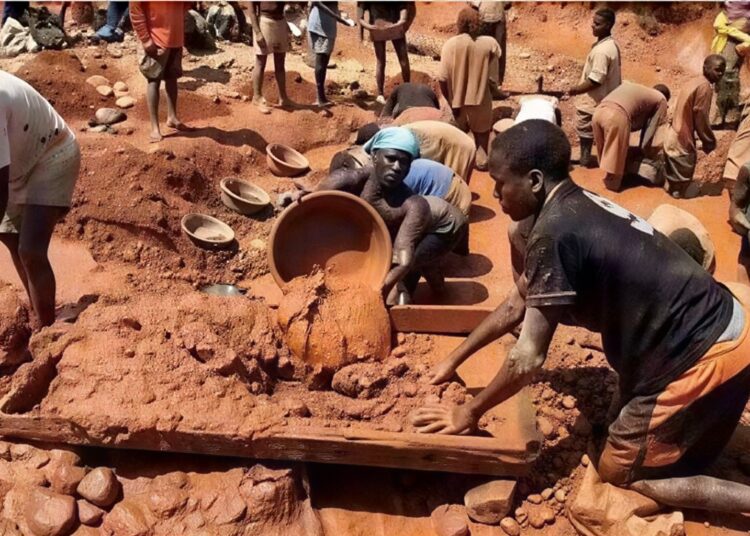
The Coordinator of Eco-Conscious Citizens, Madam Awula Serwah, has described Ghana’s illegal mining crisis as a national and health emergency, arguing that continued pollution of water bodies shows limited progress in the fight against the practice. She pointed to brown rivers, continued changfan activity and reports of mining operations returning to forest reserves as evidence of the scale of the problem.
“It’s a national emergency. It’s a health emergency taking place. Water is life, and our water is being poisoned.”
Awula Serwah

Speaking in an exclusive interview with The Vaultz Media Network, Madam Serwah questioned claims that Ghana has intensified efforts against illegal mining. She explained that civil society organisations previously called for a targeted state of emergency to mobilise state resources and confront the destruction of the country’s environment.
The environmental campaigner observed that the condition of several water bodies remains a major indicator of the crisis. She noted that the continued presence of changfans on rivers and the diversion of the Ankobra point to environmental damage that requires stronger national action.
Analysing the condition of Ghana’s water resources, Madam Serwah cautioned that visual clarity cannot be used as proof that water is safe for consumption. She explained that substances such as cyanide, mercury and arsenic are colourless, making laboratory testing essential for determining the quality of water reaching households.
The Eco-Conscious Coordinator therefore called for greater transparency around water testing results. She noted that Ghana Water Resources is expected to publish results from tests conducted on water bodies, adding that public access to such information could help citizens appreciate the seriousness of the environmental threat.
Referencing the situation in communities, she also observed that some residents are beginning to reject mining activities altogether. This development demonstrates the depth of anxiety surrounding the effects of mining on water resources and local environments.
Water Testing Results Needed To Expose Hidden Pollution
The environmental advocate stressed that public understanding of water pollution depends on access to reliable information. She explained that citizens who can see scientific results from water testing would have a clearer basis for understanding what may be present in the water they consume.
Thus, the environmental debate requires evidence that can be understood by ordinary citizens. Publishing test results can help connect the environmental damage occurring at mining sites with the potential risks faced by communities relying on affected water bodies.

The campaigner also linked the water crisis to the wider environmental consequences of mining. Rivers, forest reserves and wetlands form interconnected ecosystems, meaning damage in one area can create consequences for communities and natural resources elsewhere.
On this, the continuing presence of mining activity in sensitive areas presents a challenge for environmental protection. Madam Serwah’s assessment suggests that measuring progress requires attention to actual conditions on the ground and the quality of the country’s natural resources.
Mining Licences Require Stronger Monitoring To Protect Water Bodies
Madam Awula Serwah also argued that issuing mining licences without effective monitoring can worsen environmental degradation, stressing that a licence does not give operators unlimited authority to mine wherever they choose. She explained that licensed operators are subject to environmental conditions and regulatory requirements that must be enforced throughout their operations.
The Coordinator of Eco-Conscious Citizens noted that operators may require approvals from institutions including the Environmental Protection Agency and Ghana Water Resources before commencing activities. She stressed that obtaining a mining licence alone does not complete the regulatory process.
Analysing the enforcement gap, Madam Serwah argued that Ghana already has laws capable of protecting environmentally sensitive areas. The greater difficulty, she indicated, lies in ensuring that these laws are applied consistently.

“Having all the laws is not the problem. The challenge is, are you going to enforce them? You cannot be issuing cooperative mining licenses like confetti, when you know very well that you don’t even have the resources to monitor.”
Awula Serwah
Referencing protected wetlands, she pointed to developments within Ramsar sites such as Sakumono and Kpeshie as examples of the difficulties associated with enforcement. These areas receive international recognition for their ecological importance, yet human development continues to place pressure on them.
The environmental campaigner also questioned the practice of granting mining licences where regulators lack the personnel and resources required to monitor compliance. Therefore, licensing without effective supervision can create conditions in which operators move outside the boundaries established for their activities.
Licensed Operators Also Face Environmental Obligations
Madam Serwah stressed that some licensed operators can also contribute to pollution when they fail to comply with the conditions attached to their licences.
Small scale mining presents a particular challenge because gold processing requires infrastructure that can be expensive for operators to establish. She explained that systems such as tailings facilities are needed to prevent contaminated water used during gold processing from entering rivers and other sources of drinking water.
The environmental advocate noted that substances including mercury and cyanide can create serious risks when mining waste enters water bodies. She therefore argued that monitoring must establish whether operators are within approved boundaries and comply with environmental conditions.
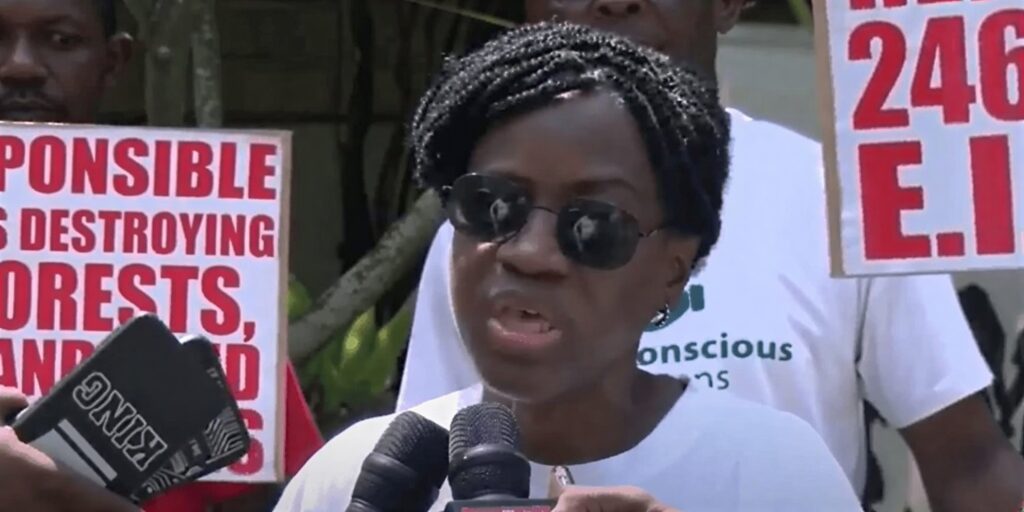
Directing attention to the regulatory process, Madam Serwah explained that operators are expected to observe limits around water bodies and comply with requirements before beginning mining activities. This requires regulators to visit operational sites and verify that the approved conditions can be met.
Therefore, the responsibility does not end when a licence is issued. Regulators must have the resources and institutional commitment to monitor operators while miners must comply with the conditions governing their activities.
READ ALSO: Nigel Farage Won Clacton But Reform UK May Have Lost Politically – Dr Thom Oliver