
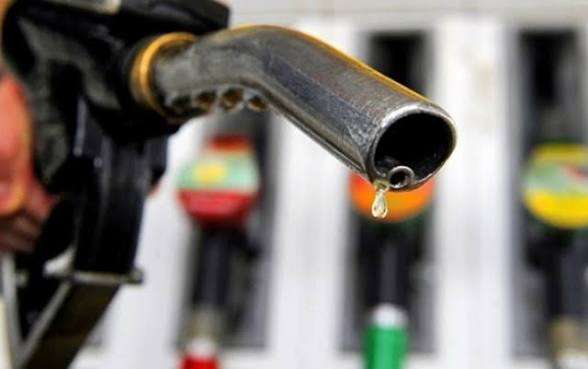
Oil prices are moving back towards the US$90-per-barrel threshold, as stalled US-Iran negotiations and sharply reduced shipping through the Strait of Hormuz revive concerns about the durability of global petroleum supplies.
Brent crude rose by more than 1% in early Asian trading on Monday, August 17, with renewed geopolitical uncertainty providing fresh support to prices.
The development is particularly relevant to Ghana because the country remains exposed to international petroleum prices through its downstream pricing system.
Even with efforts to expand domestic refining, Ghana cannot fully detach pump prices from movements in the global crude and refined-product markets.
Hormuz remains the immediate pressure point
The concern is less about the absolute level of oil prices today than about what continued disruption around the Strait of Hormuz could mean for the market.
The waterway is a critical route for global energy shipments, and tanker movements have fallen sharply amid the conflict.
Only five commodity vessels passed through the strait on Saturday, with none recorded on Sunday, compared with 31 during the previous weekend.
That decline is feeding a risk premium into crude prices because prolonged restrictions could tighten physical supply even if global inventories and alternative supply sources prevent an immediate shortage.

“Oil prices have now rebounded almost completely from the lows seen in early August, as hopes for a more permanent resolution between the U.S. and Iran have faded and geopolitical risk premiums have returned to the market.”
Priyanka Sachdeva, Head of Market Insights, Phillip Nova
The key point for Ghana is that the market does not need to lose millions of barrels of supply before domestic consumers feel the consequences.
Expectations of tighter supply can be enough to raise international benchmarks, which can then feed into Ghana’s import costs and subsequent pricing windows.
Ghana’s fuel market remains externally exposed
Ghana’s downstream market operates under a deregulated pricing framework, meaning international petroleum prices and exchange-rate movements remain important determinants of domestic fuel prices.
That exposure makes the current oil rally significant.
When crude becomes more expensive, Ghanaian importers face higher costs for petroleum products.
Those costs can eventually be reflected at the pump, depending on movements in the cedi, international product prices and the timing of local pricing windows.
The impact is not limited to motorists.

Diesel is particularly important to Ghana’s productive economy because it supports commercial transport, logistics, construction, agriculture, mining and other economic activities.
A sustained increase in diesel costs can therefore raise the cost of moving goods and operating machinery across the economy.
For households, higher petroleum costs can also indirectly affect food and other consumer prices through transportation and distribution expenses.
Domestic refining offers resilience, not immunity
Ghana’s push to expand domestic refining capacity provides an important layer of protection against physical supply disruptions, but it does not eliminate exposure to global oil prices.
Refineries still require crude feedstock, and crude is traded in an international market.
That means a refinery operating in Tema can reduce Ghana’s dependence on imported finished petroleum products and potentially strengthen supply security, while the underlying cost of crude can continue to influence the economics of the fuel produced.
This distinction is becoming increasingly important as Ghana promotes the revival of Tema Oil Refinery alongside expansion in private refining capacity.
Domestic refining can improve security of supply and retain more value within the economy. It should not, however, be presented as a mechanism capable of insulating Ghanaian consumers completely from a global oil shock.
The immediate threat is volatility
There is also reason not to overstate the latest price movement.
Brent’s approach towards US$90 does not automatically mean another extreme oil-price spike is imminent.
Market analysts have noted that further significant upside could require clearer evidence of renewed attacks on tankers or physical damage to oil infrastructure.
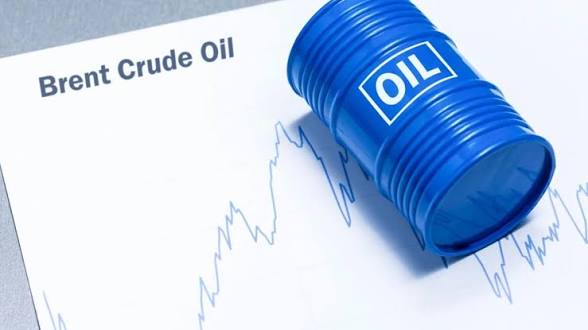
Global demand conditions and available inventories also matter.
MarketWatch mentioned that oil prices have remained comparatively restrained in August despite the geopolitical disruption, partly because weaker demand and ample inventories have limited the market’s response.
That leaves Ghana facing a market that is volatile rather than necessarily moving in one direction.
“While there is still no resolution to the Iran/Hormuz impasse, our base case remains that oil prices will stay in a $70-$100 range.”
Shane Oliver, Chief Economist, AMP
For Ghana, the US$90 level should therefore be viewed less as a crisis point and more as a warning.
Ghana needs a buffer against the next shock
The renewed pressure reinforces the importance of measures that reduce the speed and scale at which international shocks reach the domestic economy.
Strategic petroleum stocks, stronger domestic refining, reliable crude supply arrangements and adequate storage capacity can all improve resilience.
None can permanently suppress global prices, but together they can give Ghana greater flexibility when international markets become unstable.
The latest oil movement also makes exchange-rate stability particularly important.
A weaker cedi alongside higher crude prices would create a double pressure on petroleum import costs, while a stable currency can soften part of the external shock.

The immediate Ghanaian concern, therefore, is not simply whether Brent crosses US$90.
The more consequential question is how long prices remain elevated and whether the geopolitical risk premium becomes embedded in the market.
With Hormuz traffic still severely constrained and diplomatic progress uncertain, Ghana’s downstream sector has little reason to assume that the pressure will disappear quickly.
For a country still dependent on international petroleum markets, the lesson is straightforward: energy security requires more than having fuel available; it requires having enough refining capacity, storage, foreign-exchange resilience and supply flexibility to withstand the next global price shock.
READ ALSO: Galamsey Crisis Threatens Ghana’s Water Security, Eco-Conscious Coordinator Warns