Category: Asia

  • Deadly Shootout Leaves Occupied West Bank Under Curfew

    Deadly Shootout Leaves Occupied West Bank Under Curfew

    The Israeli military has ordered a curfew in the occupied West Bank following an outbreak of violence in which six people were killed.

    Four Palestinians and two Israeli soldiers were killed today as Israeli forces and settlers confronted Palestinians southwest of the city of Nablus.
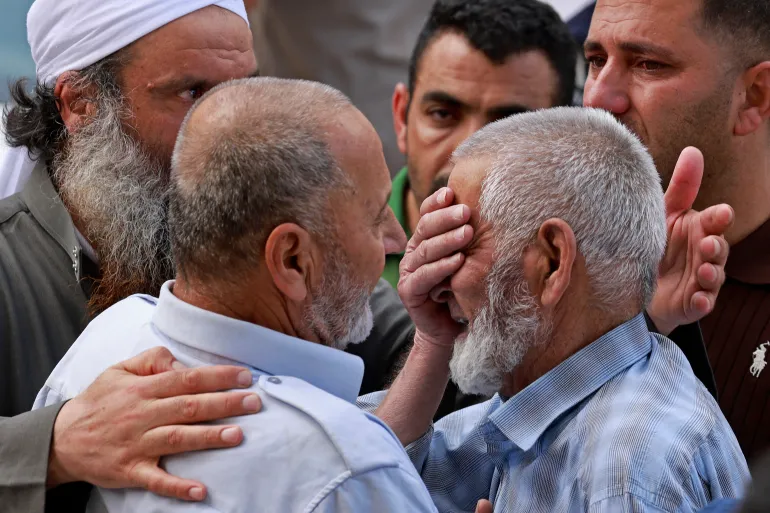
    Family members of one of the four Palestinians killed on Friday weeps outside a hospital in Nablus, in the occupied West Bank.

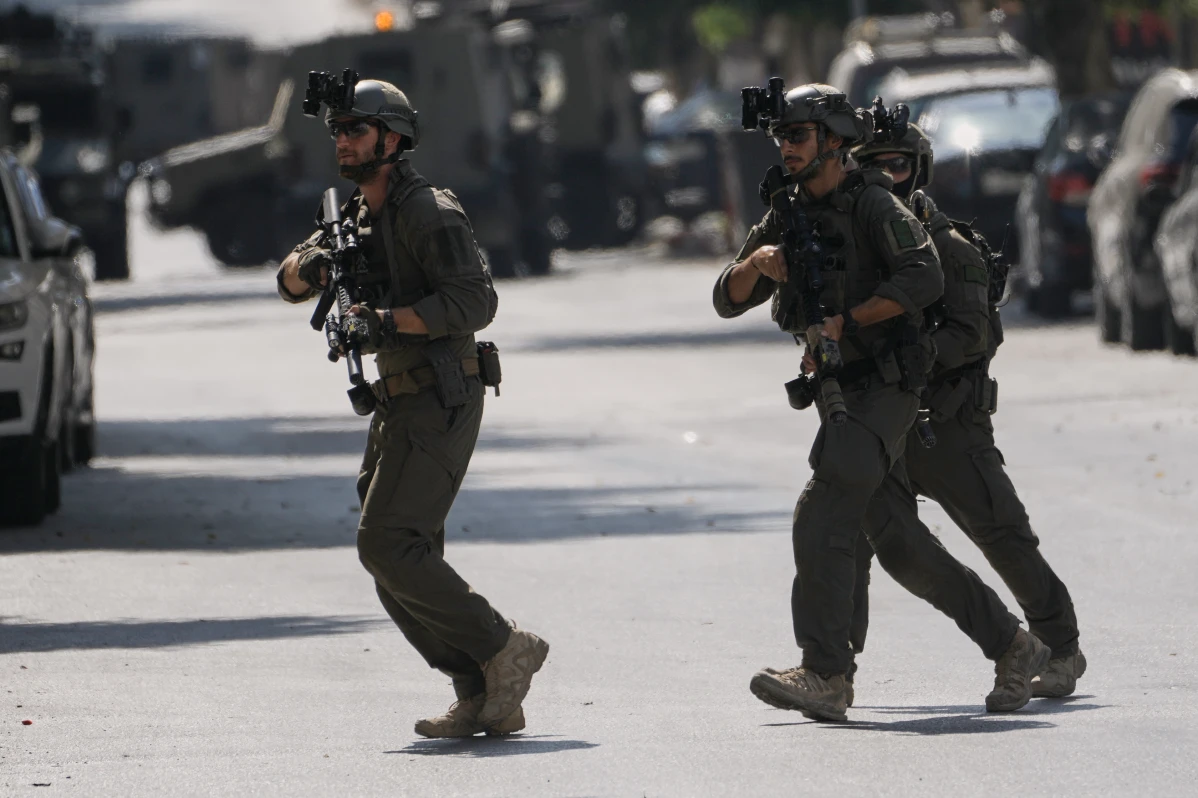
    According to reports, the violence was sparked as Israeli settlers attacked the town of Tal, which is close to the illegal Israeli settlement of Havat Gilad. Local and security sources said that the settlers opened live fire as Palestinians tried to protect their homes.The Israeli army said that it had dispatched troops to the area following “an attack on Israelis hiking in the area.”

    Four other Palestinians were injured in the attack on the town of Tal, “three of them critically”, as well as two Israelis, Palestinian health officials said.

    Shortly afterwards, the Israeli military announced it was preparing a major “counter-terror” operation in the West Bank, and had “more arrests to carry out”. Troops were then reported to have surrounded Nablus.

    The military claimed a Palestinian had stolen a weapon from local security personnel and fired at the Israeli settlers, wounding several Israelis. It added that four Palestinians were killed “on the spot”, including the one who did the shooting.The military later reported that two soldiers were killed close to Tal during “operational activity.”

    Palestinians in the West Bank have been facing a wave of violence as Israel’s hard-line government, dominated by settler leaders and supporters, has overseen a surge in settlement construction over the past four years. The international community overwhelmingly considers Israeli settlement construction in these areas to be illegal and an obstacle to peace.

    The rate of new settlements and violence has accelerated dramatically since the recent wars in Gaza, Lebanon, and Iran broke out. According to the Palestinian health ministry, the killings in Tal bring the toll to 87 Palestinians killed by Israelis across the West Bank since the beginning of the year, including 21 shot by settlers.

    United Nations figures indicate some 850 Palestinians have been wounded in the context of attacks by Israeli settlers since the start of the year.

    Israeli Prime Minister Benjamin Netanyahu pledged to respond firmly to the Israeli deaths. In a post on X, Netanyahu said that he and Defence Minister Israel Katz had instructed the army to take a “series of forceful steps against terror.”

    He said that these steps include: demolishing the home of the Palestinian reportedly responsible for the death of the Israeli near Tal; collecting weapons and revoking work permits in Palestinian villages he claimed “serve as terror hotspots”; bolstering Israeli forces across the West Bank; setting up checkpoints; and accelerating the regularisation of farms and the establishment of new ones. Netanyahu added that they will allow Israeli security forces to “operate freely and at full strength.”

    Far-right Israeli Finance Minister Bezalel Smotrich called on the army to act with an “iron fist” against the Palestinian town and its surroundings.

    “The people of the farms and the heroic settlement pioneers are the defensive wall of the State of Israel. We will continue to strengthen and honour them for their steadfast stand for our existence.”

    Bezalel Smotrich

    Smotrich added that the villages of Tell, Iraq Burin and Beit Furik “need to look exactly like the refugee camps in Nablus and Tulkarm,” referring to the mass demolition campaign that displaced tens of thousands in the West Bank towns last year.

    “It is necessary to evacuate the population there for their protection and to clear these villages of terrorist infrastructure. A sharp, determined, and unequivocal military action is required here and now.”

    Bezalel Smotrich

    The Palestinian foreign ministry condemned the latest killings in the “strongest terms”.

    “The Ministry affirms that this massacre represents a renewed image of the ongoing Nakba to which our Palestinian people are subjected, and reflects the integration of crimes and roles and the deliberate escalation of these coordinated crimes between the occupation authorities and their forces and settler gangs.”

    Palestinian foreign ministry

    Israel’s Hardline Response Sparks Concerns

    Netanyahu’s hardline response only increases concerns regarding further escalation in a region torn by conflicts – Gaza, Lebanon, Iran – that have Israel at their heart.

    Ayman Safadi, Jordan’s Foreign Minister warned that the Israeli government is “pushing the West Bank towards explosion.”

    “Its blatant violations of the historical and legal status quo at Jerusalem’s Holy Sites are illegal and dangerous provocations. They are pushing the region towards another disastrous conflcit that will reverberate.”

    Ayman Safadi

    Human rights group B’Tselem warned the violence could spin out of control as Israeli settlers and soldiers amass near multiple Palestinian cities.

    Yuli Novak, the group’s Executive Director, noted that Israeli violence is spreading across the West Bank, “fueled by Israeli politicians openly calling for revenge.” Novak added, “We know where this leads. Millions of Palestinians are now completely exposed to further attacks, with no one protecting them.”

  • Bangladesh President Resigns Over Ill Health

    Bangladesh President Resigns Over Ill Health

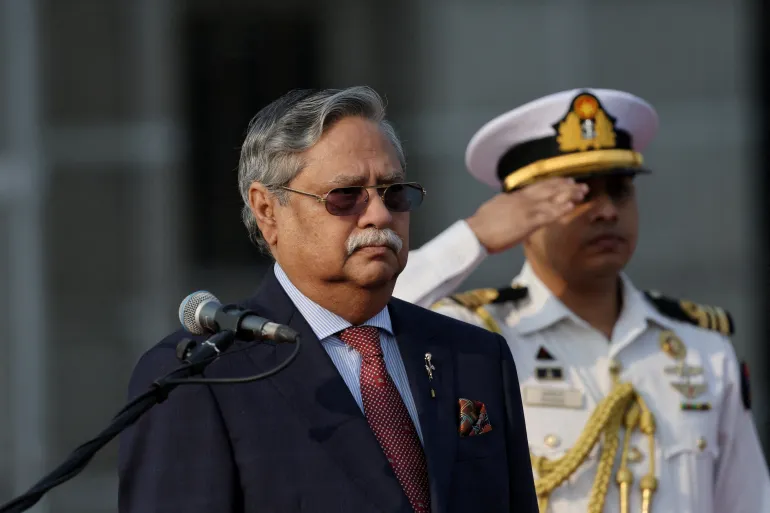
    Bangladesh President Mohammed Shahabuddin has resigned two years ahead the end of his full five-year term, citing health reasons for his decision.

    In a statement announcing his decision, Shahabuddin said that health concerns had made it increasingly difficult for him to carry out the responsibilities of the office.

    Shahabuddin said in a statement released by his press secretary, “Recent medical examinations have diagnosed me with a condition known as Autonomic Neuropathy. Due to this condition, I occasionally experience momentary loss of consciousness.”

    The move comes amid rising demand from opposition parties for him to step down.

    The resignation comes amid media reports that Shahabuddin spoke on the phone with ousted Prime Minister Sheikh Hasina, who is living in India, during a visit by the former to the UK for medical treatment in May this year, according a Dhaka-based news agency.

    Ousted Bangladeshi Prime Minister, Sheikh Hasina.
    Ousted Bangladeshi Prime Minister, Sheikh Hasina.

    Shahabuddin has refuted the media report. “I am suffering from various health complications,” he told the news agency when asked about the reason for his resignation. “I have nothing more to add at this moment,” he added.

    He had travelled to London on May 9 and returned on May 18. Shahabuddin has been the President of the South Asian nation since April 2023. His term was meant to end in 2028. He oversaw the country during a volatile period after Hasina was ousted in August 2024 by youth protesters and until a caretaker government was formed days later.

    Hasina is currently living in exile in India’s capital, New Delhi, but is expected to return to Bangladesh in December, according to a news agency.

    Earlier this month, Hasina said in an interview that she and her allies would return from exile in India and face the court in Bangladesh. Last year, the International Crimes Tribunal in Bangladesh found Hasina guilty of allowing lethal force to be used against protesters.The UN Human Rights Commission has estimated that at least 1,400 people died during the unrest which eventually saw Hasina flee the country.

    The court sentenced her to death in absentia.In the months following her departure, her party, the Awami League, has been banned from politics, and many of its leaders jailed. “My party leaders and workers are being subjected to tremendous repression,” she said during the interview earlier this month. “If death comes, I want it to come on my own soil, where my parents are buried and where their blood was shed,” she added.

    The resignation is likely to intensify discussions about the country’s political future, particularly as Bangladesh prepares for the next phase of its constitutional and electoral processes. The selection of Shahabuddin’s successor is expected to attract close attention from both the ruling party and the opposition.

    The resignation also comes as Bangladesh continues to face broader economic and political challenges, including inflation, employment concerns and efforts to strengthen investor confidence. Analysts note that maintaining political stability will remain important as the country seeks to sustain economic growth and attract foreign investment.

    International observers have closely monitored political developments in Bangladesh in recent years, encouraging dialogue among political stakeholders and calling for peaceful democratic processes. Several rights organisations have also urged all parties to respect constitutional institutions and avoid actions that could further heighten tensions.

    Bangladesh’s Parliament Speaker To Be Acting President

    The Speaker of the Jatiya Sangsad, the national parliament, will perform the duties of the President until a new one is elected, the statement added.

    Shahabuddin said in a letter to Parliament Speaker Hafiz Uddin Ahmed today, “I am seriously ill … therefore, I am unable to perform my duty of the constitutional post.”

    According to the Constitution, the President’s resignation becomes “effective upon submission of a signed letter to the Speaker,” the President’s Spokesperson, Sarwar Alam, said.

    A new President must be elected within the next 90 days, according to the constitution.

    His resignation leaves Hasina with no allies in high office five months before her planned return.

    Following the ouster of Sheikh Hasina’s government in the July mass uprising, sweeping changes were made across the board. Many of her allies were removed, ranging from top-ranking bureaucrats and police officials who had served under her administration to others in key positions. Shahabuddin was one of the few allies to remain in office.

    However, as Bangladesh’s President, his role is largely ceremonial. While he is the Head of state, the Executive power rests with the Prime Minister and cabinet.

    Attention is now focused on how the leadership change will affect the country’s political landscape. While Shahabuddin cited health as the reason for his resignation, the timing of his departure amid sustained political pressure is expected to remain a subject of debate in the weeks ahead.

  • GCC, Jordan Decry Iranian Attacks

    GCC, Jordan Decry Iranian Attacks

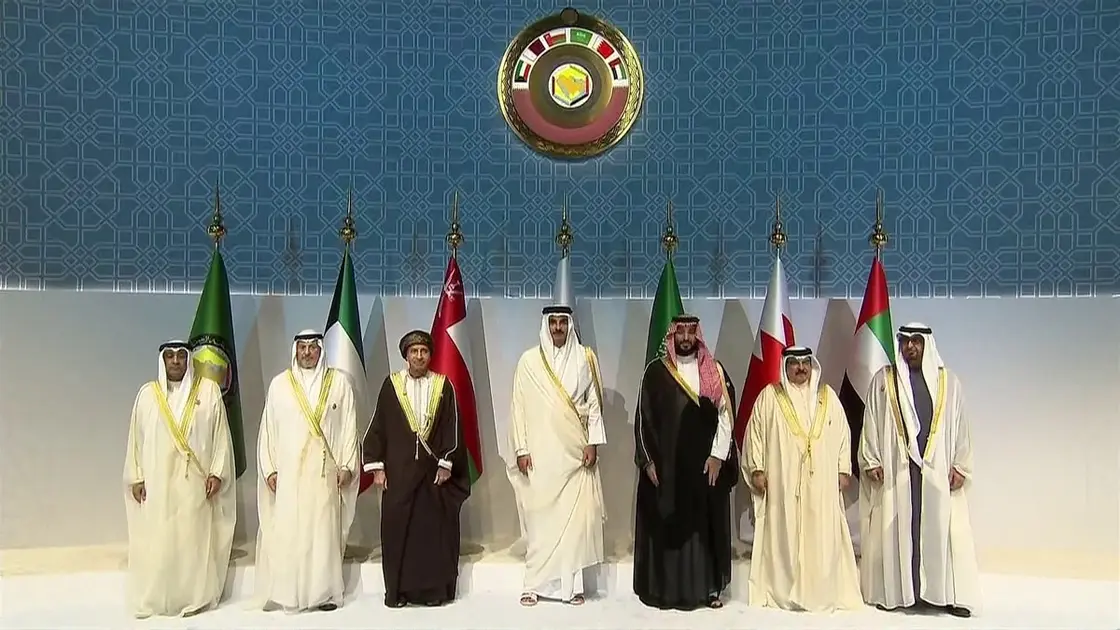
    The Gulf Cooperation Council and Jordan have condemned Iran’s continued attacks, calling them “a clear act of aggression that violates the United Nations Charter and international law.”

    In a joint statement, the seven countries affirmed their inherent right to self-defence, individually or collectively, in accordance with Article 51 of the Charter of the United Nations, calling on the UN Security Council “to recognise the right of countries affected by Iran’s attacks to defend themselves, and to issue an urgent resolution demanding an immediate halt to Iran’s attacks.”

    It also affirmed “the commitment to freedom of navigation in the Strait of Hormuz and Bab al-Mandeb and to maintaining regional security.”

    The joint statement follows after Jordan, Bahrain and Kuwait reported retaliatory missile and drone attacks from Iran after a 12th consecutive day of US strikes, including an attack on Kuwait’s Al-Abdali border crossing with Iraq.

    Iran’s Islamic Revolutionary Guard Corps (IRGC) claimed responsibility today for additional strikes on US military targets in Kuwait, saying that the attacks were retaliation against Washington and not the Kuwaiti people.

    In a statement, the IRGC said that it had “attacked and destroyed a large warehouse of military equipment, a Patriot missile defence system, and a hangar of American MQ9 drones” at Ali al-Salem airbase. It also claimed attacks on US forces’ accommodation and two helicopter hangars at the al-Adiri barracks, and said its fighters targeted a telecommunications tower.

    Later today, Kuwait’s Ministry of Defence said the Abdali border crossing was targeted by drones, causing material damage but no casualties. Ministry spokesperson Saud Abdulaziz al-Atwan said in a statement that specialised teams took all necessary measures to secure the site and drone debris was being cleared.

    Located in northern al-Jahra province, Abdali is Kuwait’s main land crossing for passenger and commercial traffic with Iraq. Addressing the Kuwaiti people directly, the IRGC said that its attacks are aimed at US bases.

    “It is America that has violated your territorial integrity and sovereignty, not us. We are attacking lands occupied by the American army, an army that knows nothing but crime.”

    Iran’s Islamic Revolutionary Guard Corps (IRGC)

    The IRGC also said that it attacked and destroyed several US military assets in Jordan. The targets included a radar for the US THAAD missile defence system, a Patriot system, a C-RAM radar and a helicopter hangar, according to a statement from the IRGC aired by state television.

    The Jordanian military said four Iranian missiles and six drones were shot down in the past 24 hours, according to a report by the official Petra news agency that quoted a military official.

    Iran has responded to the recent US onslaught with repeated attacks on US allies Bahrain, Kuwait and Jordan this week, including hitting water and power plants in Kuwait.

    Iran has said that strikes in the Gulf will not stop if the US continues to attack and threaten Iran. Iran’s chief negotiator Mohammad Bagher Ghalibaf delivered the message in a post on X on Wednesday, after US President Donald Trump threatened to attack more Iranian power plants and bridges. “In a region where we do not sell oil, no one will sell oil,” Ghalibaf said, adding, “If our security is not ensured, no infrastructure will be safe.”

    In a statement today, the United Arab Emirates Ministry of Foreign Affairs “strongly condemned the renewed Iranian aggression” on the three Middle East countries.

    Guterres Warns Of Worsening Crises Across Middle East

    Meanwhile, UN Secretary-General Antonio Guterres warned that an “alarming disregard for international law” is driving worsening crises across the Middle East.

    He told the UN Security Council that conflicts are “increasing in number, complexity, length and scope”, while “impunity is spreading.”

    “The situation is getting out of control. It is teetering on the edge of the unimaginable.”

    Antonio Guterres

    Guterres called for navigational rights around the Strait of Hormuz and Bab al-Mandeb to be “fully restored,” stressing “diplomacy is the only way forward.” On Gaza, he said that civilians still pay a heavy price despite the ceasefire, with killings continuing “as Israel increases its control of Gaza” and conditions remaining “intolerable.”

    In the occupied West Bank, he warned of “creeping annexation,” violence and “large-scale displacement,” adding, “The region is being pulled into an ever-widening circle of confrontation.”

  • Modi Promises Tough Punishment for Exam Paper Leak Offenders

    Modi Promises Tough Punishment for Exam Paper Leak Offenders

    Indian Prime Minister, Narendra Modi has said that he will set up “fast track courts” to expedite the punishment of corrupt officials who leaked examination papers.

    In his first public remarks on the movement, Modi said, “Nothing is more important than the welfare and future of our youth.”

    “We have decided to set up fast-track courts to ensure swift and stringent punishment for those involved in paper leaks. Have directed the concerned authorities and officials to take all necessary steps in this regard. This continues our series of steps for safeguarding the interests of students. Those who try to harm the future of our youth will not be spared.”

    Narendra Modi

    The offer of faster justice than usual from India’s clogged judicial system, which can take decades to deliver a verdict, comes as the India’s Prime Minister seeks to quell the youth-led Cockroach Janta Party(CJP) protests that has rocked Delhi and challenged his government. The resignation of Dharmendra Pradhan, the Education Minister is a core demand of the movement, along with reform of the education system.

    Modi’s statement follows indications the government is somewhat softening its stand. Ministers have been at pains to say they are willing to talk to the Cockroach Janta Party but the one thing they refuse to mention is Pradhan’s resignation.

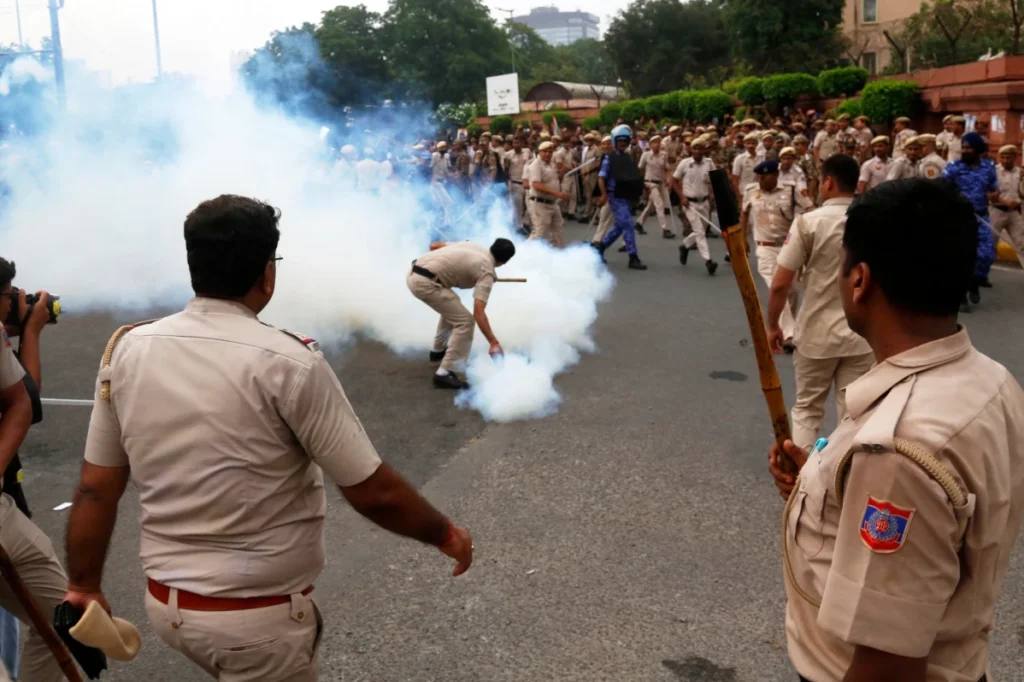
    An estimated 50,000 people protested in Delhi on Monday, even though police denied them permission to march on parliament and later mounted baton charges and fired teargas.

    Security personnel fire tear gas to disperse Cockroach Janta Party protesters.

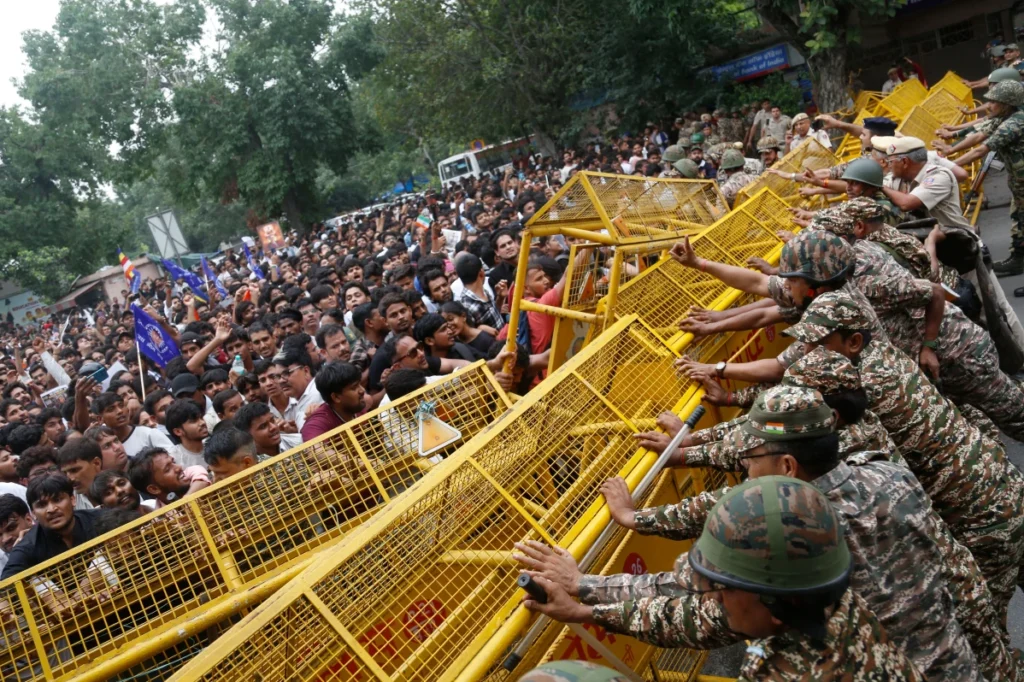
    It began as a peaceful demonstration, but by late afternoon police began to clash with the protesters. Police said 60 civilians and 118 police personnel had been injured, and they accused protesters of instigating the clashes. However, organisers condemned the “high-handedness” of the authorities and said hundreds of peaceful protesters had been injured by the police, including at least one woman now on a ventilator in intensive care from her injuries. Amnesty International have accused Delhi police of using police excessive force.

    Security personnel clash with CJP protesters on Monday.

    On Wednesday, more than 1,000 people remained camped out at the CJP’s protest site in central Delhi despite the gruelling heat and humidity. Many protesters had travelled for miles to be there.

    The protest site at Jantar Mantar is overflowing with supporters eager to show their solidarity. Unable to fit into the enclosed area, the crowd has spilled outside on to the roads. Some sort out donations of food and water sent by well wishers, others hand out food, including to the police on duty, fan those wilting from the heat, or clear up litter.Young men and women in other cities across India have also voiced their support for the CJP’s demands by holding their own demonstrations.

    Opposition politicians, led by the Congress party leader Rahul Gandhi, gathered outside the parliament building in Delhi on Wednesday, many dressed in black and waving placards calling on Dharmendra Pradhan to quit.

    At a press conference on Wednesday, the opposition leader Rahul Gandhi escalated the rhetoric, demanding that apart from Pradhan resigning, Modi should apologise for failing to provide a fair education system. Gandhi said that the country had seen 152 exam paper leaks over the past decade without resulting in a single conviction.

    “Somebody, or a group of people, are destroying our education system, India’s most valuable asset, destroying the lives of our students. What does the government do? Zero convictions.”

    Rahul Gandhi

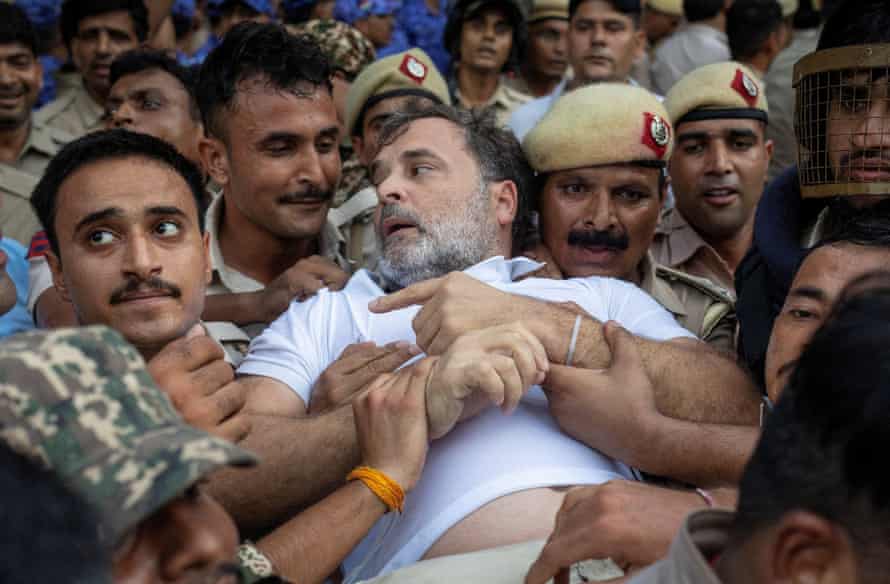
    The previous day, Gandhi had been briefly detained by police after staging a sit-in outside Modi’s residence, accusing the Prime Minister of “destroying the future of India’s youth.”

    Rahul Gandhi being carried away by police from a sit-in outside Narendra Modi’s residence in Delhi.

    CJP Rejects Modi’s Offer

    The offer of faster justice than usual from India’s clogged judicial system, which can take decades to deliver a verdict, was swiftly rejected by the Cockroach Janta party (CJP), the satirical name the youth protest movement coined after India’s top judge called unemployed youths “cockroaches.”

    Referring to the Education Minister, the party said, “Dharmendra Pradhan must resign.”

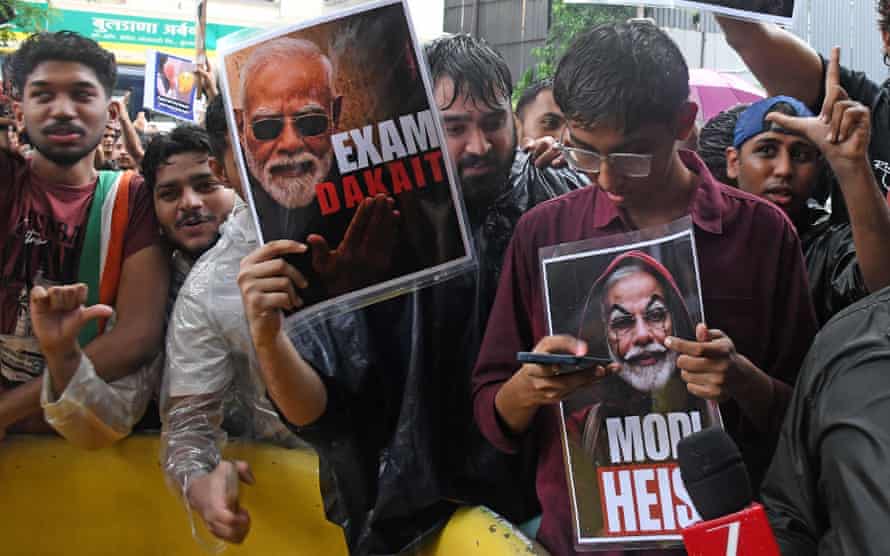
    Demonstrators hold anti-Modi placards during a protest.

    If anything, the movement is hardening its stance after Monday’s brutal crackdown by the police. CJP leaders were deeply disappointed when their meeting on Monday with the Health Minister, J. P. Nadda, the first in over 60 days, resulted in nothing.

    Its founder, Abhijeet Dipke, has said that they will not go to the government, saying that if Ministers want to speak to them, they will have to come to the protest site and talk to them in public.

  • Rubio Sounds Alarm Over Iran’s Hormuz Toll Demand

    Rubio Sounds Alarm Over Iran’s Hormuz Toll Demand

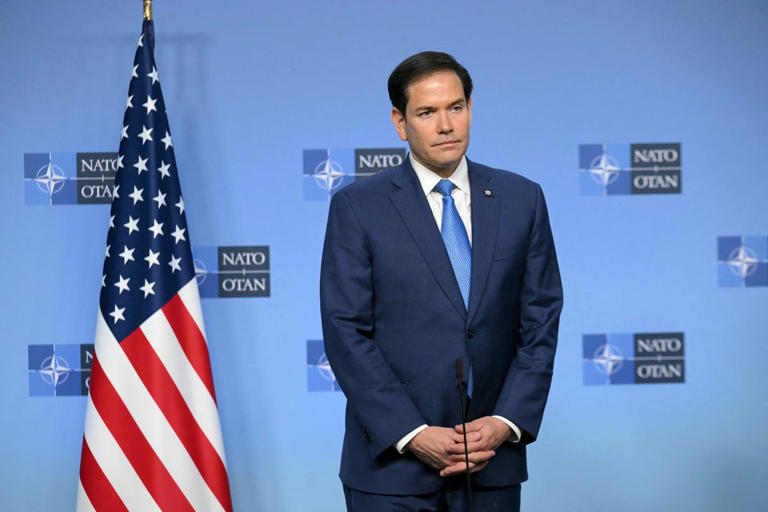
    U.S. Secretary of State Marco Rubio warned ASEAN leaders today that Iran’s demand to control and collect tolls in the Strait of Hormuz would threaten the world’s economy and set a precedent that could be repeated elsewhere in the world.

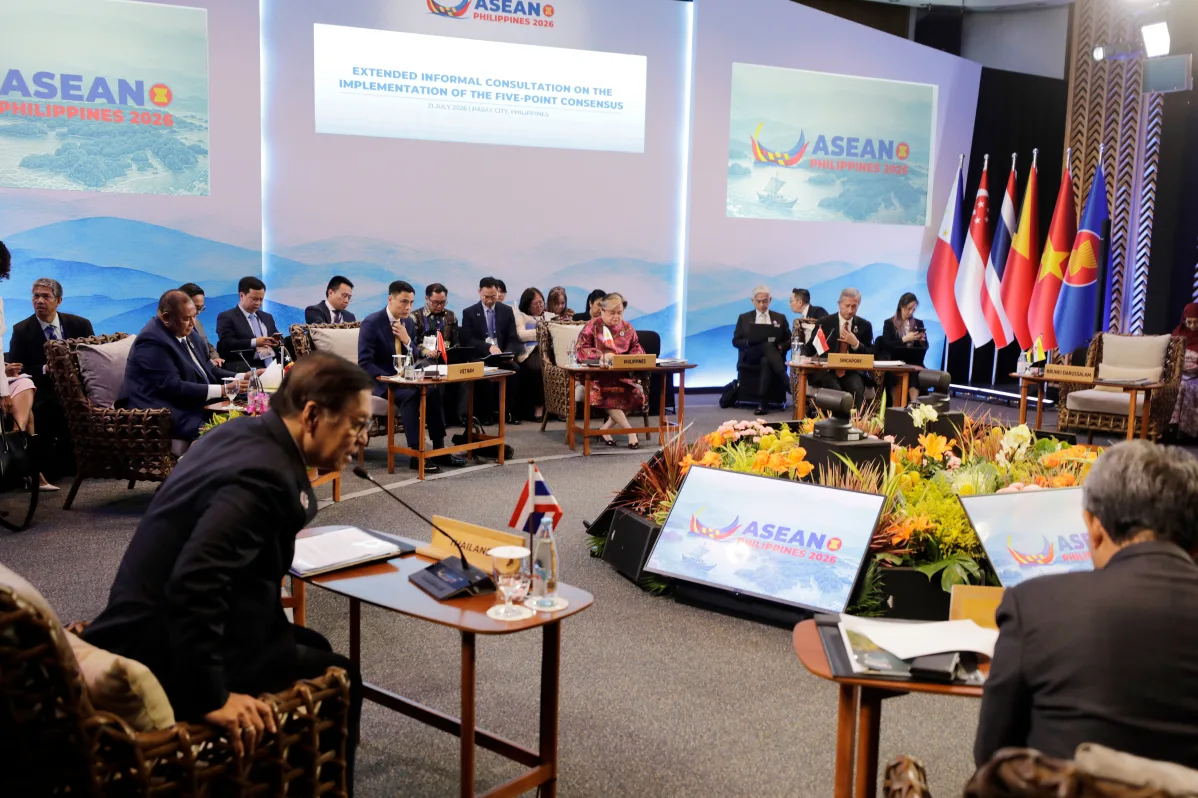
    Rubio made the remark at the opening session of Association of Southeast Asian Nations (ASEAN) Foreign Ministers’ annual meeting in the Philippine capital, Manila. Top diplomats from the U.S., China, Russia and several other countries are in Manila this week to take part in at the ASEAN ministerial gathering.

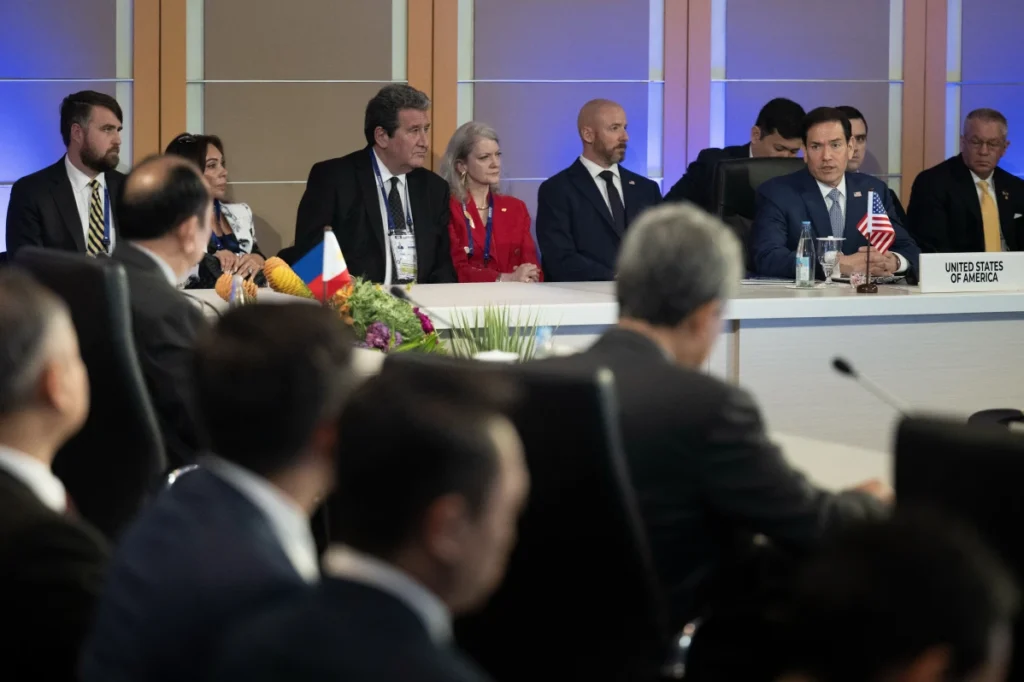
    U.S Secretary of State Marco Rubio speaks at the start of an annual meeting in the Philippine capital, Manila, with counterparts from the Association of Southeast Asian Nations.

    ASEAN diplomats have expressed alarm over the resurgent fighting in the Middle East that has impacted their region. Despite Washington’s preoccupation with Iran, Rubio said that the U.S is “with ASEAN 100%.”

    “If we create a precedent in the Middle East where a nation-state can decide that they are going to control an international waterway, charge a toll and if you don’t pay them, blow up your ships, we have created a very dangerous precedent which will repeat itself in other parts of the world, including in this region.”

    Marco Rubio

    Rubio also renewed allegations that Iran has reneged on commitments under a collapsed interim ceasefire deal. Rubio said that Iran “has been reaching out to the United States, both directly and indirectly, to engage in talks about settling the differences.” He said that while “the U.S. would love to reach a diplomatic settlement,” the Trump administration is “not going to sit by and let ships be blown up or Americans be attacked.”

    According to the International Energy Agency, which called the crisis a “stark wake-up call” for the region’s energy security, overreliance on fossil fuel imports from the Middle East has made Southeast Asia particularly vulnerable to the energy shock triggered by the Iran war. The IEA said that Asian markets imported about 80% of the crude oil and almost 90% of the liquefied natural gas, or LNG, transiting through the Strait of Hormuz in 2025.

    Speaking to reporters, Australian Foreign Minister, Penny Wong underscored her country’s concern over the renewed attacks in the Middle East, warning that “the situation could deteriorate further without much warning.”

    “We want to see an end to this war. We want to see a ceasefire. We want to see negotiations and we want the strait to be opened. People are being affected by what is happening and has happened to global energy markets and the effect on people has been direct and personal.”

    Penny Wong

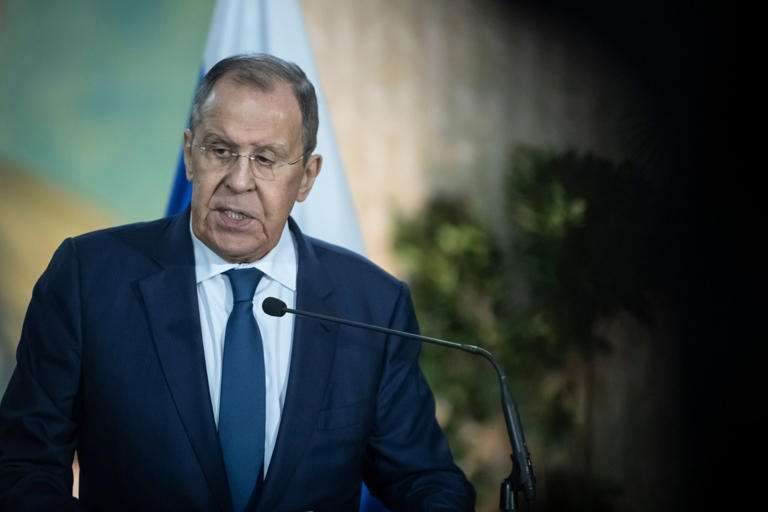
    Sergey Lavrov, Russia’s Foreign Minister, told reporters that Moscow would like to see a quick settlement between the U.S. and Iran.

    “There are those eager to incite each party to keep the conflict going, but we aren’t one of those. We would like to see it stop — it impacts the global economy and Russia is part of the global economy.”

    Sergey Lavrov

    Lavrov added that Moscow is “interested in stable global energy prices to pursue long-term economic policies.”

    Aside the Iran war, ASEAN Foreign Ministers discussed the territorial disputes, welcoming progress in yearslong negotiations between China and their regional bloc on a proposed non-aggression pact that aims to prevent a major conflict in the disputed waters that could draw in the United States.

    Rubio Meets Quad Counterparts

    Rubio also met with counterparts in the four-nation Quad partnership, which is made up of the U.S., Australia, India and Japan.

    They discussed maritime and transnational security, among other issues, and issued a joint statement that reaffirmed their commitment to maritime security initiatives aiming to counter China’s growing influence in the region.

    During the meeting, Japanese Foreign Minister Toshimitsu Motegi voiced strong opposition to any attempts to change the status quo by force in the region, including in the disputed South China Sea and East China Sea, where China’s increasingly aggressive actions have sparked concern. Tokyo has a long-running dispute over Japan-controlled islands, which Beijing also claims, in the East China Sea.

    The Trump administration has repeatedly criticized China’s assertive actions in the South China Sea to the disadvantage of smaller claimant countries like the Philippines, Washington’s oldest treaty ally in Asia.

    Rubio met separately with Chinese Foreign Minister Wang Yi, telling reporters later that they discussed a new altercation this week between Chinese and Filipino forces in a disputed shoal. Rubio called the incident “escalatory.”

    “It speaks to areas of disagreement when it comes to our policies with China. Those need to be managed very carefully, because obviously, a conflict — be it economic or otherwise — between the U.S. and China would have a dramatic global impact.”

    Marco Rubio

    He said that they also talked about a trade board that is meant to allow the two governments to discuss certain goods, and that he hopes it can be a “deliverable” from a planned meeting in the U.S. in September between President Donald Trump and Chinese leader Xi Jinping.

  • Trump Threatens Strikes on Iranian Infrastructure Over Hormuz Attacks

    Trump Threatens Strikes on Iranian Infrastructure Over Hormuz Attacks

    U.S. President Donald Trump warned today that the U.S. will destroy one bridge or power plant each time Iran shoots at a ship in the Strait of Hormuz.

    Trump’s latest threat to target civilian infrastructure came as the unpopular war spirals with no signs of abating, threatening further worldwide economic disruption and sending fuel prices up ahead of midterm U.S. elections this fall.

    “From this point forward, any time the Islamic Republic of Iran shoots at a ship in the Strait of Hormuz, whether it be by Missile, Rocket, Drone, or any other device or weapon, the United States will bomb and destroy ONE BRIDGE OR POWER PLANT.”

    Donald Trump

    Both U.S and Iran have dug in on their dispute over the strait, a crucial waterway for global energy that remains largely closed because of Iranian attacks.

    The closure of the strait, through which a fifth of the world’s traded oil and gas passed during peacetime, has jolted the world economy with effects far beyond the Middle East. A new threat by Iran-backed Houthi rebels in Yemen to target Saudi shipping in the Red Sea puts another trade chokepoint at risk.

    With negotiations largely stalled, both sides have sought leverage by targeting civilian infrastructure. Iran has responded to U.S. attacks by targeting energy infrastructure and desalination plants that provide drinking water in parched neighboring Gulf countries. International law generally prohibits such attacks unless the infrastructure is being used for military purposes. United Nations Secretary-General Antonio Guterres decried such attacks as “unacceptable” on Tuesday.

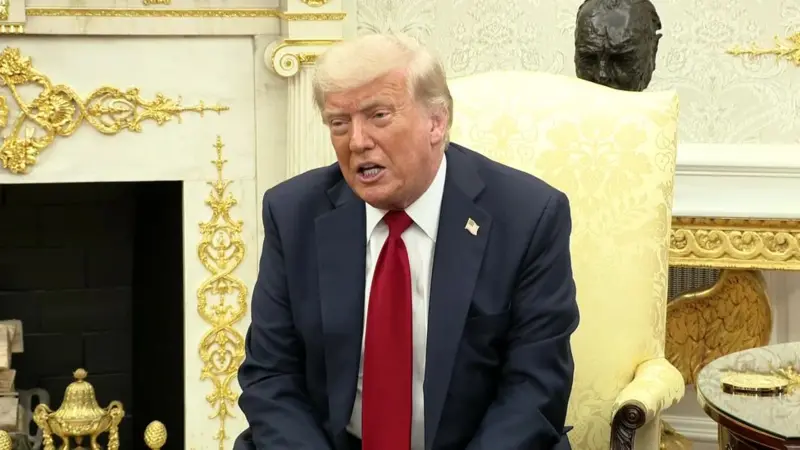
    Speaking from the Oval Office on Tuesday, Trump gave a dim view on possible talks, saying that the U.S. had “no interest in meeting.” He signaled that U.S. forces could soon target an under-construction Iranian nuclear site buried deep under a mountain.The site, known as Pickaxe Mountain, lies on the south side of Iran’s Natanz nuclear enrichment site, which was bombed by the U.S. during the 12-day war between Iran and Israel in 2025. However, Pickaxe Mountain has remained untouched as Iran continues to dig at the site.

    Attacks And Retaliation Continues

    The U.S. carried out another wave of strikes on Iran overnight into today, Wednesday, July 22, 2926, and air defenses opened fire over the capital, Tehran. The U.S. military said earlier today that it had completed an 11th night of strikes on Iran, with targets including aircraft hangars and drone storage sites.

    Iran’s state-run IRNA news agency reported explosions across several provinces such as Bushehr, East Azerbaijan, Hamadan, Hormozgan, Khuzestan and Sistan and Baluchistan provinces.

    That came after Iran attacked a tanker in the strait on Tuesday, forcing the crew to abandon the ship. According to Iran’s Health Ministry, U.S. strikes over the past 11 days have killed 53 people, including six women and three children, and wounded nearly 600 people. Iran’s paramilitary Revolutionary Guard insisted its retaliatory attacks would continue.

    Iran also kept up attacks against U.S. allies in the region. Iran also launched attacks against Bahrain, Jordan and Kuwait. Iran launched a missile attack on a Jordanian city on Israel’s doorstep, and alerts were issued in Bahrain and Saudi Arabia.

    Jordan’s military said that it intercepted four Iranian missiles over Aqaba, while two others fell in “uninhabited areas.” Plumes of smoke could be seen overhead in videos filmed by people in the nearby Israeli city of Eilat. Jordan said that it also intercepted four Iranian drones.

    Iran has avoided striking Israel since hostilities resumed last month, apparently hoping to keep it from reentering the war. However, the attack on Aqaba, within sight of Israel’s Eilat, raised concerns over a further widening of the conflict after an agreement to halt hostilities collapsed.

    Another missile alert sounded in Bahrain, and Saudi Arabia warned residents of the Persian Gulf city of Dammam to seek shelter. Saudi authorities later said the danger had passed, without elaborating.

    Before the latest strikes, Iranian Interior Minister Eskandar Momeni visited Pakistan, a key mediator in the conflict, seeking to revive diplomacy. However, it was unclear what new arrangement might be reached to end the war, which lately has become a battle for control over the Strait of Hormuz.

    According to state media, Iran’s Interior Ministry Spokesman Ali Zeinivand said “diplomacy isn’t called off” and that messages were still being exchanged, without elaborating.

    The escalation pushed energy prices higher. The international benchmark for crude oil traded today above $92 a barrel and regular gasoline in the U.S. climbed to an average of $4 a gallon. With U.S. midterm elections approaching in the fall, polls have pointed to the unpopularity of the war among Americans, who have felt the pain of pricier gas and seen new casualties in a conflict that weeks ago seemed to be winding down.

  • ASEAN Foreign Ministers Urge Halt To Iran War

    ASEAN Foreign Ministers Urge Halt To Iran War

    The Foreign Ministers of the Association of Southeast Asian Nations (ASEAN) have issued a joint statement calling for an immediate halt to fighting in the Middle East and the full and safe reopening of the Strait of Hormuz, a key corridor for energy shipments.

    The diplomats met behind closed doors in Manila before issuing the statement. This comes as Southeast Asia’s top diplomats opened three days of talks in the Philippine capital today with an agenda topped by their most daunting security problems and a backdrop of unfolding crises led by resurging U.S.-Iran fighting and a violent skirmish in the disputed South China Sea.

    Top diplomats pose for a group photo during the opening ceremony of the ASEAN Foreign Ministers’ meeting in Manila, Philippines, on July 21, 2026.

    ASEAN Ministers said that they expressed serious concern over the rapidly evolving situation in the Middle East, particularly the renewed hostilities involving the United States of America and the Islamic Republic of Iran. The Ministers added that they reaffirmed the obligations of states to peacefully resolve their differences and respect national sovereignty and territorial integrity.

    Southeast Asia, a bustling region of more than 680 million people, relies heavily on Middle East oil and gas and was severely hit by the global supply and price shocks sparked by the Iran war. Philippine President Ferdinand Marcos Jr. declared a national energy emergency in March to ensure the availability of fuel, food and other basic goods and prevent hoarding and profiteering.

    ASEAN Ministers are scheduled to meet Chinese Foreign Minister Wang Yi tomorrow with an agenda that includes a discussion on the status of negotiations between China and the regional bloc on a proposed pact called a “code of conduct,” which aims to prevent territorial disputes in the South China Sea from spiraling out of control.

    A new clash in the disputed waters underscored the urgency of the proposed nonaggression pact, which has been negotiated by the two sides for about two decades. They aim to conclude talks within the year.

    The Philippine military accused China’s coast guard of injuring a Filipino sailor during an altercation yesterday in the disputed Second Thomas Shoal. Chinese coast guard personnel aboard a motorboat repeatedly struck the sailor on the head with a wooden baton, injuring him and damaging his smaller vessel, the Philippine military said.

    Philippine officials condemned the Chinese coast guard, which blamed the Filipinos for starting the high seas confrontation. Marcos called the Chinese Ambassador Jing Quan for a meeting this afternoon, his spokesperson said without providing details. In Beijing, China’s Foreign Ministry said the Philippine ambassador was summoned on Tuesday to protest his country’s actions in the confrontation.

    Other key issues to be discussed at the ASEAN summit include the civil war in Myanmar, as the bloc’s peace initiatives falter, five years after a military coup plunged the country into a conflict that has killed an estimated 100,000 people

    Rubio To Participate In ASEAN Meeting

    US To Revoke Visas Of Chinese Student Visas
    US Secretary of State, Marco Rubio.

    U.S. Secretary of State Marco Rubio arrived in Manila on Tuesday morning for an annual meeting with his ASEAN counterparts on Wednesday, where the Middle East crisis will be high on the agenda along with other security and economic issues.

    Rubio plans to join regional security talks called the ASEAN Regional Forum, which also will include the European Union, Russian Foreign Minister Sergey Lavrov and Chinese Foreign Minister Wang Yi.

    According to the US State Department, Rubio will meet Wang on the sidelines on Wednesday..It will be the highest-level contact between the U.S. and China since President Donald Trump flew to flew to Beijing in May for talks with Chinese President Xi Jinping that focused on the U.S.-Israel war on Iran, trade and the status of Taiwan, among other issues.

    Rubio, Wang and Lavrov will attend a final forum Thursday called the East Asia Summit, where 18 Western and Asian countries, including the 11-nation ASEAN, will tackle geopolitical, economic and security concerns.

    Russian Foreign Minister Sergey Lavrov accuses Europe Of Advancing “Failed” Policy On Ukraine.
    Russian Foreign Minister Sergey Lavrov.

    Rubio’s attendance in the ASEAN meetings was apparently aimed at dispelling concerns that the war in the Middle East would deter the U.S. from focusing on the Indo-Pacific, especially China’s actions in the disputed South China Sea and its pressure on Taiwan. “The secretary’s visit advances a clear U.S. priority: a free and open Indo-Pacific that delivers safety, security and prosperity for the region and for the American people,” State Department Spokesperson Thomas Pigott said in Washington.

    Rubio is also expected to meet member of the Quad, which consists of the U.S., India, Japan and Australia, and is seen as a major component of the American strategy to counter China. It has been repeatedly criticized by Beijing as a U.S. scheme to contain its growing influence.

  • Lebanese Army Deploys To Southern Town

    Lebanese Army Deploys To Southern Town

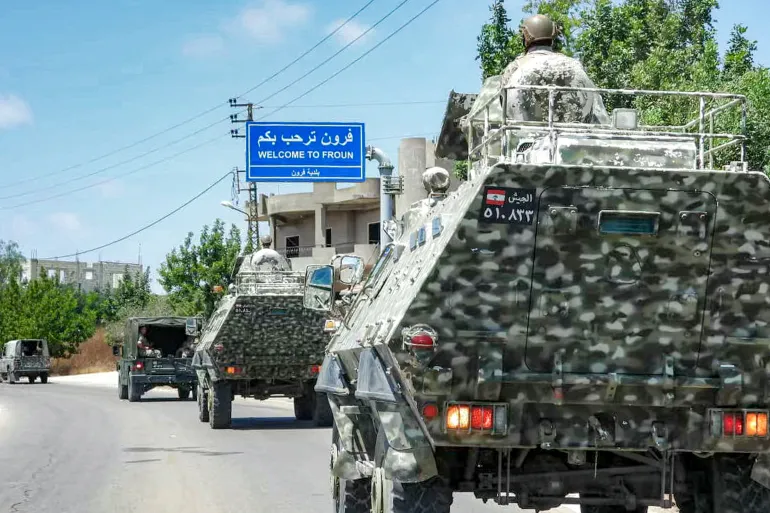
    The Lebanese army has disclosed that its soldiers have begun deploying in the southern town of Zawtar al-Gharbiyeh, following the withdrawal of Israeli forces from the sector as part of a US-mediated agreement.

    This comes as Israel, Lebanon, and the United States announced yesterday that the so-called “pilot zone” project had begun. The pilot zone plan is part of a framework agreement between Lebanon and Israel, signed in Washington last month. It will see Israel withdraw from a small number of areas in southern Lebanon, even as it remains in others it has invaded since escalating its war on the country in March, killing more than 4,300 people.

    Earlier, the US State Department said that Zawtar al-Gharbiyeh is among three southern areas set to trial the implementation of the US-mediated deal. Under the agreement, the Israeli military will carry out a phased withdrawal from the locations it occupies in southern Lebanon, after which the Lebanese military will take over security arrangements and oversee the disarmament of Hezbollah.The other two villages are Froun and Srifa.

    Two of the three villages, Froun and Srifa, are not under Israeli military control and the Lebanese army is present there, while Israeli forces are in part of Zawtar al-Gharbieh. Some locals have questioned their inclusion in the plan, saying the villages were never occupied by Israeli forces.

    To them, the inclusion of their villages is evidence that Israel is in fact not giving anything up despite the framework agreement, and is instead able to remain in the areas it has occupied.Lebanese security.

    In a statement, the Lebanese army renewed its call for citizens not to head to the town until the security situation stabilizes, and to adhere to the directives of the deployed military units for their own safety.

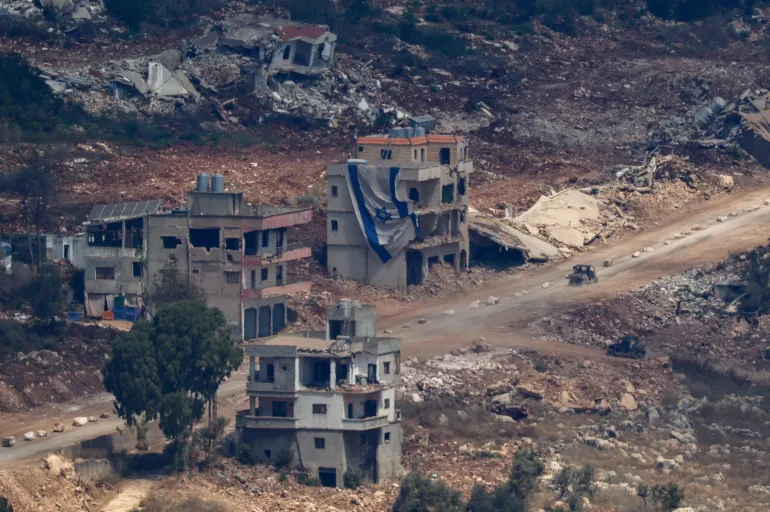
    An Israeli military vehicle drives near a damaged building with a large Israeli flag in Lebanon as seen from northern Israel, June 27, 2026.

    Dozens of displaced residents have begun to return to villages in southern Lebanon, after Israeli bombardment forced them to flee. Spanish troops had been patrolling the area opposite Froun as part of the United Nations peacekeeping force (UNIFIL) deployed south of the Litani River, though its mission is set to end by year’s end under a UN Security Council resolution.

    Lebanese President To Meet Trump

    Meanwhile, Lebanese President, Joseph Aoun will meet with U.S. President Donald Trump today, in a bid to bring about long-term calm in the war-torn country after months of war between Israel and the Iran-backed Hezbollah militant group.

    Lebanese President, Joseph Aoun Seeks Hezbollah’s Disarmament This Year
    Lebanese President, Joseph Aoun.

    The meeting will wrap up Aoun’s four-day visit to Washington. Aoun’s landmark meeting with Trump comes as Lebanon and Israel continue to hold rare direct talks mediated by Washington. Lebanon hopes they will result in Israeli troops withdrawing from large swaths of southern Lebanon that they currently occupy, and for the Lebanese military to receive support to assert full control in areas where Hezbollah militants had held sway.

    Lebanon and Israel announced a “framework agreement” on June 26, setting a plan for Israeli forces to withdraw from southern Lebanon as well as the disarmament of Hezbollah, which for decades had a strong presence in the area. It also lays out steps toward an eventual peace agreement between both countries, which have never held formal diplomatic ties and have been nominally in a state of war for nearly 80 years after Israel’s establishment.

    “Extending state authority” is expected to top the agenda when Lebanese President Joseph Aoun meets with Trump.

    On Sunday, Aoun met with Secretary of State Marco Rubio, who said Washington will continue to endorse the Lebanese agreement and support the agreement’s full implementation.

    US To Revoke Visas Of Chinese Student Visas
    US Secretary of State, Marco Rubio.

    Rubio described the meeting as “very positive” and warned that Lebanon will “never be fully at peace” as long as the Hezbollah issue is not resolved. “How do you replace Hezbollah? You defeat and replace them with a government that is strong enough to be the sole force of arms in the country,” Rubio said after the meeting.

    Skeptics in Lebanon fear that a military confrontation with Hezbollah could lead to a civil war, as government officials have also urged for investment into the country’s battered infrastructure to empower the weakened state, which Rubio iterated. “This is not just about military stuff,” he said, adding, “This is about how can we attract more U.S. and international investment into Lebanon.”

  • Houthis Announce Maritime Embargo Targeting Saudi Arabia

    Houthis Announce Maritime Embargo Targeting Saudi Arabia

    The Houthis have announced a maritime embargo against Saudi Arabia in retaliation for a blockade on Yemen and a recent attack on Sanaa International Airport, threatening another vital waterway for global shipping and raising fears of renewed conflict.

    The announcement of a maritime embargo comes after the two sides traded fire last week for the first time in years. The Houthis blamed Saudi Arabia for strikes on Sanaa airport last week and retaliated by targeting Saudi’s Abha International Airport.

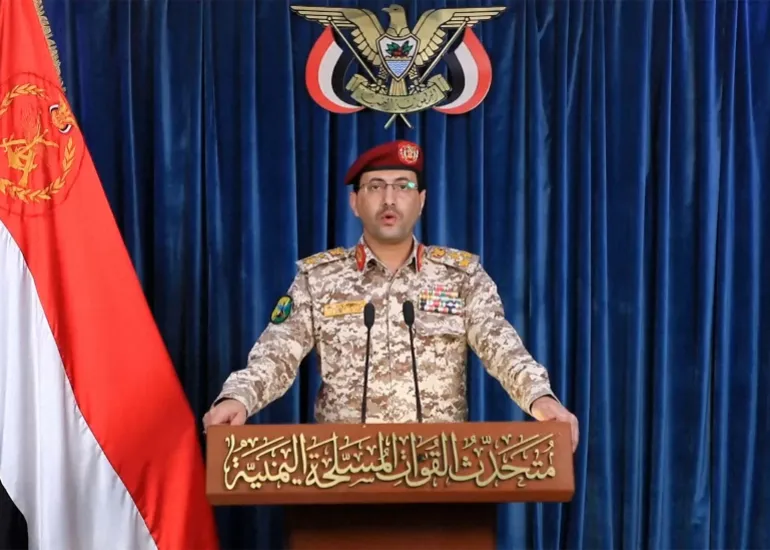
    A Houthi military spokesperson, Yahya Saree, said in a video statement, “The rebels “declare a maritime embargo against the criminal Saudi enemy, based on the equation of ‘an eye for an eye,’ effective immediately upon the issuance of this statement.”

    Brigadier-General Yahya Saree speaks in a video message.

    Without giving details, the Deputy Head of the Houthi media office, Nasruddin Amer, said on X that the Bab al-Mandeb strait will be closed in response to what he called Saudi Arabia’s “unjust blockade on Yemenis for over 10 years.” Bab el-Mandeb, at the southern tip of the Arabian Peninsula, is the gateway to the Red Sea through which around 12% of the world’s trade usually passes.

    A fourth of global container trade transits through the 32-kilometer (20-mile)-wide strait to and from the Suez Canal.The Houthis earlier demonstrated their ability to disrupt shipping there when they targeted ships for months over the Israel-Hamas war in Gaza, with over 100 vessels attacked. It is unclear whether the Houthis will resume that level of attack against neighboring Saudi Arabia.

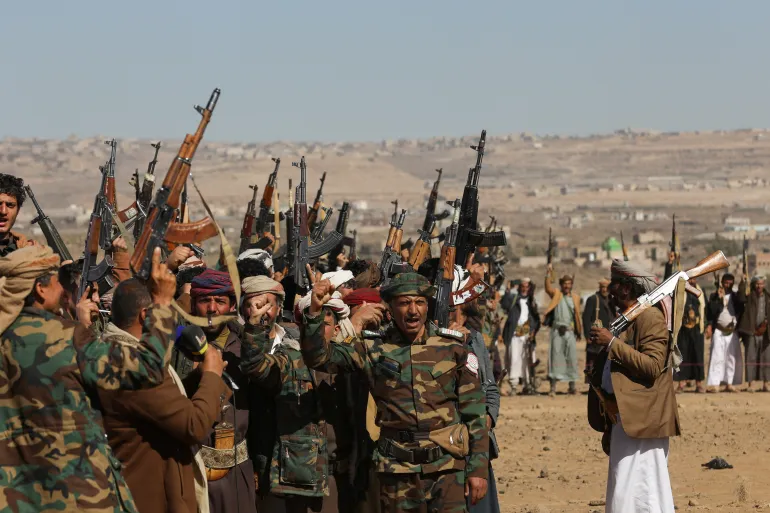
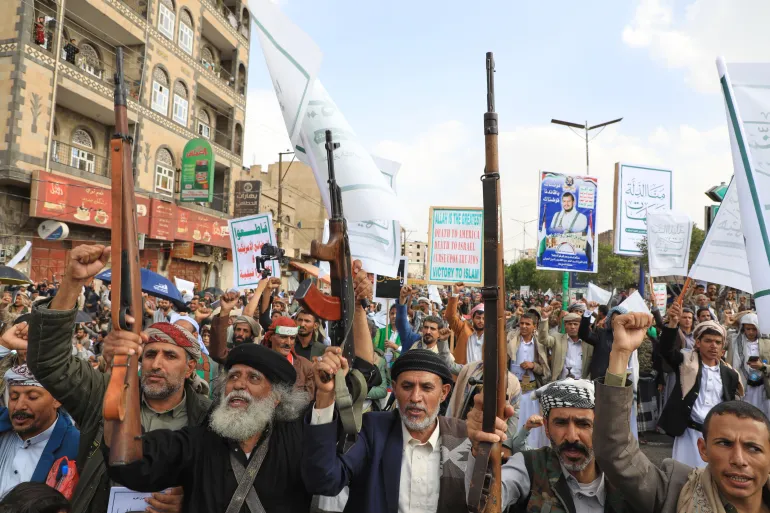
    Houthis shout slogans in Yemen’s capital, Sanaa

    Saudi Arabia already faces pressure as it uses its East-West Pipeline to the Red Sea as an alternative to the Strait of Hormuz, which remains in the grip that Iran imposed shortly after the U.S. and Israel attacked it on Feb. 28. The Saudis have been sending millions of barrels of crude oil a day through the pipeline.

    Saudi Arabia leads a coalition against the Houthis and imposed an air and sea blockade on Yemen in 2015. Yemen’s civil war began in 2014 when the rebels seized the capital, Sanaa, and much of northern Yemen and forced the government into exile.

    A truce was reached in 2022.That truce has been threatened in recent days after the Houthis said the Saudis struck the Sanaa airport in an attempt to affect a flight carrying Houthi leaders back from Iran, where they attended the funeral of Supreme Leader Ayatollah Ali Khamenei. The plane landed safely at another airport.

    Houthis Express ‘Complete Readiness For All Options’

    Moreover, Houthi military Spokesman, Yahya Saree said that the continued blockade of Yemen’s Sanaa airport “is unacceptable and cannot be tolerated.” Saree vowed to retaliate “to the blockade with a blockade and to respond to all escalation with escalation.”

    Saree emphasized that the Yemeni Armed Forces “affirm their complete readiness for all options and any foolish act committed by the reckless Saudi enemy … with a comprehensive and decisive escalation.”

    “We call upon the people of our great nation to continue the general mobilization and general call to arms, and to be fully prepared for all scenarios and developments, and to support the fronts with fighters.”

    Yahya Saree

    The Houthis are a crucial part of Iran’s so-called “Axis of Resistance,” which also includes militant groups in Lebanon, Iraq and the Palestinian territories.

    The U.S. and Israel responded to the Houthis’ earlier attacks on shipping with a punishing air campaign across Houthi-held areas in Yemen until a deal that saw the rebels stop their assaults. Disrupting transit through the Bab al-Mandeb forces shipping firms to route vessels around the Cape of Good Hope, significantly increasing costs.

    Meanwhile, Zeidon Alkinani, Founding Director of the Arab Perspectives Institute, opined that the Houthis appear to be using the announcement of a maritime embargo targeting Saudi Arabia to “redraw the rules” while regional powers are under pressure.

    The analyst told a news agency that there is “very clear” messaging in the announcement.Alkinani noted that there was “no mention of Iran” suggesting the Houthis are acting to exploit what they see as a window of opportunity while both Saudi Arabia and the United States are pre-occupied with Iran. “They’re taking it as an opportunity to redraw the rules imposed on them before,” he said.

    He added that negotiations with the Houthis could be “easier” than talks involving either the US or Iran, which remain in direct confrontation. “From a Houthi perspective they are controlling Yemen, which is in the GCC orbit,” he said. Alkinani said that direct negotiations with the Houthis would now make sense.

  • Cockroach Janta Party Protest Sparks Police Clashes

    Cockroach Janta Party Protest Sparks Police Clashes

    Cockroach Janta Party supporters clashed with police in New Delhi today, as they attempted to march to Parliament, demanding the resignation of the country’s Education MinisterDharmendra Pradhan.

    In one of the largest demonstrations yet against Prime Minister Narendra Modi’s government, the confrontation unfolded after thousands of supporters of the youth-led Cockroach Janta Party tried to breach police barricades surrounding Jantar Mantar, the capital’s designated protest site located a few kilometres from Parliament.

    Police responded by firing tear gas and charging demonstrators with batons in an effort to disperse the crowd, but many protesters regrouped and continued marching toward Parliament in smaller groups.

    Security personnel fire tear gas to disperse Cockroach Janta Party protesters.

    Despite the police action, demonstrators remained determined to press ahead with their march, chanting slogans calling for the education minister’s resignation and demanding greater accountability from the government.

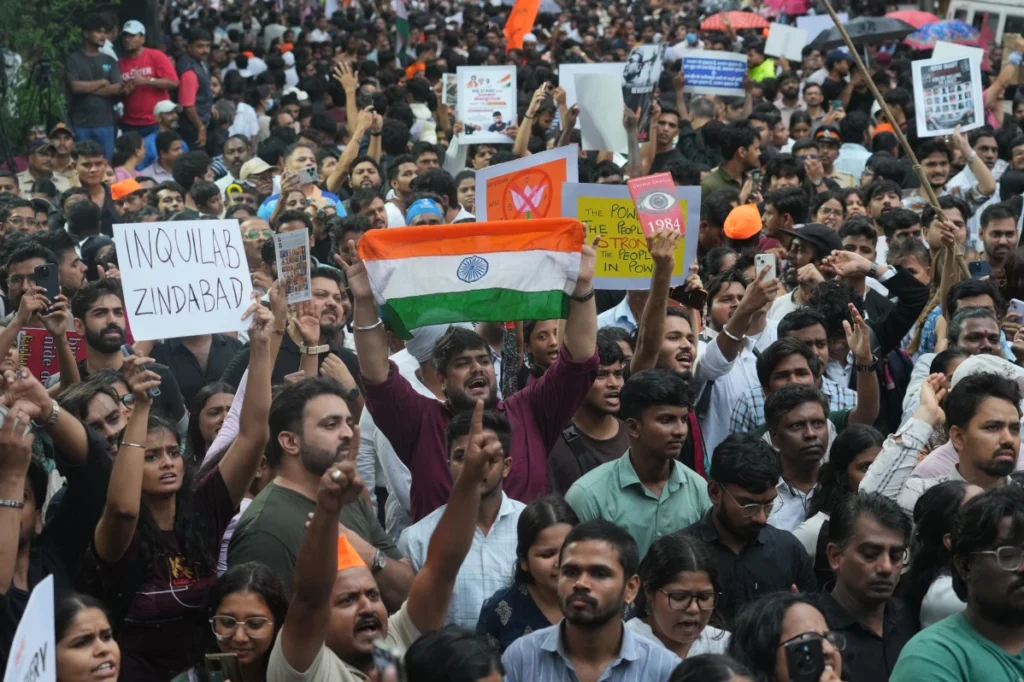
    The protest drew a diverse crowd that included university students, young professionals, teachers, parents and families with children. Many participants arrived carrying backpacks filled with food and water, anticipating a prolonged demonstration as security forces tightened restrictions around key government buildings.

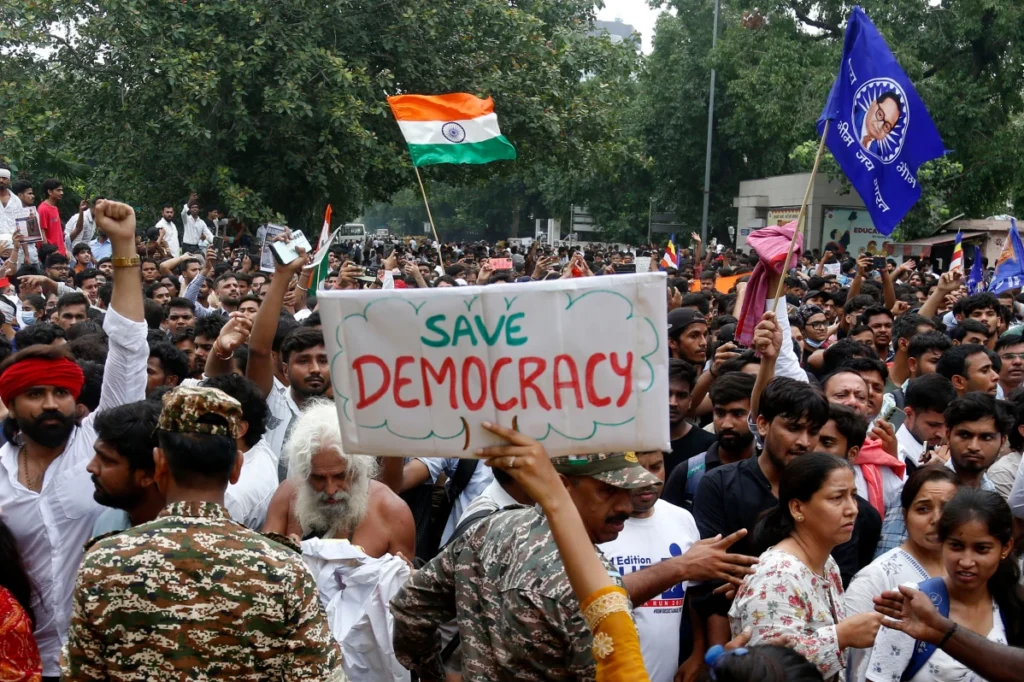
    As the day progressed, the gathering expanded beyond Jantar Mantar, spilling into surrounding roads and streets. Protesters waved Indian flags while chanting slogans directed at both the Education Minister and Prime Minister Modi, creating a charged atmosphere in the heart of the capital.

    Cockroach Janta Party protesters wave Indian flags while chanting slogans.

    Authorities erected multiple layers of security barricades around Parliament and other government institutions to prevent demonstrators from reaching the legislature. Large numbers of police officers and paramilitary personnel were deployed across central New Delhi to contain the crowds and restore order after clashes broke out.

    The demonstrations are the latest in a series of protests organised by the Cockroach Janta Party, a youth-led political movement that has attracted growing support through social media campaigns and grassroots mobilisation. Although relatively new, the movement has become increasingly vocal in criticising the government’s education policies, alleging shortcomings in governance, transparency and opportunities available to young people.

    Cockroach Janta Party protesters wave Indian flags while chanting slogans.

    Protest leaders have accused the education ministry of failing to address long-standing concerns affecting students and educational institutions. Among the issues frequently raised are examination reforms, access to quality education, employment prospects for graduates and accountability within the education sector.

    The Cockroach Janta Party emerged in May, after the Supreme Court Chief Justice compared some unemployed young people to “cockroaches” during an unrelated hearing. Supporters embraced the remark, turning it into a satirical movement that has attracted millions of followers on social media.

    The movement has gained momentum after repeated leaks of high-stakes entrance exams for medical colleges and government jobs sparked public anger. It drew wider attention after police forcibly moved hunger-striking activist Sonam Wangchuk to the hospital on Saturday.

    Protesters calling themselves “cockroaches” have camped at Jantar Mantar for the past month, with members of several student groups joining Wangchuk’s hunger strike. Thousands of supporters have also turned out at universities and rallies in other cities. They are demanding the resignation of Education Minister Dharmendra Pradhan, reforms to the examination system and compensation for the families of students who died by suicide following paper leaks.

    Meanwhile, activist Wangchuk appealed for permission to temporarily leave the hospital and join the march. In a handwritten note, he also said that he would end his nearly three-week hunger strike only if the government took responsibility for failures in the education system and exam paper leaks, or if protesters were allowed to reach Parliament and lawmakers pledged to raise the issues in both Houses.

    Cockroach Janta Party Slams Clashes

    Cockroach Janta Party Spokesperson Saurav Das denouced the clashes, accusing authorities of “brutally cracking down” on “peaceful protesters.” Delhi Police said that the march had not been authorized and that restrictions were needed to maintain law and order around Parliament during the monsoon session, which began today.

    The government has not publicly accepted the protesters’ demands for the Education Minister’s resignation. However, officials appeared to make their first direct outreach to leaders of the movement, signalling a possible willingness to engage in dialogue as tensions escalated.

    The latest unrest comes at a politically sensitive time for the Modi administration, which has faced increasing public scrutiny over a range of domestic issues, including youth unemployment, education reforms and the rising cost of living. Although the government retains significant political support, recent demonstrations have highlighted growing frustration among sections of India’s younger population.

    The protests also underscore the continuing challenge for authorities in balancing security concerns with citizens’ constitutional right to peaceful protest. Demonstrations at Jantar Mantar have long served as a platform for groups seeking to draw national attention to political and social issues.