Iran has rejected accusations by the French government linking it to cyberattacks against supermarket refrigeration systems in France, describing the allegations as “baseless and biased” and accusing Paris of attempting to damage its international reputation.
In a statement, Iran’s Foreign Ministry condemned what it called an attempt to tarnish the country’s image and undermine its relations with other nations.
The Iranian Foreign Ministry said in a statement that the accusations were a “highly irresponsible and contemptible action to tarnish Iran’s image and disrupt its relations with other countries, and merely pleases the United States and the Zionist regime as the greatest violators of international law.”
The ministry also accused France of pursuing what it called “destructive policies” towards Iran and the West Asia region, citing its alleged history of hosting terrorist groups and supporting what Tehran describes as the genocide of Palestinians.
Iran further reminded the French government of its international responsibilities and warned that it would take “necessary and appropriate measures” to protect its national interests and security against what it described as illegal foreign manoeuvres.
The response follows accusations by French authorities that an Iranian cyber unit affiliated with the Islamic Revolutionary Guard Corps (IRGC) was responsible for attacks that disrupted refrigeration systems in hundreds of supermarkets, causing food losses and equipment damage.
France Links Attacks To Iranian Cyber Unit
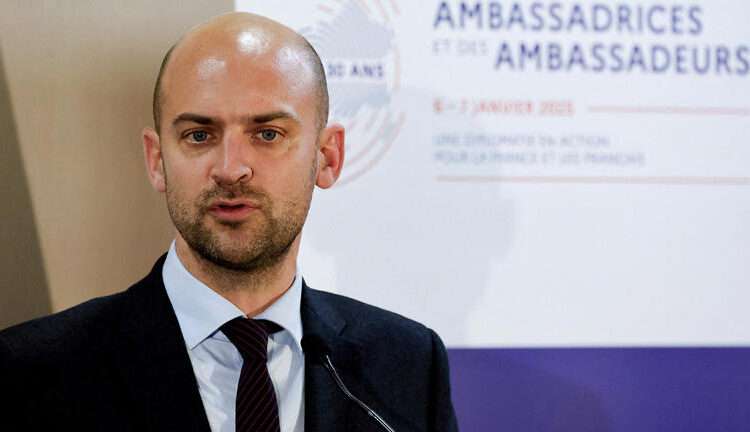
French Foreign Minister Jean-Noël Barrot said on Monday that investigators had identified the IRGC-affiliated unit as responsible for the attacks, which occurred on October 11 and 12. “I can confirm that this attack was carried out by the Islamic Revolutionary Guard Corps of the Islamic Republic of Iran,” Barrot said.
He described the incident as “unprecedented in its level of aggression” and said that France would pursue sanctions against those responsible at the European level. The French government also summoned Iran’s Ambassador to formally address the allegations.
“This is the first large-scale cyberattack carried out for sabotage purposes on French soil. It represents a major attack on the nation’s interests and on the security of the French people. That is why it will not go unanswered.”
Jean-Noël Barrot
He added that France would “also take any other measures that are proportionate and necessary, whether public or private, to respond to this attack and deter anyone who might seek to repeat it.”
The Paris prosecutor’s office has requested international arrest warrants for the alleged leader of Shahid Kaveh, an offensive cyber unit affiliated with the IRGC, and two of his deputies. The requests form part of the French investigation into the attacks and the alleged involvement of Iranian operatives.
Supermarket Refrigeration Systems Targeted
According to French investigators, the attackers gained internet access to supermarket refrigeration systems and remotely increased temperatures to as high as 50 degrees Celsius overnight.
Investigators cited the use of Farsi and IP addresses associated with devices in Iran as part of the evidence pointing towards an Iranian connection.
The temperature increases reportedly caused millions of euros’ worth of food to spoil, according to retailers. In some locations, the incidents also resulted in fires and damaged or melted equipment.
Several major supermarket groups were affected, including E.Leclerc, Intermarché, Carrefour, Monoprix and Coopérative U.
Intermarché and its Netto brand reported that at least 300 stores had been affected. Coopérative U said more than 100 supermarkets were targeted, while Carrefour reported disruptions at 80 stores. Monoprix also reported that approximately five per cent of its roughly 490 stores were affected.
The scale of the disruption has raised concerns about the vulnerability of commercial infrastructure connected to the internet, particularly systems that control essential operations such as refrigeration.
Similar Disruptions Reported Across Europe
The French incidents have also drawn attention to similar refrigeration problems reported by supermarkets in other European countries on November 2.
Temperature spikes were recorded in Belgium, Estonia, Ireland, Luxembourg and Sweden, affecting dozens of stores and a food distribution hub.
However, the available information does not establish whether the incidents in those countries were connected to the attacks in France or whether they were carried out by the same actors.
The developments have intensified concerns about the security of interconnected commercial systems and the potential economic consequences of cyberattacks targeting everyday infrastructure.
While French authorities maintain that the supermarket attacks were carried out by an IRGC-affiliated cyber unit, Iran has rejected the accusations and warned against measures it considers hostile.
The dispute has added another dimension to tensions between Paris and Tehran, with France considering European sanctions and pursuing international arrest warrants as the investigation continues.
READ ALSO: Rubio Faces G7 Questions Over Trump’s Foreign Policy