Palestinian authorities have condemned what they described as international “indifference and inaction” after a landslide killed five displaced people, including four children, in the central Gaza Strip following heavy rainfall.
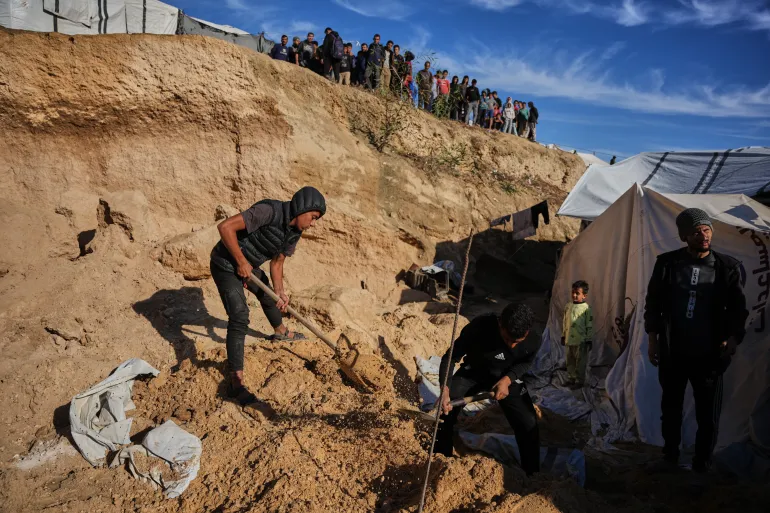
The victims died on Sunday when a sandbank collapsed onto tents sheltering displaced families in Deir el-Balah. Two other people remain missing, according to the information provided by Palestinian authorities.
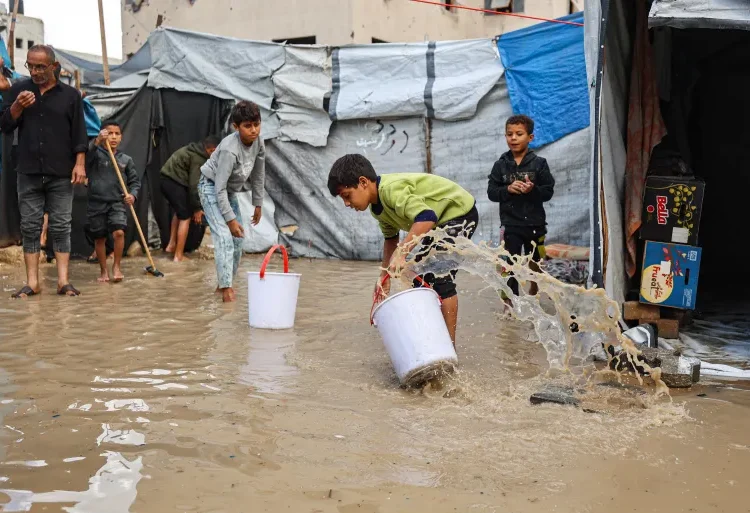
The incident followed heavy rains brought by the first winter storm of the year, which struck Gaza on Friday and caused widespread flooding across the territory.
In a statement today, the Gaza Government Media Office said that the deaths reflected the dire conditions facing displaced Palestinians, many of whom are living in tents and makeshift shelters after repeated displacement and the destruction of homes and infrastructure. “This is a scene that should shame the conscience of humanity and reflects the extent of the complicity and abandonment to which our […] people are subjected,” the office said in its statement.
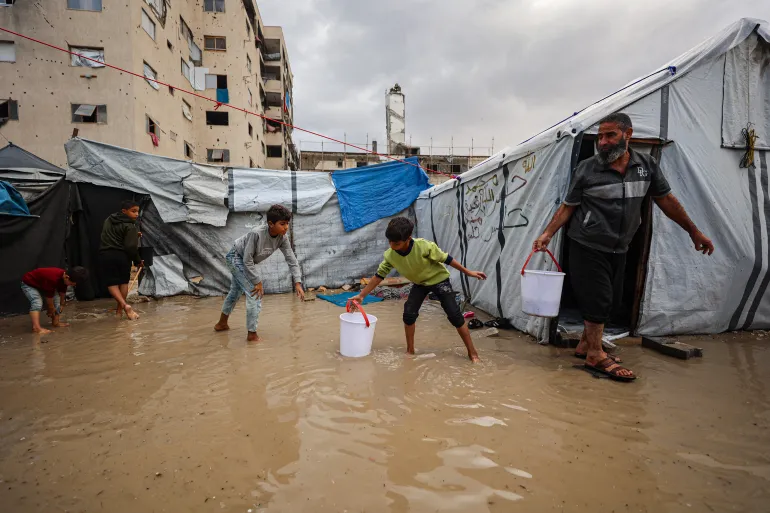
The storm inundated displacement camps, flooded makeshift shelters and weakened buildings already damaged by Israeli air strikes. According to the figures, approximately 70,000 tents were flooded during the weekend storm, leaving large numbers of displaced families exposed to the elements.
The damage has further complicated efforts to protect residents as winter conditions intensify. Many families continue to depend on temporary shelters that offer limited protection against heavy rain and flooding.
Search and rescue efforts have also been hampered by shortages of specialised equipment. Palestinian residents were reportedly forced to use their bare hands to dig through the collapsed sandbank in attempts to reach survivors.
The Gaza Government Media Office blamed restrictions on the entry of essential supplies and equipment for the difficulties facing emergency responders.
It accused Israel, the United States and the international community of bearing responsibility for the conditions, citing what it described as their silence and failure to ensure the delivery of shelter supplies, construction materials, fuel and spare parts needed to operate municipal and Civil Defence equipment.
The office also criticised the Board of Peace and the National Committee for the Administration of Gaza, accusing both bodies of failing to respond adequately to the humanitarian emergency.
It said their lack of action raised questions about their purpose and responsibilities amid the suffering of displaced Palestinians.
Aid Agencies Warn Of Severe Shelter Shortages
Children are among those facing particularly difficult conditions as flooding and inadequate shelter increase the risks associated with the winter season.
Data from Save the Children indicate that more than half a million children in Gaza are living in what the organisation describes as “critical or catastrophic” shelter conditions.
The organisation stated that a ceasefire arrangement announced more than a year ago had envisaged the entry of caravans as a more durable alternative to tents. However, it accused Israeli authorities of repeatedly preventing their entry, leaving hundreds of thousands of children exposed to another winter in inadequate shelters.
The continuing restrictions on shelter materials have also drawn concern from the International Organization for Migration (IOM).
Speaking from Deir el-Balah, IOM official Karl Baker described the conditions facing displaced families as “unliveable,” saying heavy flooding had overwhelmed tents and makeshift shelters.
He said an “incredible amount of water” had overtaken the areas where families were living, with some communities receiving virtually no assistance.
Baker stated that prefabricated housing units and construction materials could help improve living conditions if humanitarian agencies and their partners were allowed to bring them into Gaza. “These are all designated as items that need to go through further security screenings on the Israeli side,” he said, referring to restrictions affecting the entry of essential supplies.
He added that allowing the delivery of prefabricated housing and construction materials would mark an important change in the conditions facing displaced residents. “As soon as we can bring in prefabricated housing units and construction materials, that’s a day where we can actually change the way in which people exist within Gaza,” Baker said.
Humanitarian Crisis Continues Despite Ceasefire
The landslide occurred amid a prolonged humanitarian crisis following Israel’s military campaign in Gaza, launched in response to the Hamas-led attack on southern Israel on October 7, 2023.
The casualty figures put the Palestinian death toll since the beginning of the war at more than 74,600. They also state that more than 1,600 Palestinians have been killed since a ceasefire took effect in October 2025.
Despite the ceasefire, damaged infrastructure, displacement and restrictions on essential supplies continue to affect daily life across the enclave.
For families living in tents, the arrival of winter has added another threat to already precarious conditions. Flooding, collapsing structures and shortages of shelter materials have left many without adequate protection from the weather.
The deaths in Deir el-Balah have renewed calls for greater humanitarian assistance and the entry of materials needed to provide safer accommodation and restore essential infrastructure.
The immediate challenge remains ensuring that displaced families can access protection from the elements and that emergency responders have the equipment needed to assist those in danger.