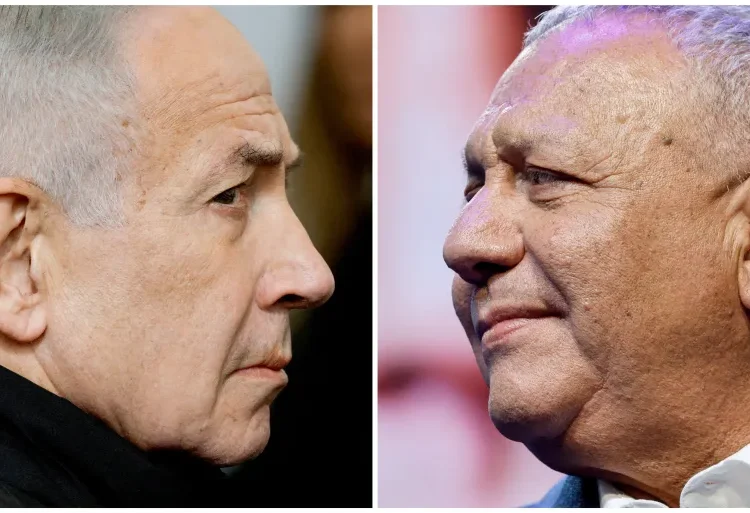
Israel’s Arab-led Joint List alliance has announced plans to recommend opposition leader Gadi Eisenkot to form the next government, a move that could strengthen his bid to replace Prime Minister Benjamin Netanyahu following last week’s general election.
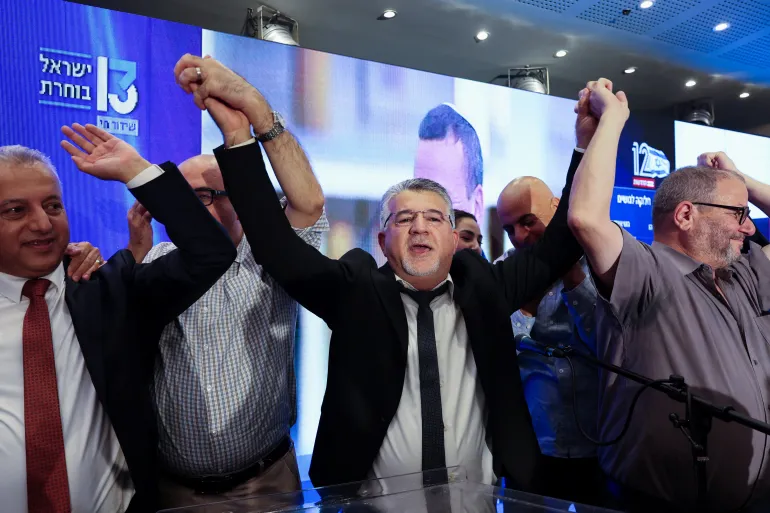
The alliance said that its representatives would inform President Isaac Herzog of their decision, adding to the support already pledged by Ra’am, another Arab-led party. “The Joint List announced today, Thursday, that it will inform the President of the State, Isaac Herzog, this evening of its decision to recommend that Gadi Eisenkot be tasked with forming the government,” the alliance said in a statement.
Arab-led parties secured a record 19 seats in Israel’s 120-member parliament, the Knesset, in the election, giving them a potentially significant role in determining the next government.
The Joint List holds 11 seats, while Ra’am has eight. If both parties formally recommend Eisenkot, he is expected to receive the backing of 67 lawmakers, exceeding the 61 seats required for a parliamentary majority.
The development comes as Netanyahu’s political bloc faces difficulties securing unanimous support, with divisions emerging among some of its ultra-Orthodox allies.
Netanyahu’s Bloc Faces Internal Divisions
Netanyahu’s bloc holds 53 seats, but its support could fall further after Degel HaTorah, which controls four of the seven seats held by United Torah Judaism, announced that it would recommend neither candidate.
The faction’s position follows disagreements with Netanyahu’s coalition over legislation that would exempt ultra-Orthodox Haredi men from compulsory military service, according to The Times of Israel.
The dispute has exposed tensions within the outgoing Prime Minister’s political camp as party leaders make their recommendations to Herzog.

Meanwhile, Netanyahu and his Likud party have repeatedly alleged that Arab parties were involved in election fraud with foreign backing, claims for which they have not presented evidence.
Likud has pointed to several reported cases, including the arrests of three political activists suspected of bribing voters before polling began. The individuals were reportedly suspected of having links to Ra’am, although the party has denied involvement.
Netanyahu and Likud have also criticised the prospect of Zionist parties cooperating with Arab-led parties to form a government. In a statement following the election, Likud described such cooperation as “dangerous to Israel.”
Israel’s Central Elections Committee certified the election results on Wednesday, saying it had found no evidence of fraud.
Herzog Begins Consultations With Party Leaders
President Herzog has accepted the certified results and begun consultations with political parties to determine which candidate should receive the mandate to form the next government.

Although he supported investigating allegations of suspected election interference, Herzog cautioned against making sweeping accusations against Palestinian-Israeli voters.
He said that he had “great respect” for Israel’s Palestinian minority, which accounts for approximately 20 per cent of the country’s population. “I condemn the coarseness and racist expressions that we have heard recently,” he said.
On Wednesday, Herzog met representatives of Religious Zionism, Zehut, Shas and Yisrael Beytenu as part of the consultation process.
He said that the representatives had presented their recommendations regarding the lawmaker who should be tasked with forming the government. He also confirmed on X that consultations would continue on Thursday.
The Israeli President is expected to choose between Netanyahu and Eisenkot, based on whom he considers best positioned to assemble a governing coalition.
Once Herzog completes the consultations, the candidate selected will have 28 days to form a government, with a possible 14-day extension.
If the nominee fails to secure a coalition within the permitted period, the opportunity could pass to another candidate. If neither Netanyahu nor Eisenkot succeeds in forming a government, Israel could face another general election early next year.
The Joint List’s decision and Ra’am’s earlier commitment could therefore prove significant in the coalition negotiations, particularly as Netanyahu faces uncertainty over support from parts of his existing political bloc.
However, recommendations to the president do not automatically translate into a functioning parliamentary majority. Eisenkot would still need to negotiate agreements with other parties and secure sufficient support to establish a government.
The coming days are therefore expected to be crucial as Herzog weighs the recommendations and Israel’s political parties negotiate over the formation of the next administration.
READ ALSO: Greenland Ratifies Security Deal With Denmark And US