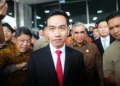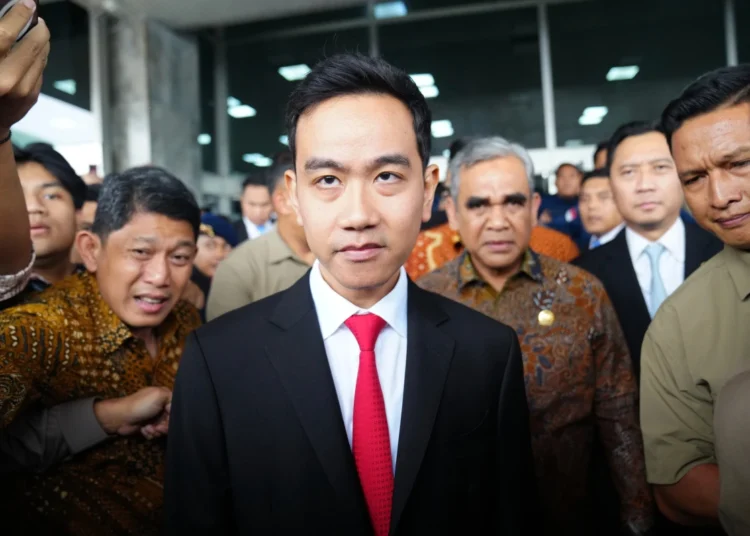
Indonesia’s Vice President, Gibran Rakabuming Raka has resigned amid growing questions about his eligibility for office following court rulings that challenged the educational documents he submitted to meet election requirements.
Raka, the 39-year-old son of former President Joko Widodo, submitted his resignation to the leadership of the People’s Consultative Assembly at the parliament building in Jakarta.
His departure comes as lawmakers consider allegations that he did not meet the constitutional and electoral requirements for serving as Vice President. The controversy intensified after the Constitutional Court and Supreme Court ruled last month that documents relating to his overseas education did not satisfy the relevant election requirements.
Raka had reportedly offered to resign on Tuesday during a meeting with President Prabowo Subianto, saying that he wanted to prevent the dispute from developing into a prolonged political controversy.
However, a Cabinet Minister said that Prabowo had urged him to defend himself at the time. It was initially unclear whether the President had accepted the resignation offer.
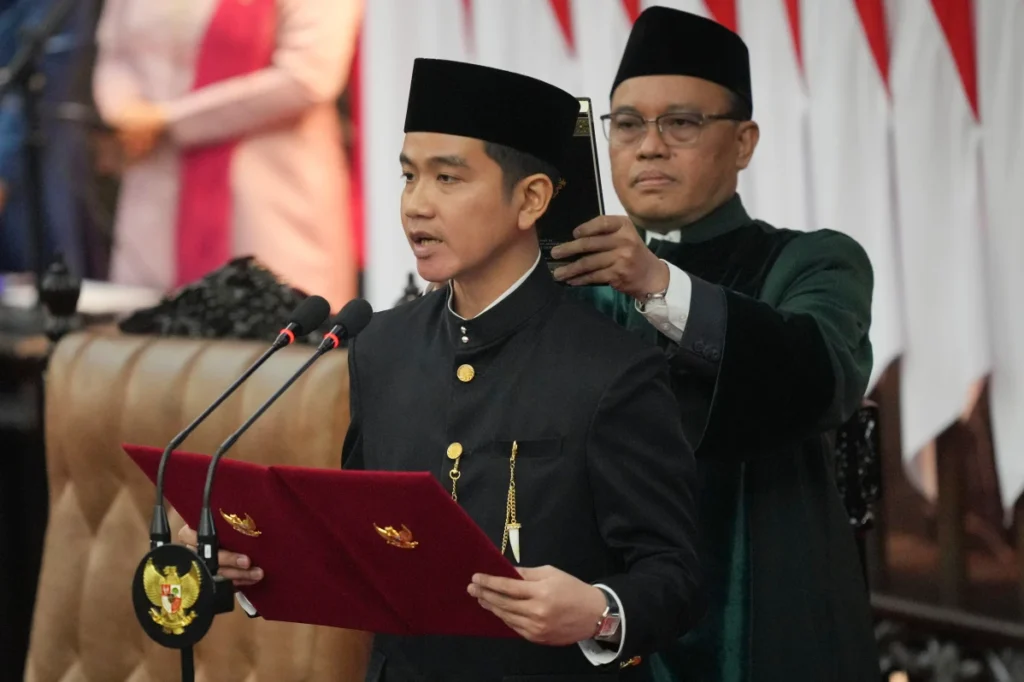
Under Indonesia’s Constitution, a vacancy in the vice-presidential office does not automatically trigger a new election. Instead, the People’s Consultative Assembly must elect a replacement from two candidates nominated by the President within 60 days.
The resignation also comes as parliament begins examining a petition submitted by 120 lawmakers representing eight political parties. The petition, delivered to the House leadership on Wednesday, initiated a process that could eventually lead to Raka’s impeachment.
Parliament Considers Impeachment Process
Under Indonesian law, the House leadership must establish a special committee to investigate whether Raka violated the Constitution by serving as vice president despite allegedly failing to meet the eligibility requirements.
If lawmakers conclude that there are sufficient grounds to proceed, the House must refer the matter to the Constitutional Court for a ruling on whether a constitutional violation occurred.
The court’s decision would determine whether the allegations meet the legal threshold for further action under the impeachment process.
The dispute centres on Raka’s educational credentials and the documents he submitted during the electoral process. The recent court rulings have intensified scrutiny of his eligibility, prompting lawmakers from several political parties to seek a formal investigation.
His resignation, however, introduces a further constitutional question concerning the process for filling the vacant office and whether the parliamentary proceedings will continue.
Wiretapping Scandal Expands To Government Officials
Separately, Indonesia’s police chief has told lawmakers that an alleged illegal wiretapping operation targeting President Prabowo also monitored senior government officials, politicians, activists and law enforcement personnel.
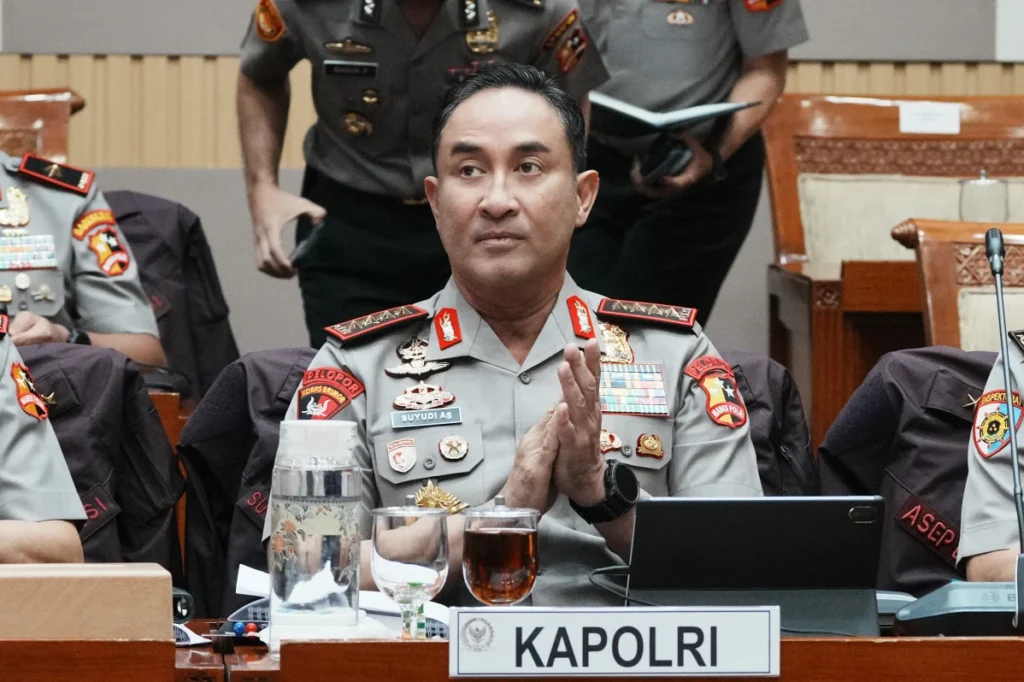
General Suyudi Ario Seto appeared before the parliamentary Commission III, which oversees law enforcement and security affairs, as legislators investigate the surveillance operation allegedly involving several high-ranking officials.
Seto said that the reported targets included the President, officials at the presidential palace, government ministries, state institutions, lawmakers, political party figures, Governors, anti-corruption officials, activists and students.
He cautioned, however, that appearing on the surveillance list did not necessarily indicate involvement in wrongdoing. “The fact that someone appeared on the list of surveillance targets does not mean they are suspected of any wrongdoing,” Seto told the parliamentary panel.
The allegations emerged earlier this month after three senior police generals were detained in connection with the suspected operation. One of them, General Listyo Sigit Prabowo, was named Prabowo’s chief of staff in October and has close ties to former President Widodo. A fourth senior police official has since been implicated.
The President’s office said that the operation was being investigated as a possible case of treason. Authorities also ordered 20,000 troops to Jakarta as a precaution, although the reports indicate that most personnel remained on standby in barracks, with no major military deployment visible on the capital’s streets.
Lawmakers Seek Answers Over Surveillance Operation
A central part of the investigation is determining who authorised the alleged wiretapping of the President and why the surveillance was conducted.
Commission III is examining the possible motives behind the operation and whether additional individuals were involved.
Seto, whose office oversees the ongoing investigation, became police chief after Listyo Sigit Prabowo was appointed to Prabowo’s chief-of-staff position.
Commission III Chairman Habiburokhman said lawmakers would pursue the investigation until the facts were established and those responsible were identified. “We will see this case through until the facts are fully and clearly revealed,” he said.
He added that anyone found to have participated in the operation should face legal consequences. “Anyone found to be involved must be held legally accountable,” Habiburokhman said.
Amnesty International has also called for a comprehensive investigation, warning that the alleged surveillance could have been used to intimidate government critics and undermine civil liberties.
The organisation’s concerns add to questions about the potential impact of the operation on political freedoms and the protection of individuals targeted by state surveillance.
Although the investigation into Raka’s educational credentials is separate from the wiretapping scandal, both developments have placed Indonesia’s political and security institutions under scrutiny.
With the vice-presidential office now facing a vacancy and parliament investigating allegations involving senior police officials, the government faces pressure to clarify the constitutional and legal issues surrounding both cases.