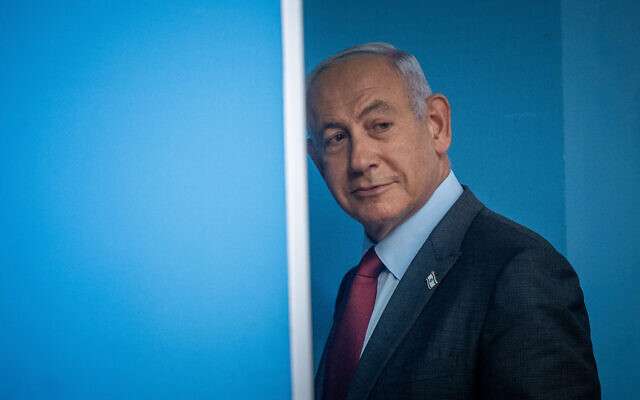
Israeli opposition leader, Gadi Eisenkot has called for Prime Minister Benjamin Netanyahu to leave office, saying he cannot “remain at the helm of government for even one more minute” following allegations that members of the Prime Minister’s office were involved in efforts to influence the country’s recent election.
Eisenkot’s remarks followed a report by an Israeli broadcaster alleging that Netanyahu’s office sought police action against members of the United Arab List (Ra’am) party on the eve of Israel’s October 27 election.
The opposition leader described the reported conduct as a threat to the country’s democratic institutions and demanded an immediate investigation into the claims.
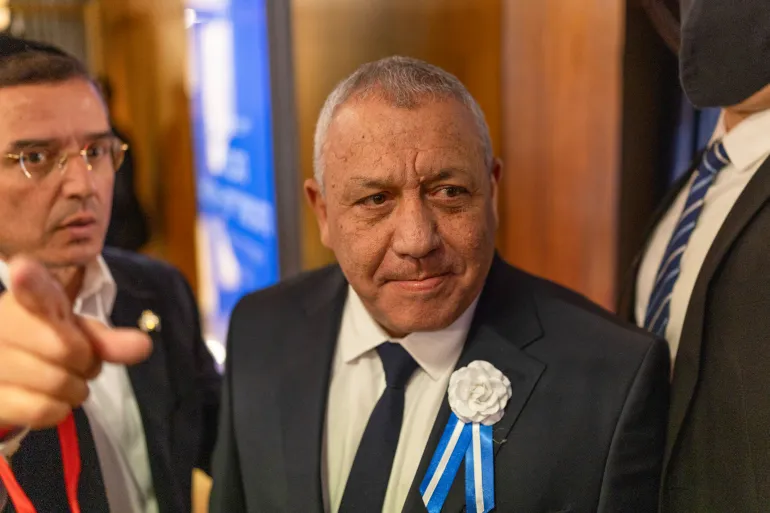
“The conduct of outgoing Prime Minister Netanyahu and his inner circle poses a tangible, direct and immediate threat to Israeli democracy.”
Gadi Eisenkot
His comments came only hours after representatives of Netanyahu’s Likud party and Eisenkot’s Yashar party met to discuss the possibility of forming a national unity government, reflecting the tension between the political negotiations and the allegations surrounding the election.
Alleged Police Intervention
According to the Israeli broadcaster, Netanyahu’s chief of staff, Ido Norden, lodged a complaint with the Police Commissioner’s office against members of Ra’am shortly before the election.
The report alleged that Norden directed police officers to an intelligence source who was a former employee of Netanyahu’s office. Acting on information provided by the source, approximately 14 police officers reportedly raided the homes of three Ra’am members without warrants and arrested them on suspicion of bribery intended to influence voting.
However, the three men were subsequently released after police determined that the information supplied by the purported intelligence source was unfounded.
The news agency also reported that Netanyahu launched a campaign against Arab-led political parties during election day. After those parties secured a record 19 parliamentary seats, the Prime Minister made allegations of electoral fraud.
The allegations have raised questions about the use of state institutions during an election campaign and whether law enforcement agencies were subjected to political pressure.
The report further alleged that David Zini, head of Israel’s internal intelligence agency, Shin Bet, requested permission from the Attorney General’s office to wiretap five Palestinian-Israeli members of the Knesset on election day over suspected electoral interference.
The request was reportedly rejected. The report did not establish that the proposed surveillance was carried out.
Eisenkot Demands Investigation As Likud Responds
Responding to the allegations, Eisenkot called on the relevant authorities to establish what happened and clarify the roles of those involved. “I call for an immediate investigation into the affair and for the police and the Shin Bet to immediately clarify the details that have been published,” he said.
Eisenkot, a former Chief of the Israel Defence Forces, has also accused Netanyahu of using divisive rhetoric against Palestinian citizens of Israel during the election campaign.
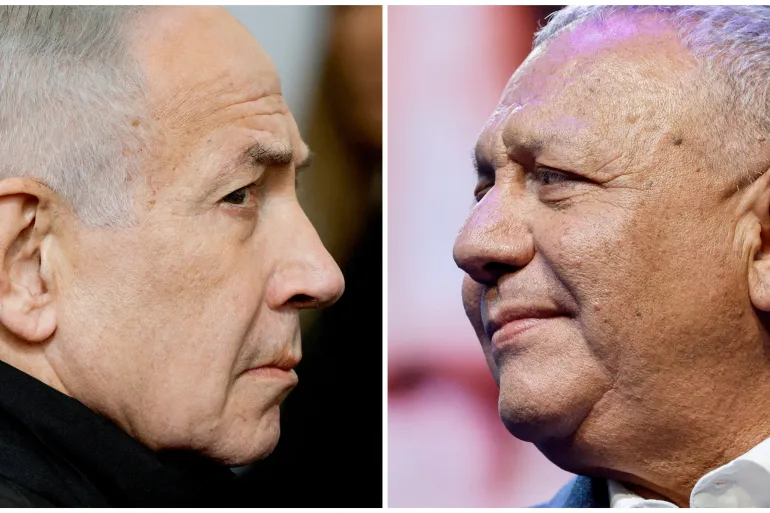
On Friday, he described the Prime Minister’s campaign as “racist and violent,” accusing Netanyahu of attempting to retain political power by targeting Arab-led parties.
Likud rejected Eisenkot’s latest remarks, describing his statement as “outrageous incitement” against the Prime Minister.
The exchange has further strained relations between the two political camps, even as discussions over a possible unity government continue.
Netanyahu renewed his appeal to Eisenkot to join a national unity government on Saturday. Eisenkot, however, dismissed the proposal as a “bluff,” questioning the sincerity of the Prime Minister’s offer.
Despite the public disagreement, Eisenkot confirmed that representatives of his Yashar party had held discussions with Likud over the possibility of establishing a shared government.
Government Formation Remains Uncertain
The political negotiations are taking place amid uncertainty over the formation of Israel’s next government, with neither Netanyahu’s bloc nor Eisenkot’s opposition grouping having secured the 61 seats required for a parliamentary majority.
The absence of a clear majority has increased pressure on political leaders to explore coalition arrangements, including the possibility of a national unity government.
However, the reported allegations have complicated those efforts, placing the conduct of Netanyahu’s office and the role of state security institutions under renewed scrutiny.
Eisenkot’s demand that Netanyahu leave office also presents a challenge to the prospect of cooperation between the two parties, although their representatives have continued discussions.
The immediate focus is now on whether police and Shin Bet will provide further clarification and whether the reported allegations will lead to a formal investigation.
READ ALSO: Zelenskyy Warns Russia Could Exploit Wider European Security Talks