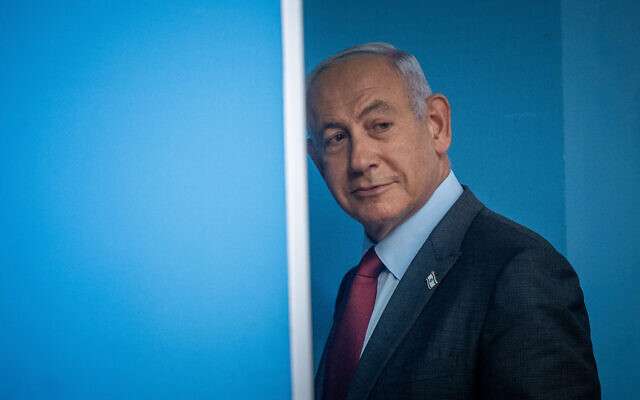
Israeli Prime Minister, Benjamin Netanyahu has called for a right-wing government to secure Israel’s long-term security, rejecting reliance on Arab parties he accused of opposing the country’s existence, as preliminary election projections point to a potentially deadlocked parliament.
Netanyahu made the remarks to supporters at his Likud party headquarters in West Jerusalem on Tuesday, hours after polls closed in Israel’s legislative election and preliminary results began emerging.
With more than half of the ballots counted, The Times of Israel projected Netanyahu’s bloc to win 56 seats in the 120-member Knesset, compared with 49 for an alliance led by Gadi Eisenkot.
Neither bloc appeared positioned to secure the 61 seats required for a parliamentary majority, leaving the composition of the next government uncertain. “We must establish a right-wing government to ensure Israel’s long-term security,” Netanyahu told supporters, arguing that the country could not depend on coalitions with Arab parties “that are against our existence.”
The Prime Minister acknowledged that the final results could take another day or two to emerge, while maintaining that Likud was on course to become the largest party in parliament.
Likud Leads As Netanyahu Defends His Record
Projections from Israeli television Channels 12 and 13 indicated that Likud was on track to win approximately 27 seats, ahead of 21 for Eisenkot’s Yashar party.
Although Likud held a clear lead over individual rival parties, the projections suggested that Netanyahu’s wider bloc could fall short of the numbers needed to form a government without additional support.
Addressing supporters, Netanyahu highlighted what he described as his government’s security achievements since returning to office in 2022, arguing that its military operations had strengthened Israel’s position in the region.
“We worked wonders that changed the face of the Middle East. We eliminated [Mohammed] Deif, [Ismail] Haniyeh, [Yahya] Sinwar, [Hassan] Nasrallah, [Iranian Supreme Leader Ali] Khamenei.”
Benjamin Netanyahu
He also pointed to Israel’s military presence in Gaza, Lebanon and Syria, claiming that his government had reduced threats to the country.
“We established security zones deep inside Gaza, in Lebanon, in Syria. We removed an immediate existential threat that hung over us, the danger of immediate destruction. We struck the Iranian regime and brought it to the edge of the abyss. Iran is weaker than ever; Israel is stronger than ever.”
Benjamin Netanyahu
Netanyahu further argued that Israel had an opportunity to work with US President Donald Trump to address the threat posed by Iran. “[We have a] historical opportunity together with United States President Donald Trump to remove the existential threat of Iran once and for all,” he said.

His remarks placed national security and the confrontation with Iran at the centre of his argument for continuing right-wing leadership.
Arab Parties Projected To Win Record Seats
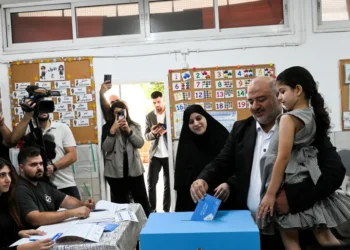
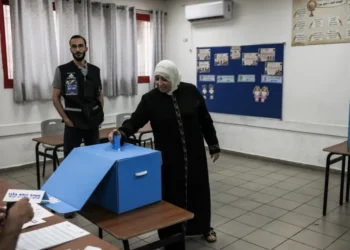
Meanwhile, Israel’s Arab parties appeared poised to make significant gains, with exit polls projecting that the Joint List and Ra’am could secure a combined 19 seats in the Knesset.
The projected result followed a surge in voting among Palestinian citizens of Israel, with turnout estimated at approximately 80 per cent, according to Israel’s Channel 12.
The reported participation would mark a historic level, surpassing records set in 1999 and potentially strengthening the parliamentary influence of Arab-led parties.
Mansour Abbas, leader of Ra’am, also known as the United Arab List, said he hoped the final results would allow the anti-Netanyahu bloc, including his party, to secure the 61 seats required to form a government. “With the numbers we have now, there is no government,” Abbas told Channel 12 before preliminary results began emerging.
Ra’am currently holds five seats in the Knesset and previously joined the coalition that governed Israel from 2021 to 2022.
Abbas said that both major political blocs had approached his party before and after the election, highlighting its potential importance in negotiations over the next government.
However, the projected distribution of seats suggested that coalition negotiations could be complicated by Netanyahu’s rejection of reliance on Arab parties and the opposition bloc’s need to assemble a parliamentary majority.
Netanyahu Campaigns Against Arab Voter Mobilisation
Netanyahu and his far-right allies made last-minute appeals for supporters to vote on election day, focusing on reports of increased participation among Palestinian citizens of Israel.
Arab politicians condemned the campaign as racist and inflammatory, particularly amid warnings from right-wing figures about the political consequences of high turnout in Arab communities.
Witnesses reported that cars displaying Likud flags drove through Jerusalem while playing the Islamic call to prayer and urging supporters to vote because “Arabs are voting.”
Netanyahu also highlighted long queues at polling stations in Arab communities on social media, publishing an image he said showed Arab voters, including women wearing the niqab, waiting to cast their ballots. “If we don’t wake up now, we’ll find ourselves with a government of Mansour Abbas and Ahmad Tibi,” he said, referring to two prominent Palestinian members of the Knesset.
The remarks underscored the divisions surrounding the election, particularly over the role Arab parties could play in determining Israel’s next government.
With Likud projected to remain the largest party but neither major bloc commanding a clear majority, the final results and subsequent coalition negotiations are likely to determine whether Netanyahu can remain in office or whether rival parties can assemble an alternative government.
READ ALSO: Trump Claims US Strike In Venezuela, Maduro and Wife Captured