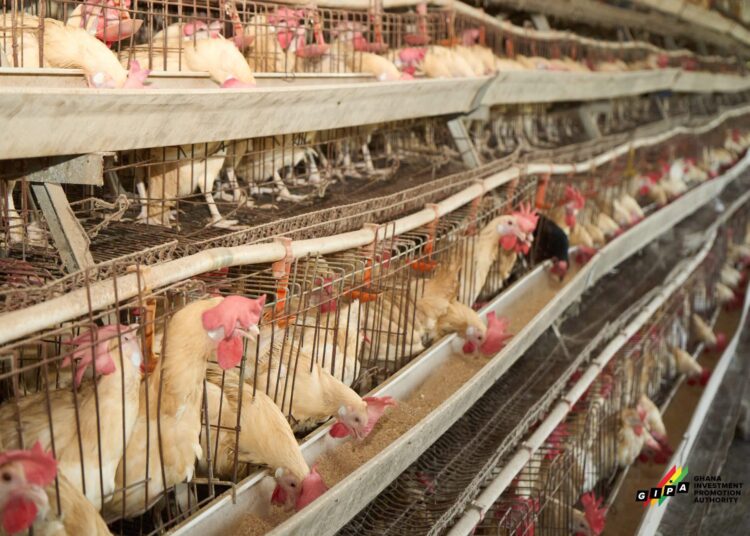
The Ghana Investment Promotion Authority (GIPA) is identifying agribusiness investment opportunities in the Upper West Region, following a working visit to Lamdi Farms, an integrated poultry and agricultural enterprise in Kpongu in the Wa Municipality.
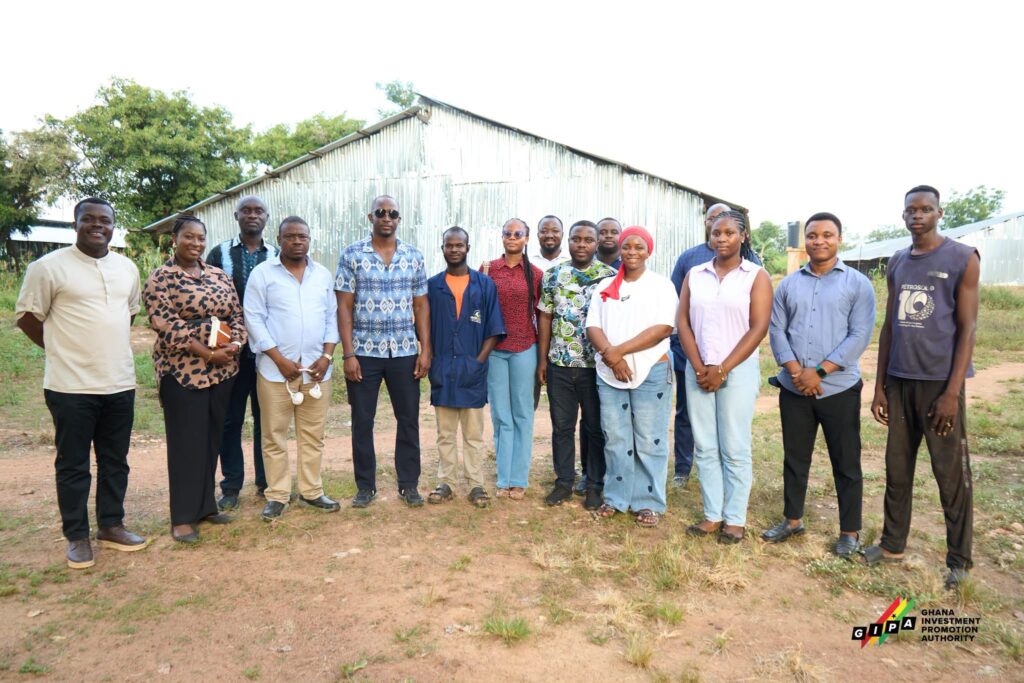
The visit, led by GIPA Deputy Chief Executive Officer, Mr. Abdul Razak Baba, formed part of the authority’s Upper West Regional Investment Roadshow and Investment Opportunities Mapping Project (IOMP), which seeks to identify viable businesses and investment prospects capable of attracting capital into the region.
Lamdi Farms’ operations illustrate the commercial potential of poultry production in northern Ghana, particularly in egg production, distribution, farm support services and the wider agricultural value chain.
The company operates four farms and supplies eggs to markets within the Upper West Region and other parts of the country.
“The operations of Lamdi Farms demonstrate the opportunities available in poultry production and related agribusiness activities in the Upper West Region.”
GIPA Deputy Chief Executive Officer, Mr. Abdul Razak Baba
Poultry Enterprise Demonstrates Production Capacity
On the company’s operations, production capacity, expansion prospects and the support required to grow the business.
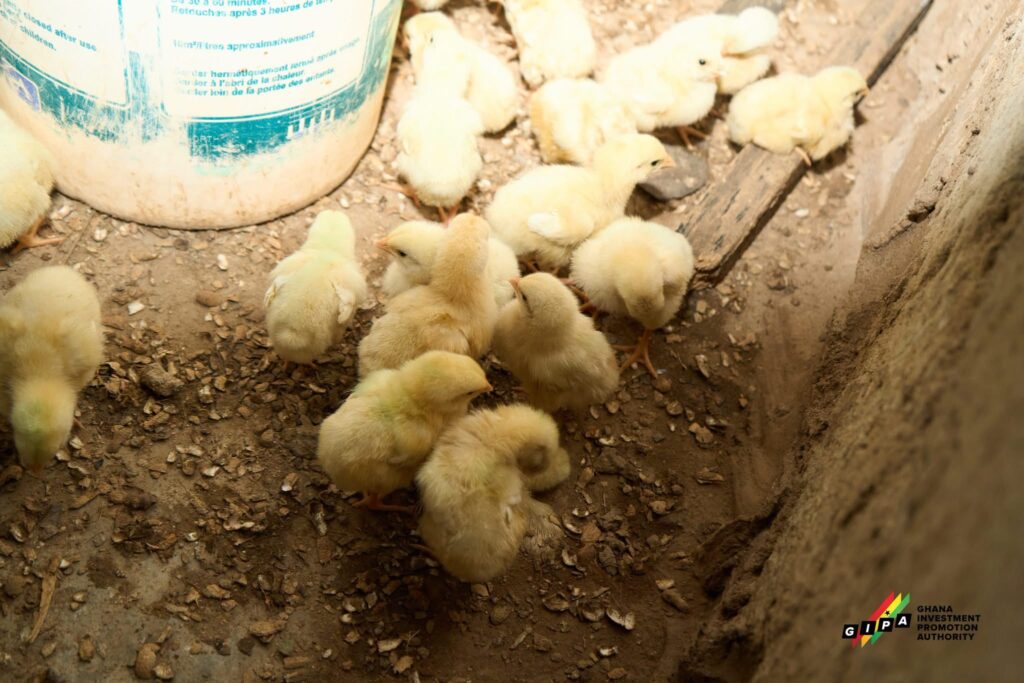
According to Mr. Naa, the enterprise manages between 26,000 and 30,000 birds across its four farms and produces approximately 350 crates of eggs daily. This output represents about 10,500 crates over a 30-day month, assuming production remains consistent.
The scale of production positions the company as a commercial supplier within Ghana’s poultry industry, with its operations extending beyond the immediate Wa market to other destinations across the country.
At an estimated 30 eggs per crate, daily production of 350 crates is equivalent to approximately 10,500 eggs. The figures illustrate the volume of agricultural output that can be generated by a locally based poultry enterprise operating at commercial scale.
“The company operates four farms, manages between 26,000 and 30,000 birds, and produces approximately 350 crates of eggs daily.”
Managing Director of Lamdi Farms, Mr. Kaleo Naa
The figures provided by the managing director also highlight the importance of reliable production systems, access to working capital and efficient distribution networks in sustaining poultry businesses.
For enterprises of this scale, expansion requires more than increasing the number of birds. Feed availability and prices, veterinary services, disease prevention, water supply, housing infrastructure and dependable market access can all influence operating costs and production efficiency.
These considerations are particularly relevant to investors assessing opportunities in poultry farming, where profitability depends on maintaining production levels while managing input costs and market risks.
Distribution and Farm Support Expand Value Chain
Lamdi Farms’ activities extend beyond direct egg production, with the company supporting poultry production on other farms and providing credit facilities to vendors involved in distributing its products.
These activities connect the enterprise to several segments of the poultry value chain, including production support, marketing and retail distribution.
The provision of credit to vendors is particularly significant because it can help distributors obtain products for sale without having to finance every purchase entirely from their own resources.
When properly managed, such arrangements can strengthen relationships between producers and sellers while supporting the movement of goods to consumers.
However, credit-based distribution also requires effective payment tracking, credit assessment and cash-flow management to limit the risk of delayed payments and unpaid debts.
The company’s support for other poultry farms also presents a potential avenue for expanding production beyond its own facilities. Depending on the nature of the arrangements, such support can help other operators access technical assistance, production inputs or market connections.
“The company also supports poultry production on other farms and extends credit facilities to vendors to aid distribution.”
GIPA Deputy Chief Executive Officer, Mr. Abdul Razak Baba
GIPA Maps Projects Ahead of Investment Summit
Mr. Baba commended Lamdi Farms for its contribution to agricultural development, food security and employment creation, noting the investment prospects available in poultry production and related activities across the Upper West Region.
The engagement forms part of GIPA’s broader effort to gather information directly from businesses, understand their operational constraints and identify areas where investment could support expansion.
Through the Investment Opportunities Mapping Project, the authority intends to document viable investment prospects across the region and use the findings to inform investor engagement.
“Insights from engagements with businesses such as Lamdi Farms will feed into GIPA’s Investment Opportunities Mapping Project, which seeks to identify and document viable investment opportunities across the region.”
GIPA Deputy Chief Executive Officer, Mr. Abdul Razak Baba
The findings are expected to contribute to preparations for the Invest Ghana Summit scheduled for November 16–17, 2026. The summit is intended to provide a platform for presenting investment opportunities and connecting businesses with potential investors.
Lamdi Farms’ production figures and distribution activities provide a practical example of the type of enterprise-level information that can inform investment promotion.
By identifying businesses with established operations and opportunities for expansion, GIPA’s mapping exercise could help connect regional economic potential with investment decisions.
The broader challenge will be translating identified opportunities into bankable projects that attract financing, strengthen local supply chains and generate sustainable employment.
For the Upper West Region, the success of the initiative will depend not only on documenting investment prospects but also on whether the identified businesses can secure the capital, infrastructure and technical support needed to expand their operations.
READ ALSO:Ecobank Deposits Hit US$27.5 Billion as Customer Confidence Soars