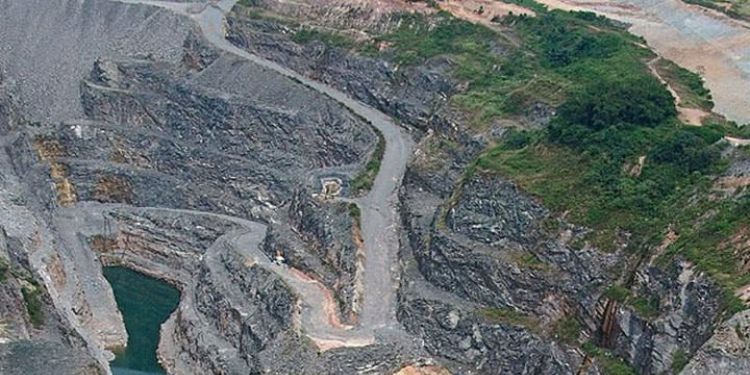
Northern Ashanti Mines Limited (NAML) has formally rejected a recent public press release issued by the Minerals Commission regarding the regulatory state takeover of its mining concessions in Konongo, asserting that the regulatory intervention threatens over two hundred million dollars ($200,000,000) in capital investments injected into the property.
The Ghanaian-owned mining firm insists that the regulatory watchdog’s justification of the action relies entirely on misrepresented facts designed to undermine local participation within the nation’s extractive industry.
“1. That the said press release is, with due respect, loaded with falsehoods, untruths and half-truths which can only be borne out of an ulterior motive to destroy a Ghanaian company which has invested over two hundred million dollars (US$200,000,000) in a mine it took over in 2020. 2. For the record, Northern Ashanti Mines Limited denies the claim by the Commission of having satisfied the requirements of Section 68 of the Minerals and Mining Act 2006 (Act 703).”
Northern Ashanti Mines Limited (NAML)
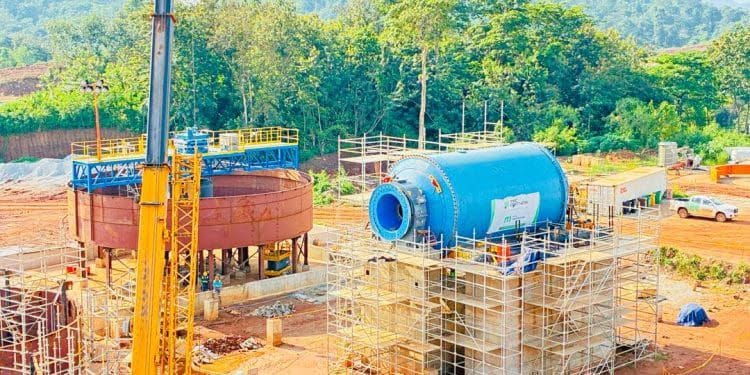
Expanding on the escalating regulatory dispute, NAML maintains that it acquired the Konongo mining site in 2020 and subsequently poured substantial private equity into long-term infrastructure, site development, and environmental remediation.
Company executive management contends that the Minerals Commission’s summary action ignores these long-term financial commitments while creating severe operational instability for local workers and investors.
Furthermore, NAML highlights that the statutory mechanisms cited by government regulators were never applied transparently, leaving the enterprise exposed to sudden loss of operational access and asset forfeiture without adequate notice.
Regulatory Mandates and Procedural Disputes
A central point of contention revolves around the legal protocols governing mineral rights revocation under Ghana’s principal mining legislation.
According to NAML’s leadership, the Minerals Commission failed to adhere to Section 68 of the Minerals and Mining Act, 2006 (Act 703), which explicitly mandates formal written notices detailing statutory breaches and granting reasonable remedial windows before lease terminations occur.
NAML emphasizes that prior to the radical enforcement action, “no letter alleging any statutory breach was ever issued to NAML before the purported revocation of its lawfully acquired Mining Lease.”

The company maintains that the first and only official correspondence received from state regulators was the 30th April 2026 notification, which abruptly declared the revocation of both its Mining Lease and Prospecting License.
Company leadership maintains that relying on “alleged indebtedness” to justify the immediate seizure of a major industrial mine reflects bad faith and a disregard for administrative fairness.
Protecting Domestic Capital in the Extractive Industry
The legal battle over the Konongo concession highlights broader concerns across the West African extractive landscape regarding security of tenure, administrative discretion, and local participation in resource development.
Industry analysts observe that domestic mining investments remain inherently high-risk, requiring stable, predictable, and transparent regulatory frameworks to attract and retain private equity.
When state regulators abruptly enforce lease cancellations without exhaustive remediation processes, it shakes investor confidence across the entire mining ecosystem.

Addressing these governance challenges requires balanced policy enforcement that protects state revenues while safeguarding private capital.
Establishing clearer communication channels and mandatory arbitration protocols prior to license revocation helps prevent costly legal standoffs and property destruction.
For local firms taking over legacy assets, institutional support and fair regulatory enforcement are essential to ensuring sustainable operation, socio-economic stability, and local wealth creation.
Strategic Reforms and Statutory Adherence
To avoid similar disputes that paralyze industrial operations, mining policy experts urge regulatory authorities to adopt structured compliance frameworks before exercising total lease cancellation.
Giving mining firms documented notices, clear financial reconciliations, and structured cure periods ensures that state agencies enforce statutory standards without appearing arbitrary or punitive.
Furthermore, strengthening independent administrative review mechanisms ensures that domestic investors receive impartial hearings before state agencies execute drastic asset forfeitures.
As NAML challenges the Minerals Commission’s actions, the outcome will serve as a key test case for administrative due process and local enterprise protection within Ghana’s mining sector.
Restoring transparency to lease administration will remain critical to guaranteeing that institutional actions promote industrial growth rather than capital flight.
READ ALSO: Netanyahu Seeks Right-Wing Coalition As Israeli Election Deadlocks