
The Minerals Commission of Ghana (MinCom) has mounted a firm defense regarding its decision to revoke the mining leases and prospecting licenses previously granted to Northern Ashanti Mines Limited, formerly known as Owere Mines, maintaining that the revocation was executed strictly in accordance with statutory requirements following fifteen years of deliberate non-compliance.
The regulatory authority indicated that the company engaged in persistent and flagrant breaches of national mining statutes by failing to settle mandatory annual statutory fees while simultaneously leaving the vast concession inactive for an extended timeframe.
This administrative action underscores the government’s resolve to enforce regulatory compliance across the extractive industry and prevent the speculative holding of strategic mineral resources without active production or financial returns to the state.
“The law is the law. Mineral rights are not an inheritance. Once granted, a holder must abide by the rules, whether they are an indigenous company or not, and this includes the payment of statutory fees and the undertaking of meaningful mining operations.”
Minerals Commission of Ghana
Expanding on this regulatory enforcement, the statutory regulator revealed that the company accumulated massive financial arrears totaling over US$8.3 million in unpaid Annual Mineral Right (AMR) fees for its primary mining lease covering 595 cadastral blocks between 2010 and 2025, alongside an additional US$49,928 owed for prospecting licenses spanning 2019 to 2025.

Despite being served formal Notices to Remedy Breach on April 14, 2025 which provided a statutory grace period to rectify these monetary defaults Northern Ashanti Mines failed to fulfill its legal obligations or resume active operations on the concession.
Consequently, on April 7, 2026, the Minerals Commission formally requested the Minister for Lands and Natural Resources to initiate the statutory termination process, resulting in ministerial approval on April 24, 2026, and the definitive termination of all mineral rights on April 30, 2026.
Compliance and Statutory Obligations in Ghana’s Extractive Sector
The regulatory body emphasised that its regulatory mandate requires strict adherence to the Minerals and Mining Act, 2006 (Act 703) and the Minerals and Mining (Licensing) Regulations, 2012 (L.I. 2176), both of which define clear operational standards for mining entities operating within Ghana.
Under Section 24 of Act 703, leaseholders are legally bound to make timely annual payments of mineral right fees to maintain valid landholding tenure.
Furthermore, Section 69(1) of Act 703 explicitly mandates that holders of mining leases must actively carry out mining operations and forbids leaving concessions dormant for any period exceeding two consecutive years without regulatory authorization.

Addressing public claims made by the affected firm, MinCom noted with “grave concern” what it described as an ongoing public sympathy campaign intended to undermine lawful regulatory oversight.
The Commission reiterated that Northern Ashanti Mines was afforded every procedural opportunity over an extended timeframe to regularize its standing but repeatedly failed to act.
The regulator stressed that legal processes were strictly followed at every stage, confirming that all mineral rights formerly assigned to the company have now fully reverted to the State, which remains the sovereign custodian of all national mineral wealth.
Economic Implications and State Asset Governance
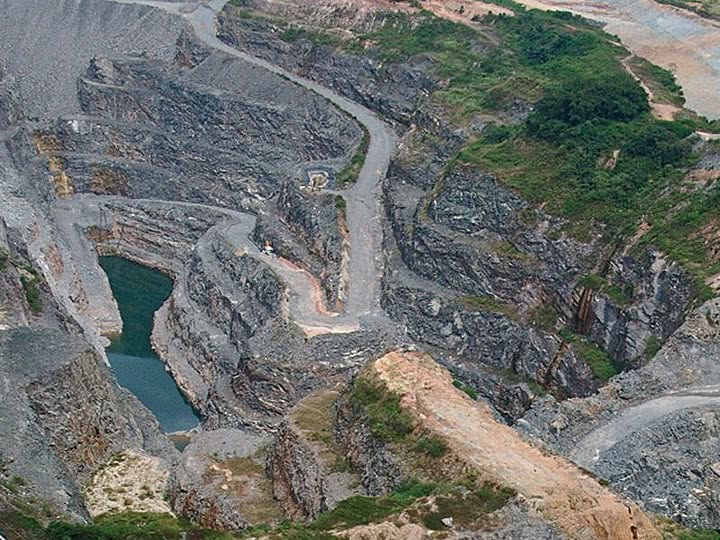
The necessity for this regulatory intervention stems from the urgent requirement to safeguard state revenue and curtail speculative asset holding within Ghana’s lucrative gold sector.
Unproductive mining concessions deny the nation vital royalty payments, corporate income taxes, and local employment opportunities that active mining projects typically generate.
By permitting companies to hold extensive concessions idle without satisfying basic operational or financial obligations, the sector risks systemic inefficiency, reduced mineral export output, and significant fiscal leakage.
To protect public funds, the Commission affirmed that the termination of mineral rights does not absolve the company of its historical financial obligations accrued prior to revocation.
MinCom explicitly stated its determination to pursue the recovery of all outstanding debts through legal avenues, ensuring that the company remains liable for its accumulated indebtedness to the State.
Reclaiming inactive concessions enables the government to reallocate viable mineral fields to well-capitalized, compliant investors capable of driving sustainable operational growth and contributing positively to national economic development.
Strategic Reform and Future Sector Supervision
This enforcement exercise signals a broader governance shift aimed at tightening oversight, strengthening transparency, and eliminating regulatory leniency across the Ghanaian mining sector.
The state authority aims to instill discipline among domestic and international resource developers, proving that licensing conditions will be enforced uniformly regardless of ownership structure or company origins.
By taking a firm stand against prolonged non-payment and operational dormancy, the Minerals Commission reinforces a transparent operational environment grounded in rule-based governance.
Moving forward, prospective and existing mineral right holders must prioritize full statutory compliance, active field investment, and strict adherence to payment schedules to secure their operational tenures within the nation’s extractive industry.
READ ALSO: Conflict Gold Fuels ADF Insurgency in Eastern Congo