The Government of Spain has provided €300,000 to the Narcotics Control Commission (NACOC) to support completion of its first forensic laboratory, in a move aimed at strengthening Ghana’s capacity to investigate and prosecute drug-related offences.
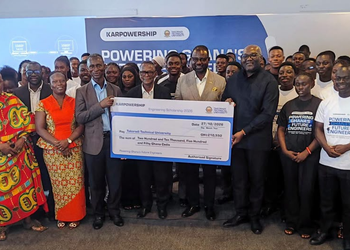
The funding was presented by Spain’s Ambassador to Ghana, H.E. Ángel Lossada, during a brief ceremony with NACOC management. The support forms part of efforts to deepen bilateral cooperation against illicit drug trafficking and transnational organised crime, while helping prepare specialist officers to operate the facility when construction is completed.
“The Spanish Government is increasing its efforts on strengthening its cooperation with Ghana in the fight against illicit drug trafficking and organized crime.”
Ambassador to Ghana, H.E. Ángel Lossada
Ambassador Lossada reaffirmed Spain’s commitment to supporting NACOC through capacity building, specialised training and technical assistance. He indicated that cooperation could be pursued under the European Union Security and Defence Partnership or through bilateral agreements being negotiated with Ghana’s Ministry of the Interior.
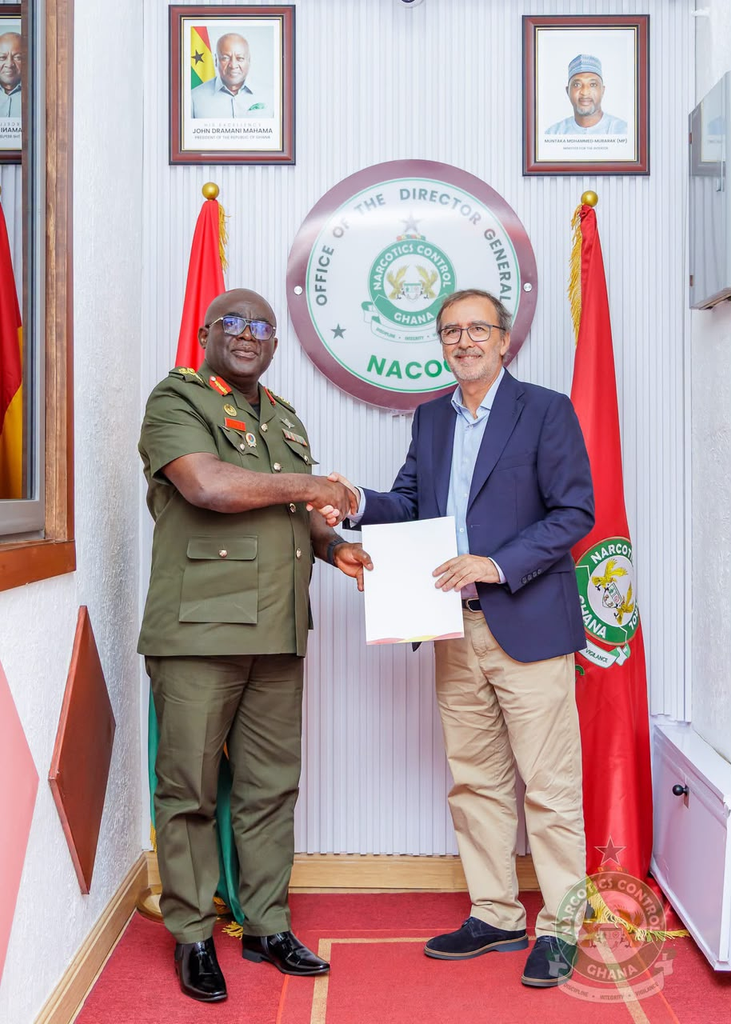
The Ambassador also pledged support for training forensic officers, highlighting the importance of building the technical expertise required to make the laboratory operational. The assistance is intended not only to help complete the facility but also to strengthen the Commission’s ability to use forensic evidence in investigations and prosecutions.
NACOC Welcomes Timely Laboratory Support
Receiving the package, NACOC Director-General Major General Maxwell Obuba Mantey expressed appreciation to the Spanish Government for its continued partnership and commitment to Ghana’s fight against drug trafficking.
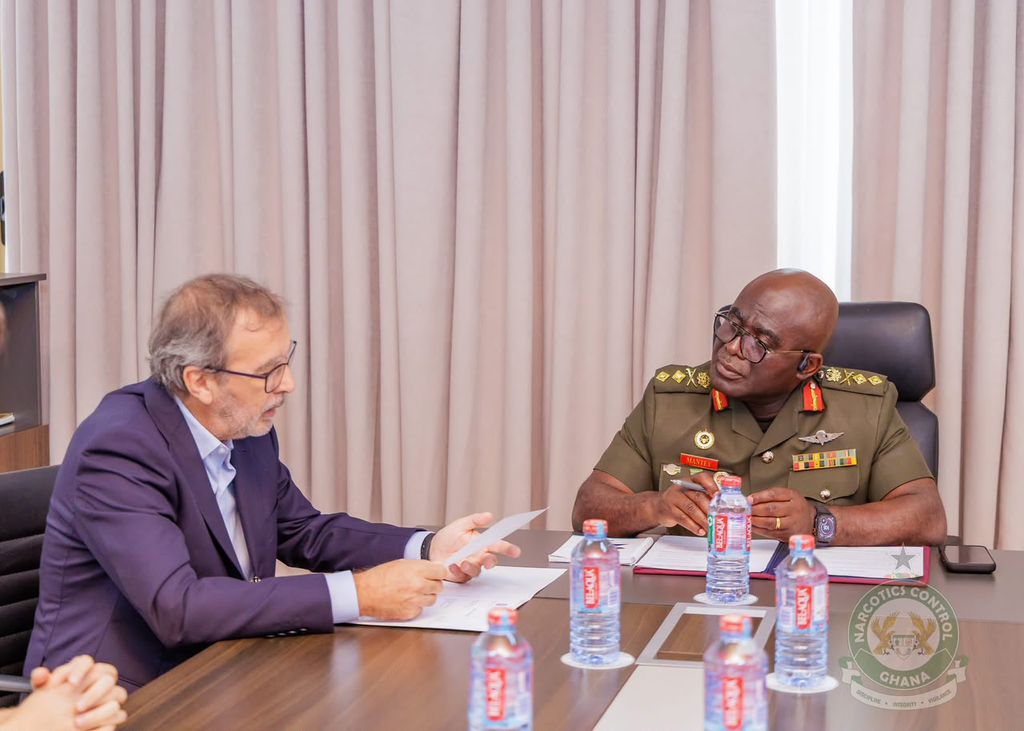
He described the funding as timely, explaining that establishing a modern forensic laboratory had been one of his key priorities since assuming office. According to him, the absence of a dedicated facility has constrained the Commission’s work, particularly when investigators need forensic examinations to support drug-related cases.
“ completion of NACOC’s forensic laboratory will strengthen investigations, speed up forensic analysis and improve the prosecution of drug-related offences in Ghana.”
Major General Maxwell Obuba Mantey, NACOC Director-General
NACOC currently depends on other state institutions to conduct forensic examinations. Mantey explained that this arrangement can delay the release of laboratory results and, consequently, the prosecution of cases. A dedicated facility would give the Commission greater control over the process and help investigators obtain evidence within a more practical timeframe.
Forensic Capacity to Support Investigations
The completion of the laboratory is expected to strengthen NACOC’s ability to conduct timely forensic examinations, improve investigations and facilitate prosecutions.
Mantey stressed that the lack of an in-house laboratory has been a major operational challenge. Reliance on external institutions means the Commission must depend on their availability and processes when forensic testing is required. Delays in receiving results can complicate investigations and affect the pace at which cases proceed.
A dedicated laboratory would help address that challenge by placing forensic testing within NACOC’s operational framework. However, the facility’s effectiveness will also depend on the availability of trained personnel and the technical capacity needed to operate it, an area the Spanish Ambassador has pledged to support through training.
Training and Bilateral Support Remain Key
Ambassador Lossada’s commitment to capacity building and technical assistance is therefore central to the package. The planned training of forensic officers is intended to ensure the laboratory can function effectively once completed, complementing the financial contribution towards the facility itself.
The Ambassador noted that Spain was seeking to strengthen cooperation with Ghana through both European Union security arrangements and bilateral engagement with the Ministry of the Interior. These channels provide a framework for continued collaboration on illicit drug trafficking and organised crime.
For NACOC, the contribution represents support for both infrastructure and the skills required to use it. The Commission’s reliance on other public institutions for forensic examinations has been a practical obstacle, and completing the laboratory would give it a dedicated resource to support its investigative and prosecutorial mandate.
Strengthening Ghana’s Fight Against Drug Trafficking
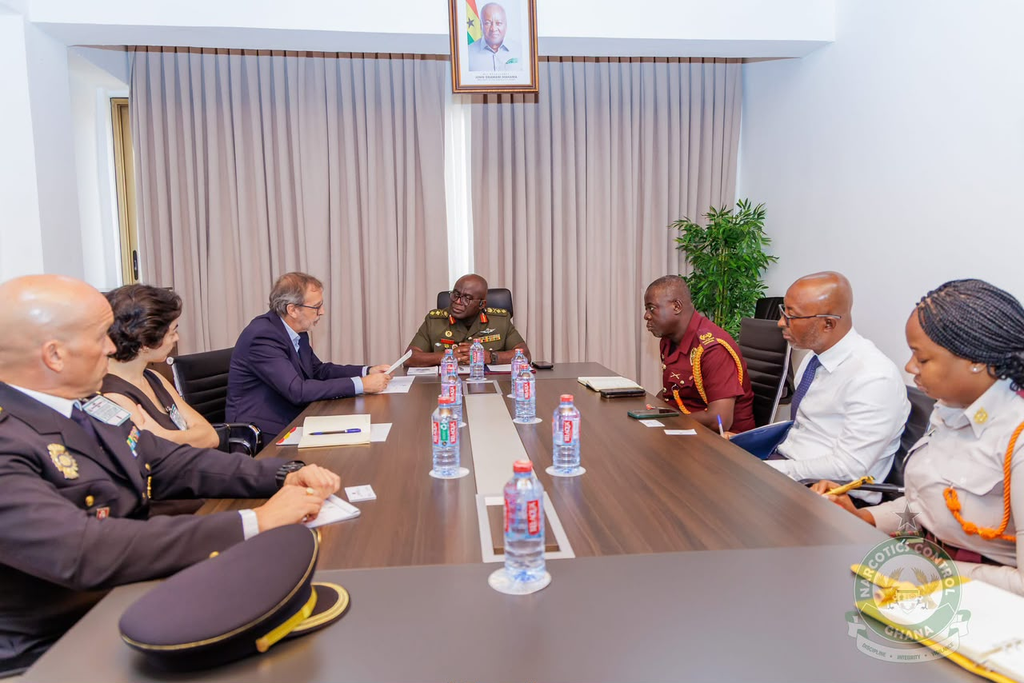
The €300,000 contribution places the completion of NACOC’s first forensic laboratory within broader efforts to improve the country’s response to drug-related crime. The facility is expected to reduce dependence on external forensic services and help the Commission obtain results more efficiently.
Mantey welcomed Spain’s continued partnership, while the Ambassador reaffirmed his country’s willingness to support the Commission through specialist training and technical assistance.
Once completed and properly equipped with trained personnel, the laboratory is expected to support more timely forensic analysis, strengthen evidence gathering and help NACOC pursue drug-related offences more effectively. The immediate priority remains completion of the facility and preparation of officers to operate it, improving evidence handling across cases.
READ MORE: Ghana Strengthens Ebola Preparedness, Flags Sensitisation and Infrastructure Gaps