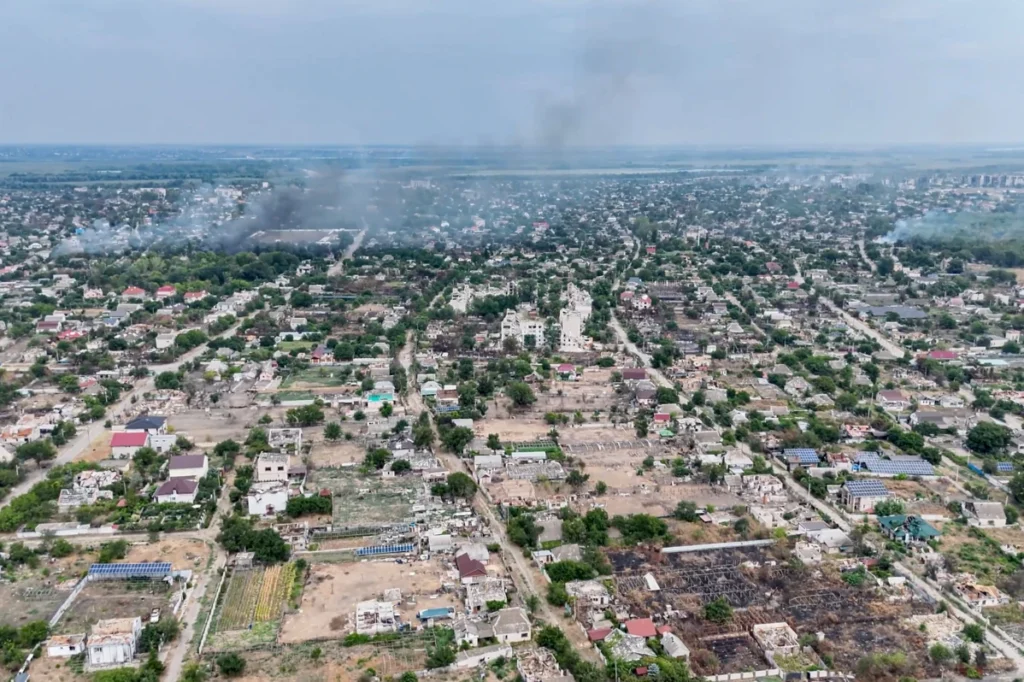
Russia and Ukraine began observing a localised ceasefire on Tuesday, October 27, 2026, to facilitate a humanitarian mission to the Russian-occupied Ukrainian city of Oleshky, where food and medical supplies are running dangerously low.
The ceasefire, which the White House said was brokered by US First Lady Melania Trump, is intended to protect civilians and enable the delivery of essential humanitarian assistance to the devastated southern city.
In a social media post, Melania Trump announced that the ceasefire had taken effect at 4am Moscow time on today, two days earlier than originally scheduled. “THE CEASEFIRE HAS COMMENCED,” she wrote.
She said that the timing had been accelerated “to protect the safety of civilians and to facilitate the delivery of critical humanitarian aid.”
According to the First Lady, the geographical scope of the ceasefire had also expanded beyond Oleshky, in Ukraine’s Kherson region, to provide safe passage for humanitarian convoys. “General Valery Gerasimov, Joint Chief of the General Staff of the Russian Armed Forces has confirmed,” she added.
Moscow, Kyiv Confirm Halt In Fighting
Russia and Ukraine separately confirmed that the localised ceasefire had begun, signalling a temporary pause in hostilities to support the planned relief operation.
Russia’s Ministry of Defence announced on Telegram that it had stopped shelling in the direction of Kherson from 4am Moscow time, equivalent to 1am GMT, on Tuesday to prepare for the humanitarian effort in Oleshky.
Dmytro Lubinets, Ukraine’s parliamentary commissioner for human rights and head of the Ukrainian negotiating team, also confirmed that Kyiv was observing the arrangement. “As head of the Ukrainian negotiating team, I confirm that the Ukrainian side is honouring its commitments,” Lubinets said in a Facebook post, confirming the timing of Russia’s halt in shelling.
A local pause in fighting had been planned from 3am to allow an aid mission into Oleshky during the week. The precise timing and expanded geographical coverage announced by Melania Trump were presented as measures to facilitate the safe movement of humanitarian convoys.
The operation is intended to deliver urgently needed assistance to residents who remain in the city despite the dangers posed by the war.
Food and medical supplies are running perilously low in Oleshky, where drone activity and land mines have restricted movement for as many as 2,000 people who remain in the area. Negotiators involved in the humanitarian mission said that doctors, medicines, food supplies and water would be delivered before evacuation corridors were opened.
The ceasefire is therefore expected to provide a temporary window for humanitarian assistance and potentially enable civilians to leave areas affected by the fighting.
Nonetheless, the agreement represents a high-stakes effort for Moscow and Kyiv, both of which are seeking to maintain favour with US President Donald Trump amid continuing diplomatic efforts to address the war.
Previous attempts to establish limited ceasefires between Russia and Ukraine have quickly unravelled or failed to take hold, reflecting the deep mistrust between the two sides.
The success of the Oleshky arrangement will depend on whether the parties maintain the pause long enough for humanitarian workers to deliver supplies and establish safe passage for civilians.
Meanwhile, Western officials have continued to accuse Russian President Vladimir Putin of orchestrating a campaign of disruption across Europe, as diplomatic efforts to isolate Moscow persist.
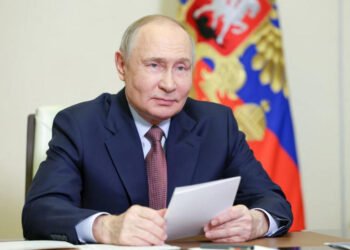
In a separate development, Finland’s President and Norway’s Prime Minister spoke by telephone with Putin. The conversations marked their first known direct contact with the Russian leader since shortly after Russia launched its full-scale invasion of Ukraine on February 24, 2022.
The calls came as diplomatic engagement over the war continued alongside attempts to secure limited humanitarian arrangements on the ground.
Russian Attacks Continue In Other Ukrainian Cities
Despite the localised ceasefire, Russian attacks continued elsewhere in Ukraine, underscoring the limited scope of the arrangement.
Minutes after 3am local time, multiple ballistic missile explosions shook Kyiv, while air alerts sounded across the country.
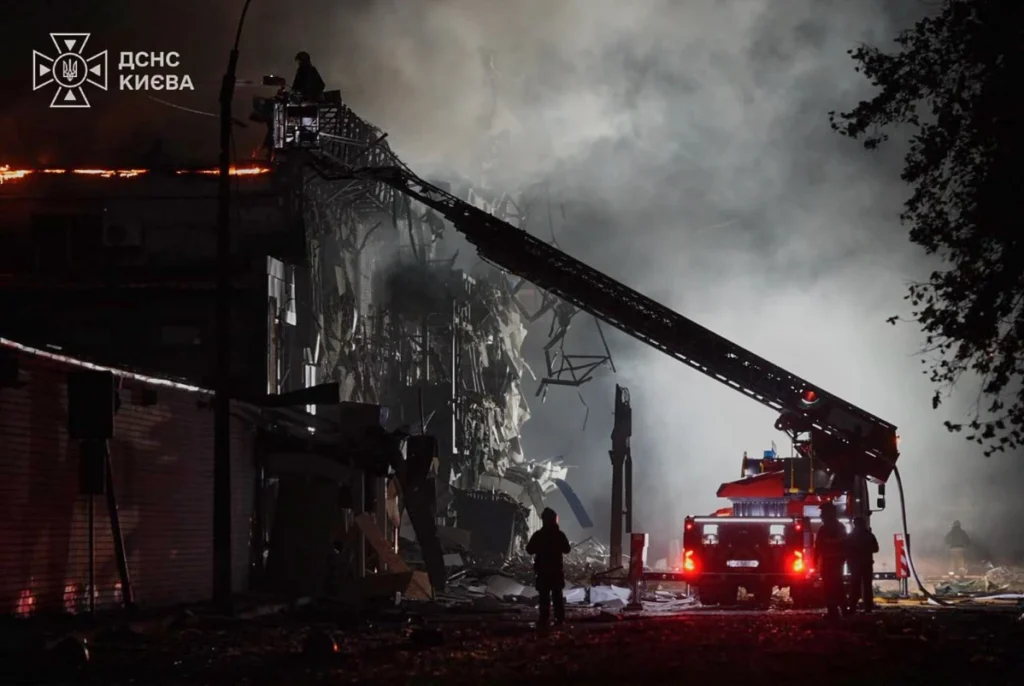
City officials said Russian ballistic missiles damaged the grounds of a university in the Ukrainian capital, killing one person and injuring 12 others.
In Kharkiv, Ukraine’s second-largest city, authorities reported that attacks late on Monday killed two people and wounded four others.
Ukrainian President Volodymyr Zelenskyy said that Russia had launched 16 ballistic missiles and more than 280 drones across 11 regions of the country.
For residents of Oleshky, the immediate priority remains access to food, medicine and safe passage amid dangerous conditions. Whether the temporary truce can deliver meaningful relief will depend on the parties’ continued adherence to the arrangement and the safe passage of humanitarian convoys.