President John Dramani Mahama has called on contemporary African leaders to translate the ideals of independence and dignity championed by Kwame Nkrumah and Patrice Lumumba into practical development, stronger institutions and greater opportunities for young people.
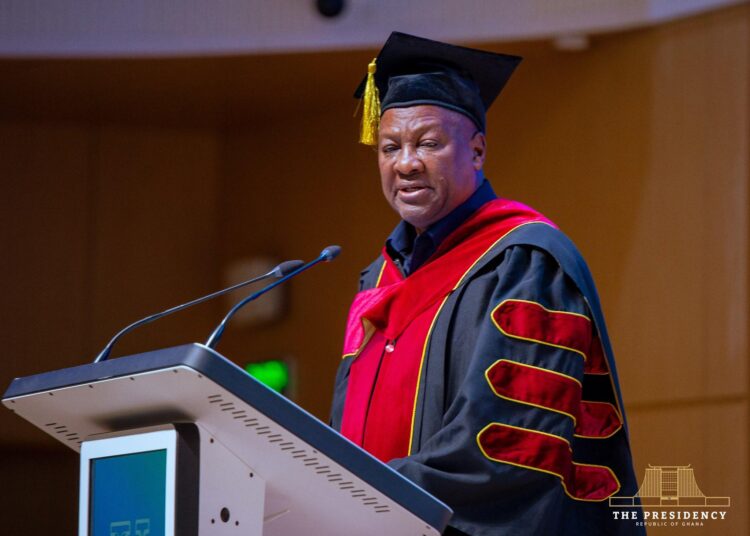
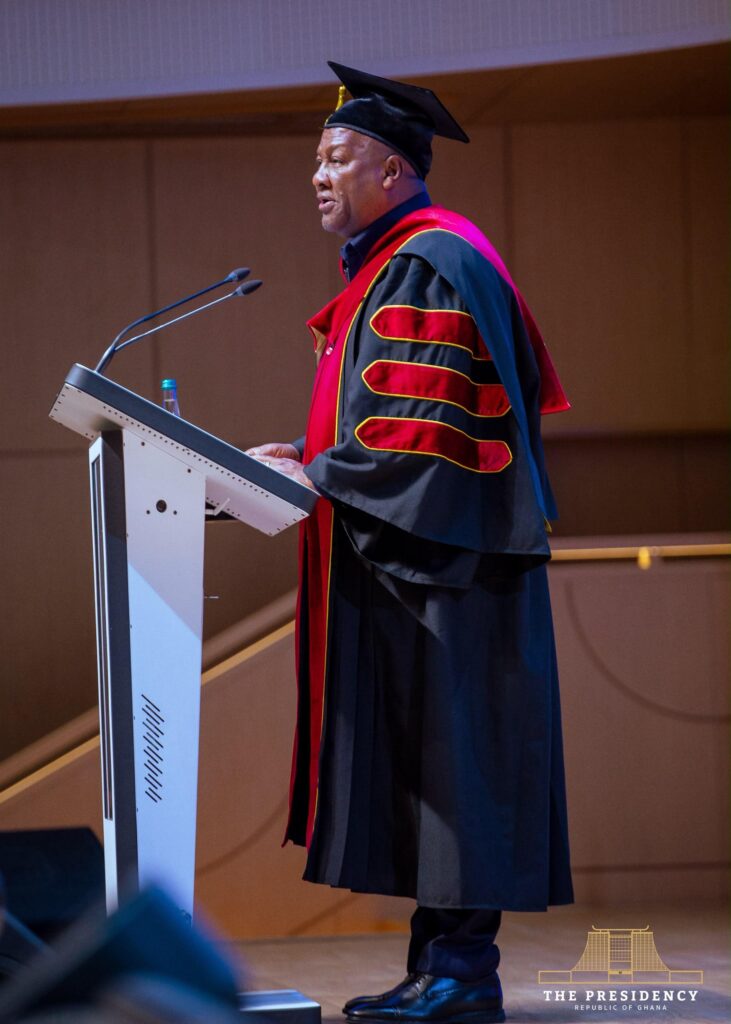
Addressing the academic community at the People’s Friendship University of Russia (RUDN) in Moscow on Tuesday, October 27, 2026, President Mahama said Africa’s liberation struggle must extend beyond the attainment of political independence to improving the lives of its people and enabling them to shape their societies and economies.
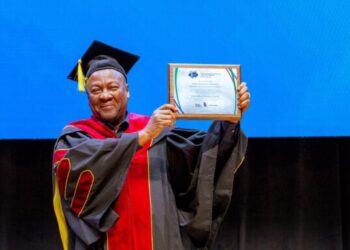
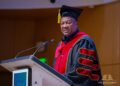
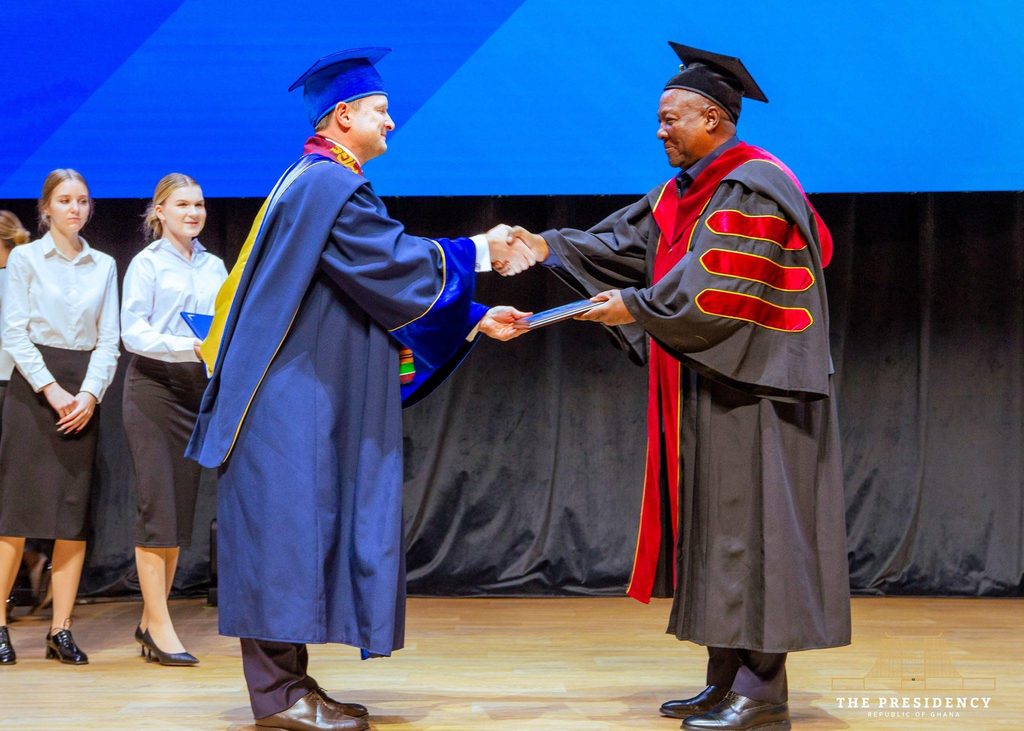
The President made the remarks after receiving an honorary doctorate from RUDN University during his working visit to Russia for the third Russia-Africa Forum.
“Patrice Lumumba and Kwame Nkrumah belong to a generation that challenge Africans to imagine a different future for ourselves. Our responsibility as present day African leaders is to give practical expression to that aspiration of our forefathers”.
President John Dramani Mahama
Mahama Invokes Nkrumah and Lumumba’s Legacy
President Mahama drew parallels between Ghana’s first President, Dr Kwame Nkrumah, and Congolese independence leader Patrice Lumumba, whose name the Russian university bears. He described both men as members of a generation that challenged Africans to imagine a different future for the continent.
For President Mahama, their vision of liberation was not limited to the removal of colonial administrations or the raising of national flags. It also involved securing the freedom of African people to determine their development paths, build their economies and live with dignity.
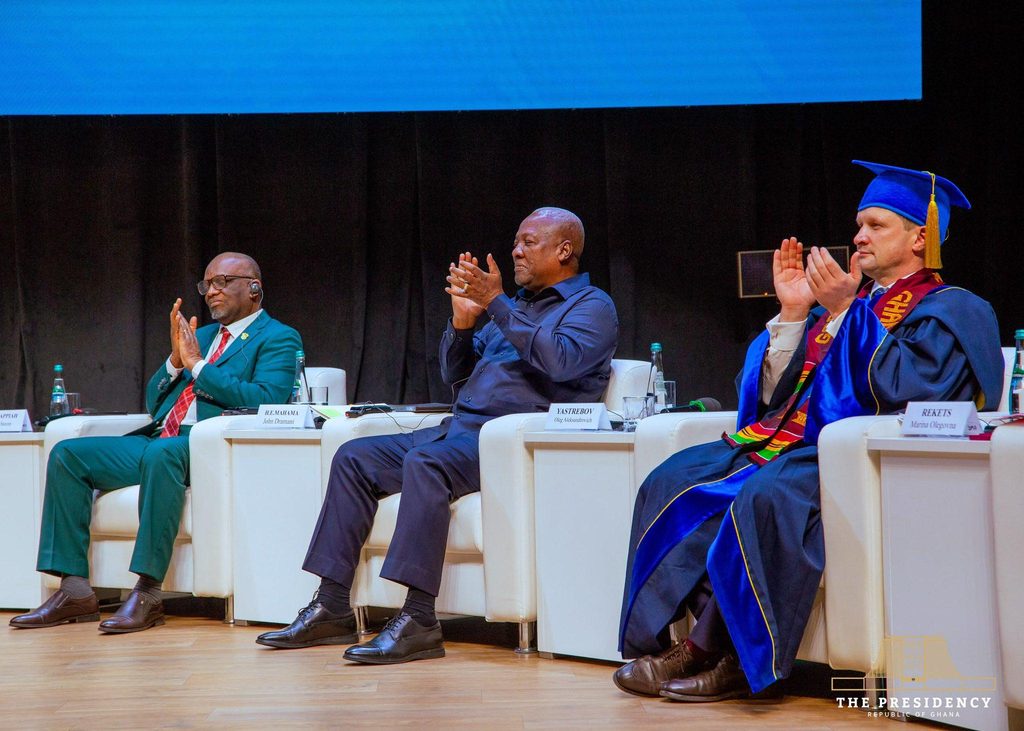
He recalled Nkrumah’s conviction that political independence must give Africans the power to shape their societies and determine their future. The President argued that contemporary leaders have a responsibility to turn those aspirations into measurable improvements in national development.
He pointed to the quality of schools, the strength of institutions and the opportunities available to young people as practical areas in which the legacy of Africa’s liberation leaders should be reflected.
His remarks placed education and institutional development at the centre of the continuing effort to fulfil the ambitions associated with the continent’s independence movements.
Calls for Confronting Historical Injustices
President Mahama also argued that advancing African dignity requires confronting historical injustices inflicted on people of African descent through colonial domination and the transatlantic slave trade.
He called for these issues to be addressed through informed dialogue and international cooperation. The President’s remarks connected the historical experiences of African people with the present responsibility of governments and international institutions to promote a deeper understanding of the past.
He maintained that universities have an important role in this process through rigorous scholarship, preserving historical memory and allowing difficult truths to be examined freely.
According to President Mahama, RUDN’s association with Patrice Lumumba carries both a historical legacy and a continuing responsibility. He said the institution’s identity serves as a reminder that knowledge should help people understand their circumstances and acquire the means to improve them.
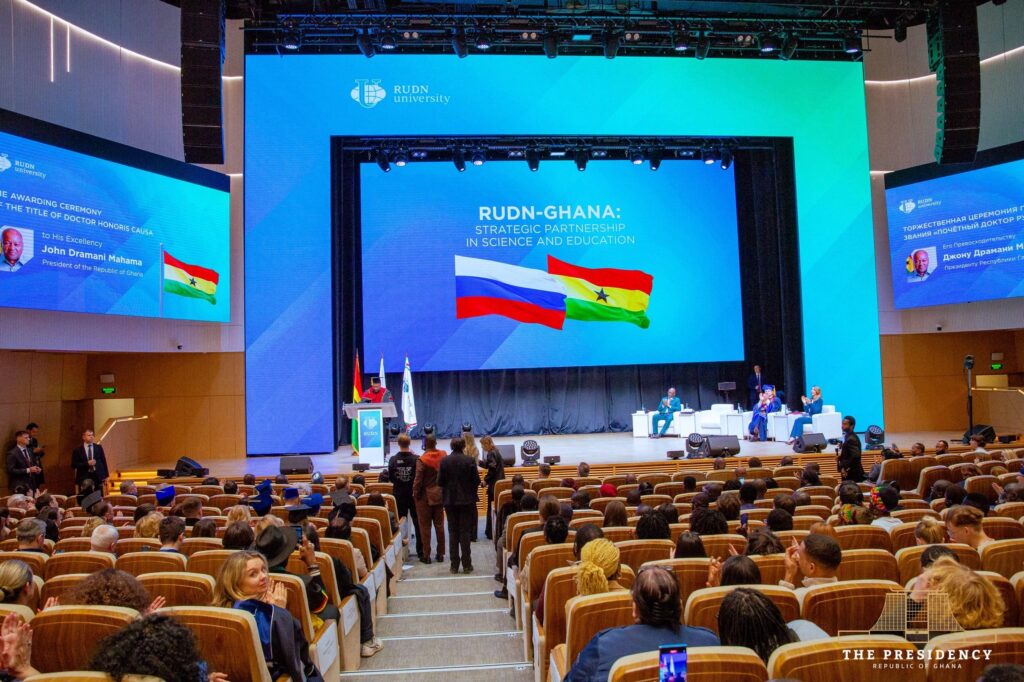
The argument positioned education as more than the acquisition of academic qualifications. It also presented universities as institutions that can preserve historical knowledge, encourage critical examination and contribute to discussions about justice and development.
Education Must Translate Into Development Opportunities
President Mahama identified education as central to Ghana’s development ambitions, particularly given the country’s young population.
He said young people must have opportunities to acquire knowledge and use it productively, linking access to education with the broader responsibility to create conditions in which talent can contribute to national progress.
The President’s address connected this development objective to the ideals of Nkrumah and Lumumba, arguing that the aspirations of earlier generations must be reflected in the quality of contemporary public institutions and the opportunities available to citizens.
He also recognised RUDN’s historical contribution to educating African students. Over several decades, the university opened its doors to students from African countries, many of whom returned home to contribute to the development of their newly independent nations.
President Mahama described this history as an example of educational cooperation supporting national development. The university’s international character, he added, enables students from different countries and backgrounds to learn alongside one another and build relationships based on curiosity, patience and respect.
International Cooperation Remains Necessary
Beyond historical justice and education, President Mahama emphasised the importance of cooperation between countries in addressing shared challenges. He said academic engagement helps keep channels of communication open in a world troubled by conflict and mistrust.
He identified public health, food security, energy and climate change as areas in which cooperation is essential because individual countries cannot resolve every challenge alone.
His remarks presented international academic partnerships as a means of encouraging dialogue and enabling people from different backgrounds to work together on common problems.
The President also linked RUDN’s history to the solidarity shown by the former Soviet Union and Russia towards countries emerging from colonialism in Africa. He said the university’s commitment to friendship among peoples continues to speak to contemporary international relations.
A Continuing Responsibility for African Leaders
President Mahama’s address ultimately returned to the responsibilities facing current African leaders. By invoking Nkrumah and Lumumba, he challenged leaders to connect the continent’s history of liberation with present-day priorities, including better schools, stronger institutions and more opportunities for young people.
His call for historical justice also placed universities at the centre of efforts to preserve collective memory and encourage informed international dialogue. The speech did not set out specific policy measures or timelines for addressing the historical injustices he identified.
Instead, it established a broader argument that Africa’s independence ideals require continued action through education, institutional development and cooperation.
President Mahama’s remarks at RUDN therefore linked the continent’s liberation history with its contemporary development responsibilities, arguing that the ideals of sovereignty and dignity must find expression in the lives and opportunities of African people.
READ ALSO: Lands Commission Collects GH¢40.7m in Ground Rent