Polls have opened in Bulgaria’s presidential election, with growing economic hardship, inflation and drone attacks on Black Sea shipping dominating the campaign in the European Union and NATO member state.
The election also represents the first major test for Prime Minister Rumen Radev’s Moscow-friendly Progressive Bulgaria party following its victory in parliamentary elections in April.
Bulgaria elects its President directly for a five-year term, with a constitutional limit of two terms. Although the presidency is primarily ceremonial, direct election gives the officeholder political authority and a public mandate. The President serves as commander-in-chief of the armed forces, can veto legislation, signs international treaties and appoints Ambassadors.
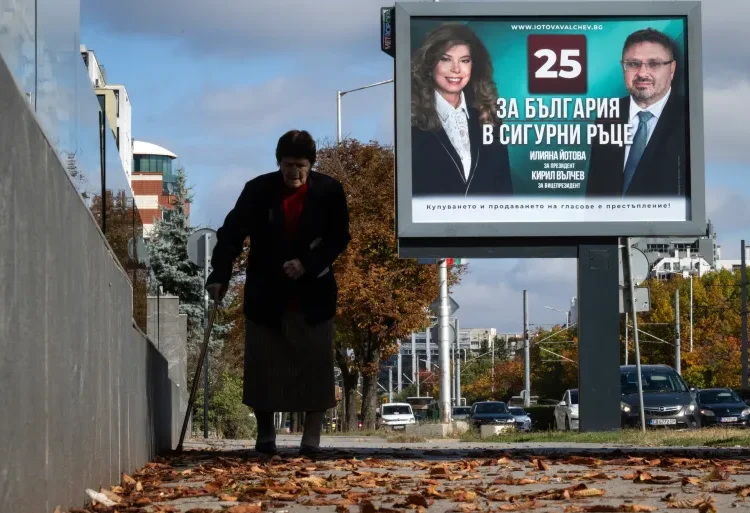
Despite a record 27 candidates contesting the presidency, the race is expected to culminate in a runoff between incumbent President Iliana Iotova, backed by Progressive Bulgaria, and former caretaker Prime Minister Andrey Gyurov, who enjoys the support of pro-Western opposition parties.
The campaign has been shaped by Russia’s invasion of Ukraine and widening hostilities in the Black Sea, where recent drone attacks on commercial vessels off Bulgaria’s coast have heightened security concerns.
The strikes have raised questions about the risk of further escalation and prompted the Bulgarian government to seek assistance from its international partners to strengthen maritime security.
Meanwhile, rising energy prices and inflation have remained central campaign issues, as households, particularly in rural communities, struggle to cope with the cost of living.
Polling stations opened at 7 a.m. and are scheduled to close at 8 p.m. Initial exit polls are expected after voting ends, while preliminary results are anticipated on Monday.
Iotova Seeks Mandate After Taking Over Presidency
Iotova, 62, is a former journalist and member of the European Parliament who became president in January 2026 after Radev stepped down to contest parliamentary elections.
She previously served as Vice President during Radev’s two terms as head of state and is now seeking her own presidential mandate.
Although running as an independent candidate, Iotova has received the official backing of Progressive Bulgaria and the Socialist Party, where her political career began. A victory would make her Bulgaria’s first elected female President.
Addressing supporters at a rally on Thursday, Iotova advocated a diplomatic approach to the war in Ukraine, arguing that negotiations offered a better path to peace than continued fighting. “I advocated for peace through negotiations, rather than force,” she said.
She also criticised opponents who, according to her, favour a prolonged war of attrition. “My opponents argue that there must be a war of attrition,” she said, “The truth is, we are all the ones who are most exhausted.”
Her remarks reflect the broader debate in Bulgaria over how the country should respond to the war and the security challenges facing the Black Sea region.
Gyurov Campaigns On Pro-Western Foreign Policy
Iotova’s main challenger, Andrey Gyurov, is an economist and former Deputy Governor of Bulgaria’s central bank who served as caretaker Prime Minister during the early months of 2026.
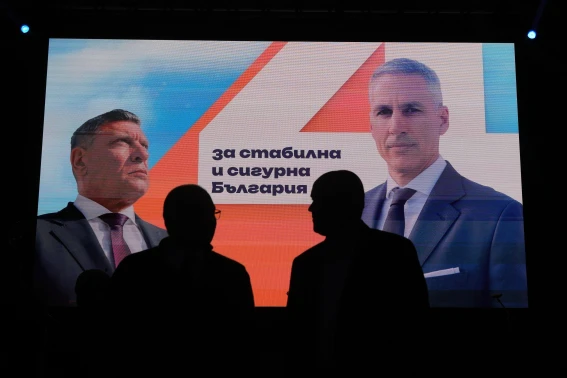
He is backed by pro-Western reformist opposition parties and has consistently expressed support for Ukraine.
During his premiership, Gyurov signed a security cooperation agreement with Kyiv, underlining his position on European security and Bulgaria’s relations with Ukraine.
Speaking to supporters this week, he called for a more assertive Bulgarian role within European and transatlantic institutions.
“I want Bulgaria to have a voice of its own in Europe. A reliable NATO ally that defends its interests through preparedness, strong diplomacy and a clear position.”
Andrey Gyurov
His campaign offers voters an alternative to Iotova’s position on the war and the country’s foreign policy direction, placing Bulgaria’s role as a NATO ally at the centre of the contest.
Opinion polls cited ahead of the election give Iotova between 40 and 45 per cent of the vote in the first round, compared with Gyurov’s projected 25 to 30 per cent. The reported margin of error is three percentage points.
Low Turnout Points To Likely November Runoff
Bulgaria’s presidential election is expected to proceed to a second round because none of the 27 candidates is projected to secure an outright victory.
For a candidate to win in the first round, voter turnout must exceed 50 per cent of the country’s 6.6 million registered voters, and the winning candidate must obtain a majority of the votes cast.
However, projections suggest Sunday’s turnout will remain below 40 per cent, making a runoff on November 1 increasingly likely.
The outcome will therefore determine not only who occupies the presidency but also how Bulgaria navigates mounting security concerns, economic pressures and divisions over its foreign policy orientation.
With Iotova leading the first-round opinion polls and Gyurov positioning himself as a pro-Western alternative, the expected runoff could become a defining contest over Bulgaria’s political and international direction.
READ ALSO: Sánchez Rules Out Moroccan Role In Ceuta Migrant Surge