The Green Climate Fund (GCF) has approved $184.8 million for two projects in Algeria and Mexico to restore degraded landscapes, protect forests and strengthen climate resilience among rural communities.
The projects, supported by the Food and Agriculture Organization of the United Nations (FAO), aim to reduce greenhouse gas emissions, combat desertification, promote sustainable agricultural practices and improve livelihoods in communities dependent on natural resources.
GCF Chief Investment Officer Amer Baig noted that “these new investments demonstrate how GCF is backing national climate ambition with investment, delivering impact where it is needed most.”
“In Algeria, GCF’s first project in the country will support a shift to integrated, climate-resilient landscapes across six provinces, home to more than half of the country’s nomadic population.
“With the government financing 57 percent of the investment, the project shows how country ownership can drive ecosystem restoration and stronger rural livelihoods.”
Amer Baig
Algeria will use a $43 million GCF grant, alongside $56.5 million in government co-financing, to strengthen climate resilience across 454,138 hectares in six provinces under a seven-year initiative targeting the country’s Green Dam landscape.
The project, titled Improving Climate Resilience in the Steppe and Dry Forest Areas of the Algerian Green Dam, builds on Algeria’s efforts to combat desertification dating back to 1971, when the government launched the Green Dam initiative, an ecological belt stretching approximately 1,500 kilometres across the pre-Saharan steppe.
The initiative is expected to reach more than one million people and directly support over 142,000 farmers, herders and pastoralists, more than a third of whom are women.
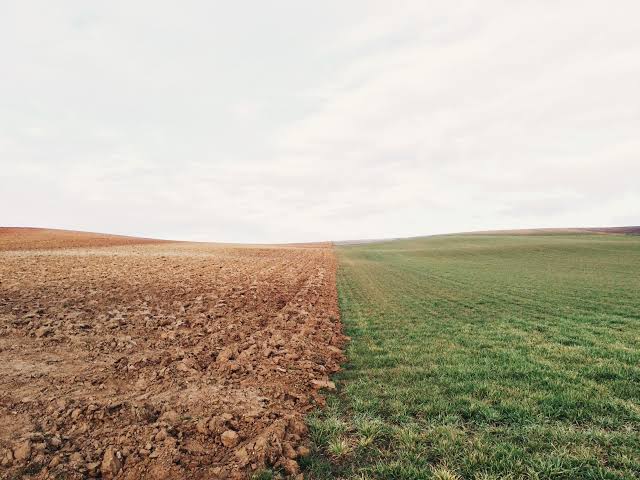
Planned interventions include restoring more than 59,000 hectares of degraded forests, rangelands, dunes and agricultural land, alongside installing 190 solar energy kits to support refrigeration, processing and other productive activities in remote rural communities.
The project will also establish 240 hydroponic forage units to provide year-round feed for more than 25,000 livestock and improve access to finance for rural micro-enterprises, at least half of which are expected to be women-led.
Additional support will target climate-resilient value chains involving prickly pear cactus, olives, rosemary, wool, esparto grass and peppermint.
The project is expected to reduce or sequester 540,355 tonnes of carbon dioxide equivalent by its completion and more than 1.8 million tonnes over its lifetime.
According to Algeria’s Agriculture, Rural Development and Fisheries Minister Sid Ali Khaldi, “with support from GCF and FAO, this project will constitute a substantial contribution to the integrated relaunch of the Algeria Green Dam that reconciles biodiversity, economic resilience of local populations and adaptation to climate change.”
Mexico Secures $85.3 Million for Forest Protection

In addition, Mexico has secured $85.3 million in GCF results-based payments to strengthen forest conservation and promote sustainable livestock production following emissions reductions achieved between 2018 and 2019.
The country recorded 12,915,671 tonnes of carbon dioxide equivalent in emissions reductions through its efforts to address deforestation and forest degradation under its National REDD+ Strategy.
The newly approved project will reinvest the funding in forest conservation, restoration of degraded pasturelands and sustainable livestock practices, including silvopastoral systems that integrate trees, shrubs and livestock to improve productivity and climate resilience.
The six-year initiative is expected to reach more than 33,000 people, including Indigenous Peoples, Afro-Mexicans and local communities, while generating an estimated 262,801 tonnes of additional emissions reductions by 2032.
Planned activities include establishing 1,200 farmer field schools, supporting sustainable forest management across 205,000 hectares through Payments for Environmental Services, financing 120 women-led productive initiatives and improving access to sustainable finance.
Mexico’s National Forestry Commission Director-General Sergio Graf noted that, “this initiative is based on a fundamental reality: tropical dry forests make a decisive contribution to livestock production through grazing and the use of forage resources.”
“Therefore, their conservation and proper management are essential both for climate action and for the well-being of thousands of small-scale rural producers.”
Sergio Graf
FAO and GCF Strengthen Climate and Rural Development Partnership
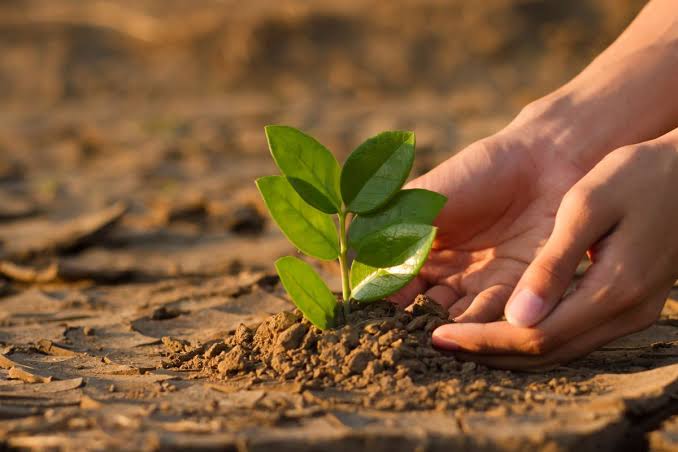
The two projects reflect efforts by the GCF and FAO to link climate action with agricultural development, ecosystem protection and improved livelihoods for rural populations.
FAO Director-General QU Dongyu indicated the organisation remained committed to helping Algeria and Mexico build agrifood systems that are more efficient, inclusive, resilient and sustainable.
“Let us continue to work together to strengthen our partnership that brings together FAO’s technical expertise and strong government commitment for effective, efficient and coherent climate action that benefits rural communities and the ecosystems they depend on for their food security and wellbeing.”
QU Dongyu
The goals are intended to support emissions reductions, climate resilience and food security while expanding investment in landscapes where restoration and sustainable land management can benefit both communities and ecosystems.
READ ALSO: IEA Fellow Calls for Natural Resource Approval Reforms