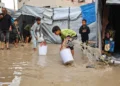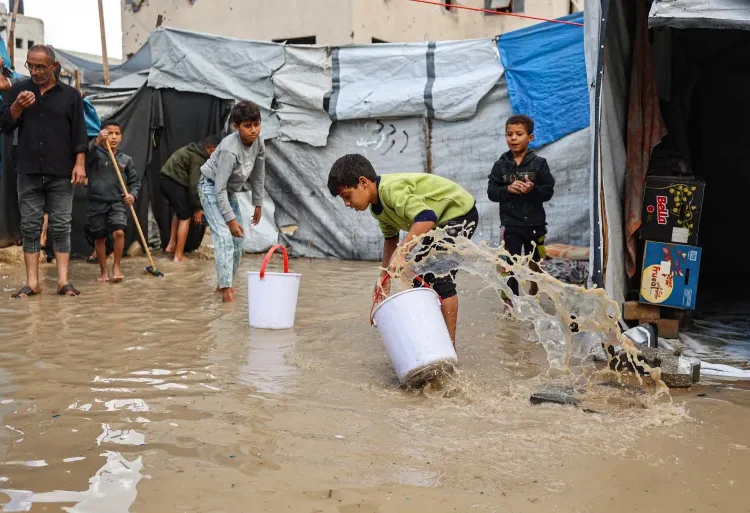
United Nations humanitarian agencies have warned that winter rains are worsening conditions in Gaza, flooding makeshift shelters, destroying limited food supplies and exposing displaced families to greater risks of hunger, cold and poor sanitation.
The World Food Programme (WFP) and the International Organization for Migration (IOM) have warned that heavy rainfall is compounding the already difficult conditions facing millions of Palestinians, many of whom have been forced to live in overcrowded tented camps after repeated displacement.
Floodwater and sewage have damaged food stocks stored in tents, while shortages and high costs of cooking gas and firewood have left families struggling to prepare meals and keep warm.
WFP Country Director for Palestine, Shaun Hughes, during a briefing with journalists in Geneva following his visit to Gaza, stated that, “most people burn rubbish to cook their food. Now even the rubbish is wet.”
The scale of the damage has raised concerns about the ability of displaced households to withstand the months ahead, with humanitarian workers reporting destroyed shelters, dangerous attempts to keep warm and continued barriers to aid delivery.
Displacement Leaves Millions Exposed to Hunger
More than 1.7 million people remain displaced across Gaza, while approximately 1.4 million face acute hunger, placing additional pressure on humanitarian agencies working to meet their basic needs.
The WFP previously provided one hot meal daily to families in displacement camps. However, worsening conditions and resource constraints have reduced that support.
“Now it’s one hot meal every two days,” WFP Country Director for Palestine stressed.
Humanitarian agencies have also cautioned that recent improvements in food security remain fragile, relying largely on aid deliveries rather than a recovery in local livelihoods, markets and food production. The destruction of stored food through flooding threatens to reverse the limited progress achieved.
“When you’re in Gaza, it does not feel like a ceasefire,” Hughes stated.
He added that Israeli military control across nearly 70 per cent of Gaza leaves residents with little space to grow food, while fishing is prohibited and dangerous. With unemployment exceeding 80 per cent, he argued, humanitarian assistance remains essential to the survival of many households.
Winter Conditions Increase Risks to Families

The heavy rainfall has resulted in loss of life, with humanitarian agencies reporting deaths from flooding and unsafe methods used by families struggling to keep warm.
Karl Baker, IOM’s Regional Crisis Coordinator, disclosed that “after just one day of rain, tens of thousands of shelters were damaged or destroyed.”
At least five people were reportedly killed when a sandbank collapsed just over a week ago.
Humanitarian partners also reported that two children had died in fires accidentally started by families cooking inside their tents in attempts to stay warm.
IOM Seeks $9 Million for Winter Protection
Humanitarian teams have spent months preparing displacement sites for winter, including digging drainage channels, reinforcing pathways and repurposing flour bags as sandbags to reduce flooding.
However, IOM has warned that these measures require at least $9 million in additional funding over the coming months to support flood prevention, fire safety, heating points, lighting and other emergency improvements.
The agency has also called for more basic equipment, including shovels, sandbags and nails, to enable displaced communities to reinforce their shelters and protect themselves against further rainfall.
IOM is therefore urging Member States to use their influence with Israeli authorities to open additional crossing points and secure the immediate and predictable entry of humanitarian supplies, particularly durable shelter materials.
IOM’s Regional Crisis Coordinator disclosed that IOM has more than 100,000 tents ready for delivery from Egypt, but their entry remains subject to strict approval criteria.
He explained, “it is not a statement of dual use, it is just that this tent, at this time, is not allowed to enter Gaza. We don’t get the specifics.”
READ ALSO: BoG Warns Ghana’s Economic Recovery and Inflation Gains Could Reverse in 2027